
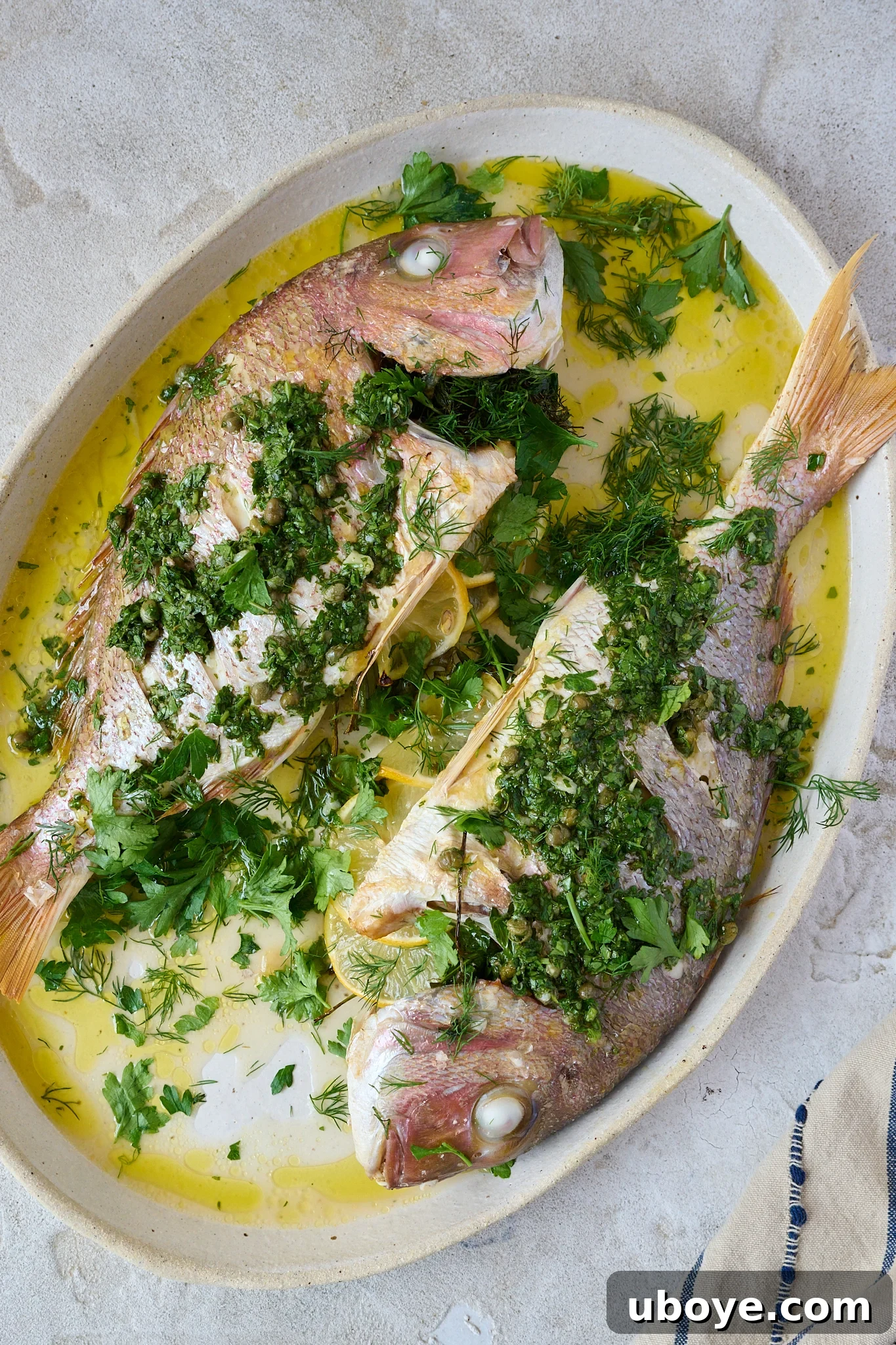
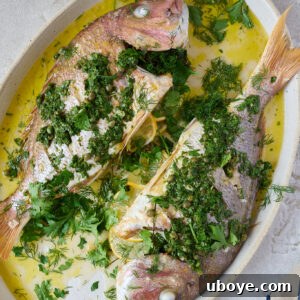
Prepare to be amazed by this **Whole Baked Snapper with Vibrant Salsa Verde**, a truly spectacular yet incredibly simple seafood recipe designed to impress without the fuss. Perfect for elegant Easter gatherings, celebratory dinners, or a healthy weeknight meal, this dish comes together with minimal active cooking time. A fresh whole snapper is expertly roasted with a generous drizzle of premium olive oil, bright lemon slices, and aromatic fresh herbs until its flesh is perfectly tender and flaky. The culinary masterpiece is then elevated with a light, zesty, and utterly refreshing homemade salsa verde, transforming a humble fish into a gourmet experience that is both nutritious and incredibly delicious.
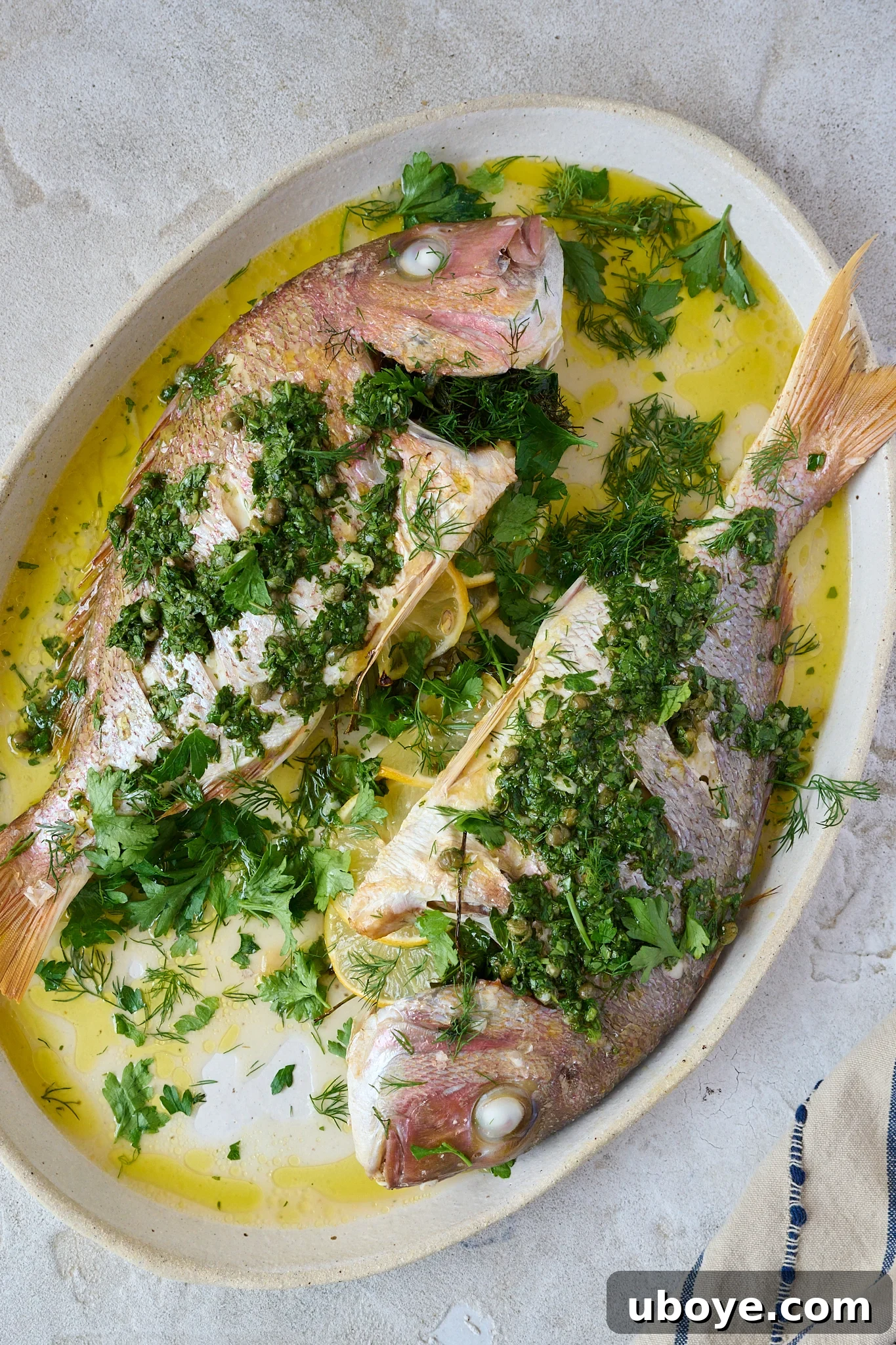
Why You’ll Adore This Whole Baked Snapper Recipe!

Imagine savoring a dish that evokes the serene ambiance of a charming seaside restaurant, but from the comfort of your own home. This recipe delivers precisely that, proving that exquisite flavors don’t require complex techniques or hours in the kitchen. Many home cooks feel intimidated by the idea of preparing a whole fish, often perceiving it as a challenging task. However, I’m here to tell you that roasting a whole fish is one of the most straightforward and forgiving culinary adventures you can embark on!
The secret to its inherent simplicity and incredible taste lies in two fundamental elements: a generous hand with **good quality extra virgin olive oil** and ample seasoning with **flaky sea salt**. These humble ingredients, when applied thoughtfully, work wonders in retaining moisture, enhancing the fish’s natural sweetness, and developing a rich, savory crust. This dish perfectly embodies my cooking philosophy: keep it simple, prioritize freshness, and let the inherent quality of your ingredients shine through. The result is a meal that’s naturally healthy, bursting with vibrant flavors, and remarkably light on effort, making it ideal for both seasoned cooks and beginners.
If you’re already a fan of my delightful Spanish garlic prawns (Gambas al Ajillo) or my flavorful prawn and saffron spaghetti, then this whole baked snapper with salsa verde will undoubtedly earn a permanent spot in your recipe repertoire. It shares their winning characteristics: big, bold flavors that genuinely impress, minimal preparation and cooking time, and a wonderful communal appeal that makes it perfect for sharing with family and friends.
Essential Ingredients for a Perfect Whole Baked Snapper & Salsa Verde
The true brilliance of this whole baked fish recipe stems from its reliance on high-quality, fresh ingredients that inherently do most of the culinary heavy lifting for you. We embrace a minimalist yet impactful approach, focusing on a beautiful whole snapper, robust extra virgin olive oil, fragrant fresh herbs, bright lemons, and a few key pantry staples to create a harmonious and unforgettable blend of flavors.
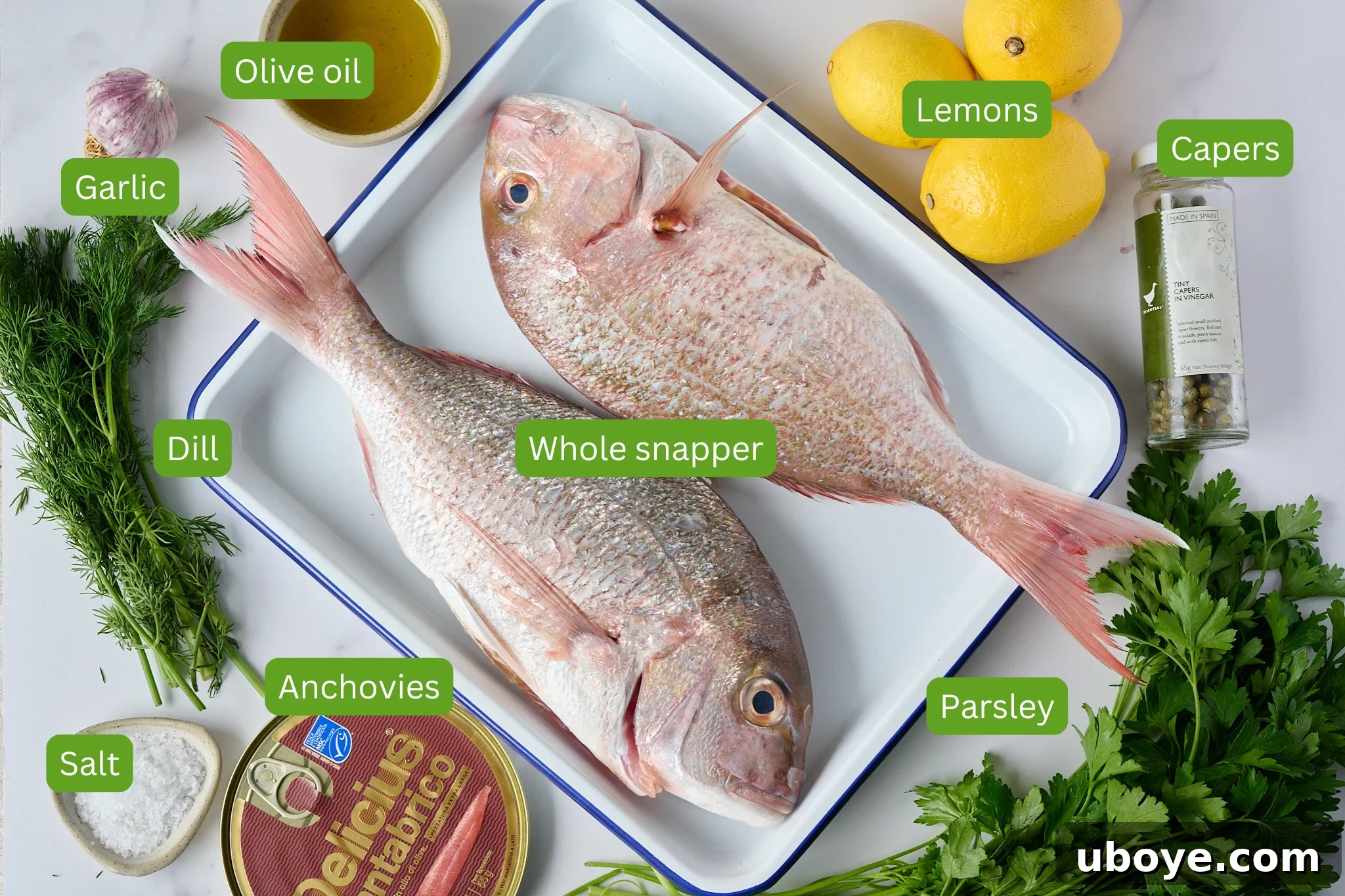
- Whole Snapper: The undisputed star of our dish! When selecting your snapper, prioritizing freshness is paramount. Look for fish with bright, clear, bulging eyes that are not sunken, shiny and firm skin with vibrant color, and a clean, fresh ocean-like aroma – absolutely no strong, unpleasant “fishy” smell. For your convenience, don’t hesitate to ask your fishmonger to **gut, scale, and thoroughly clean the fish** for you. Many reputable fishmongers will also gladly **score the sides** of the fish (make a few shallow diagonal cuts). These scores are beneficial as they help the fish cook more evenly by allowing heat to penetrate deeper, and they also enable the flavors of the seasoning and herbs to infuse more profoundly into the flesh.
- Other Whole Fish Options: This versatile recipe is wonderfully adaptable and not exclusively limited to snapper. It performs beautifully with other whole fish varieties that are similar in size, shape, and delicate texture, such as **barramundi, sea bass, branzino, or bream**. If you choose to substitute, opting for a fish of comparable weight (e.g., around 700g per fish) will ensure the cooking time remains consistent, preventing any potential over or undercooking and maintaining the dish’s integrity.
- Premium Quality Extra Virgin Olive Oil: This ingredient is far more than just a cooking medium; it’s a critical flavor enhancer and a source of healthy fats. Invest in an **extra virgin olive oil** that you genuinely love the taste of, as its nuances will contribute significantly to the final dish. Be unreservedly generous when drizzling it over the fish; it’s crucial for keeping the fish wonderfully moist during the baking process and imparts a luxurious richness and depth to every single bite.
- Fresh Herbs: Aromatic, fresh herbs are indispensable for elevating this dish. While classic choices include a generous mix of **fresh parsley and dill**, feel free to explore and experiment with other vibrant herbs like **basil, oregano, or even a hint of thyme**. Beyond their beautiful fragrance and flavor contribution to the roasted fish, fresh parsley is an essential ingredient, forming the herbaceous base for crafting our bright and lively salsa verde.
- Lemon: An absolutely essential component, utilized both for stuffing into the fish’s cavity and for a final, refreshing squeeze over the finished dish. Its bright, zesty, and acidic notes provide a vital lift, cutting through the richness of the olive oil and enhancing the overall freshness and brightness of the seafood, creating a perfect balance.
- Capers and Anchovies (for Salsa Verde): These two ingredients are the secret weapons behind the salsa verde’s incredibly deep, umami-rich, and utterly irresistible flavor profile. Capers contribute a delightful briny, tangy pop and a burst of texture, while anchovies, though seemingly strong, melt away during preparation to provide a profound savory richness. This combination creates that incredibly delicious, punchy sauce that perfectly complements and enhances the delicate flavor of the baked fish. Don’t worry if you’re not an anchovy fan; they won’t make the sauce taste “fishy” – they simply add a complex layer of savory depth.
- Garlic: A foundational aromatic for both flavoring the fish cavity and forming the pungent base of the salsa verde, adding a warm, indispensable depth to the overall flavor profile.
- Sea Salt: Absolutely crucial for seasoning the fish adequately. A generous hand with high-quality sea salt ensures that the fish’s natural flavors are properly balanced and its inherent sweetness is beautifully highlighted, making every bite truly satisfying.
Step-by-Step Guide: How to Prepare This Whole Baked Snapper to Perfection
You’ll be truly delighted to discover that preparing this whole baked fish is genuinely one of the simplest and most rewarding meals you can create. Despite its impressive appearance, the process is straightforward and yields a perfectly cooked, intensely flavorful snapper every time. Follow these easy steps to achieve culinary success.
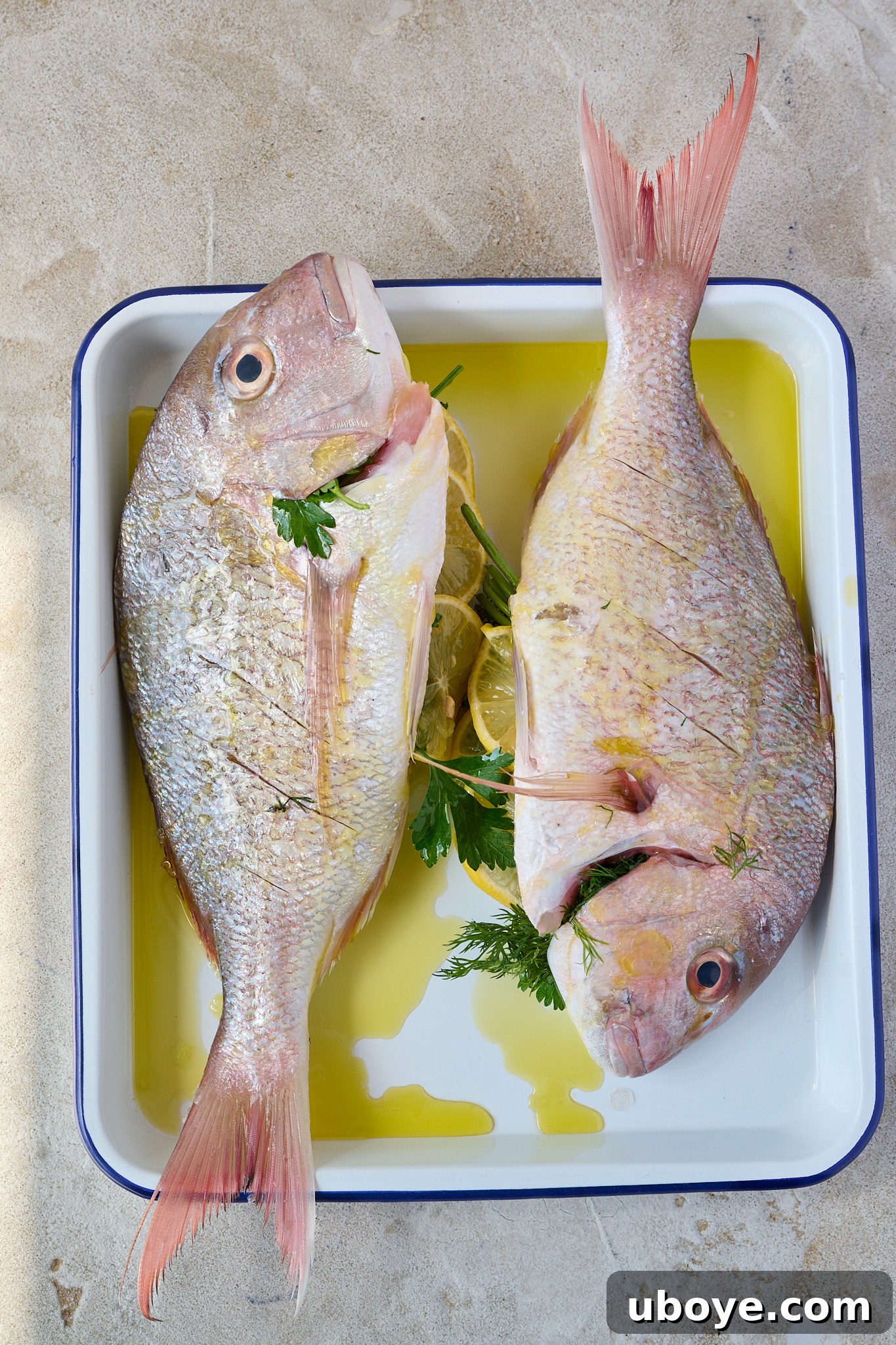
Step 1: Prepare the Snapper. Begin by preheating your oven to a hot 220°C/430°F (or 200°C if you are using a fan-forced oven). Thoroughly pat the whole snapper dry with paper towels to ensure crispy skin. Using a sharp knife, make three shallow, diagonal slashes on each side of the fish, cutting through the flesh down to the bone. These strategic scores aid in more even cooking and allow the seasonings to penetrate deeper into the fish. Lightly sprinkle sea salt inside the fish’s cleaned cavity. Generously stuff the cavity with a handful of fresh parsley and dill, then layer thin lemon slices over the herbs. Season the skin of the fish very generously with salt on both sides, including a little on the head. Finally, drizzle a good amount of extra virgin olive oil all over the fish and gently rub it into the skin and into the slashes to ensure even coating and maximum moisture retention.
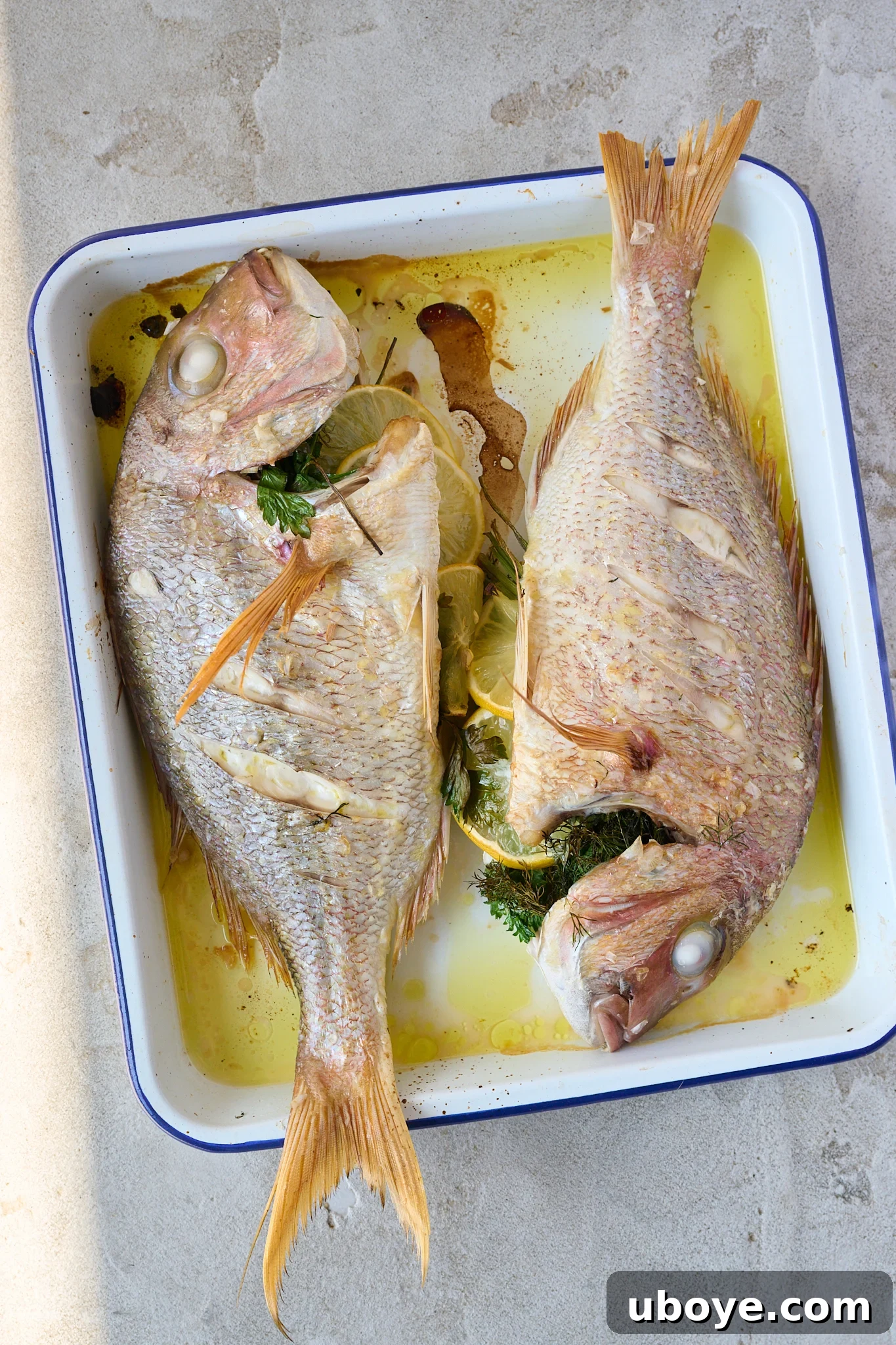
Step 2: Bake to Perfection. Carefully transfer the seasoned fish onto a baking tray. Roast in your preheated oven for approximately 15 minutes. The ideal internal temperature for perfectly cooked fish is 55°C/131°F when measured at the thickest part with an instant-read thermometer. Alternatively, you can test for doneness by inserting a small knife into one of the cut slits in the fish and gently prying a bit of meat away from the spine. If the flesh appears opaque throughout and flakes away from the bone easily without resistance, your fish is perfectly cooked and wonderfully juicy. It is crucial to be careful not to overcook, as this can quickly dry out the delicate flesh.
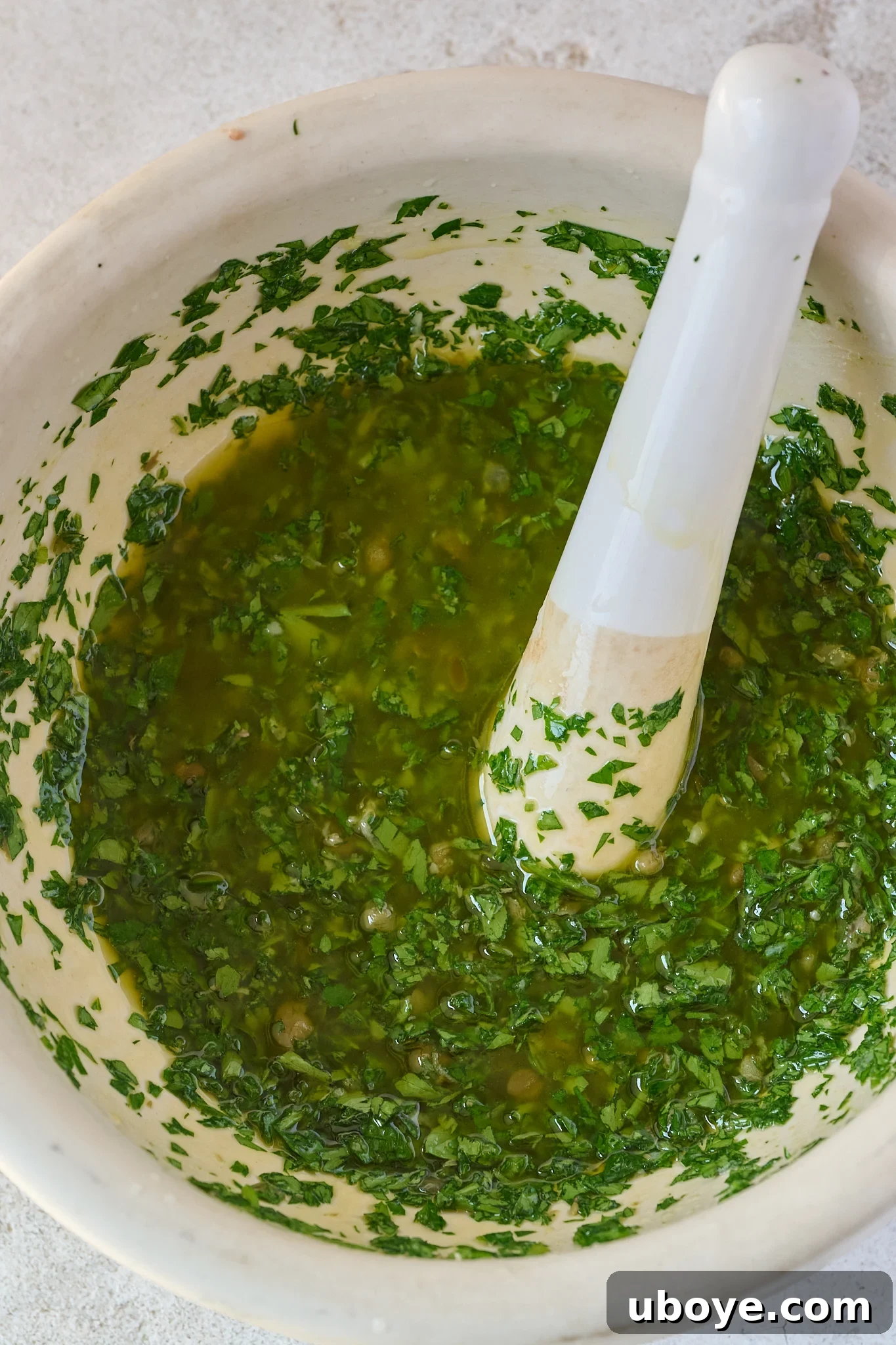
Step 3: Prepare the Vibrant Salsa Verde. While the fish is roasting, prepare the incredibly fresh salsa verde. Combine all the ingredients for the sauce in a mortar and pestle. Begin by adding the peeled garlic cloves and a pinch of sea salt, grinding them together until you achieve a smooth, paste-like consistency. Next, add the anchovy fillets and capers, continuing to pound and grind until they are well broken down and fully integrated into the garlic paste. Finally, incorporate the finely chopped fresh parsley, then gradually stir in the high-quality extra virgin olive oil and fresh lemon juice until all ingredients are beautifully combined into a bright, aromatic, and slightly chunky sauce. Taste the salsa verde and adjust seasoning (salt, pepper, or additional lemon juice) as needed to achieve your desired flavor balance.
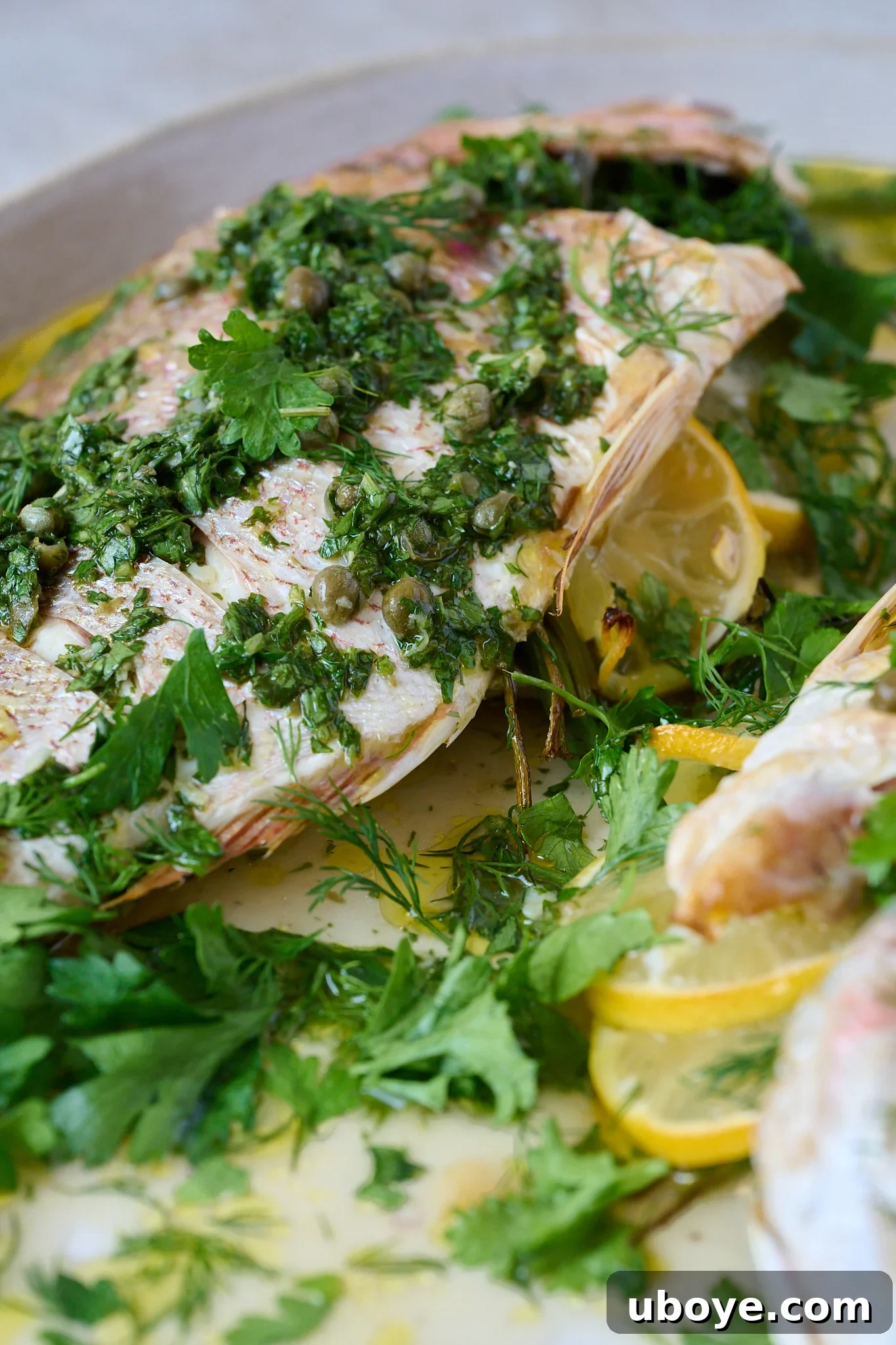
Step 4: Rest and Serve. Once removed from the oven, it is crucial to allow the baked fish to rest for 5 minutes. This simple yet vital step allows the internal juices to redistribute evenly throughout the flesh, ensuring a more tender, moist, and flavorful result. After resting, carefully transfer the fish to a large, elegant serving platter. Drizzle the vibrant homemade salsa verde generously over the entire fish, ensuring every part is coated with its fresh flavors. For an extra burst of brightness, squeeze a little additional fresh lemon juice over the top. Serve immediately and delight in this simple yet sophisticated dish!
Frequently Asked Questions About Baking Whole Fish
Absolutely, you can certainly use fish fillets if that’s what you have on hand or what you prefer to work with. While cooking a whole fish often yields superior flavor and moisture retention, along with a more impressive and rustic presentation, fillets will still result in a delicious and satisfying meal. If opting for fillets, be sure to significantly reduce the cooking time, as they are much thinner and will cook considerably faster than a whole fish. Keep a close eye on them to prevent overcooking, which can lead to dry, tough fish.
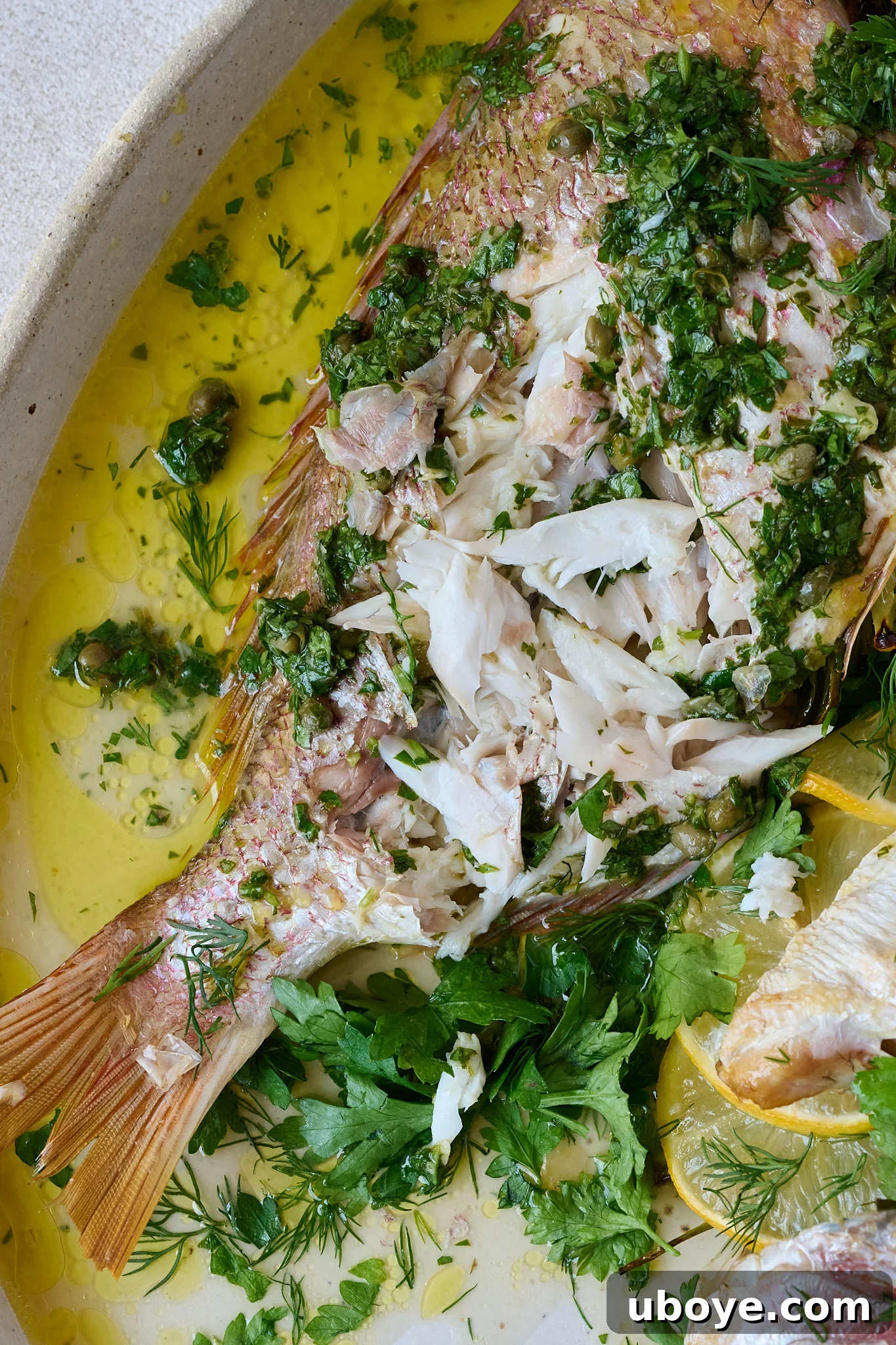
Knowing when your fish is perfectly cooked is key to preventing a dry outcome. The flesh should appear opaque throughout and flake away effortlessly from the bone when tested with a fork or the tip of a small knife. A reliable spot to check for doneness is at the thickest part of the fish, usually near the head or spine. If the flesh separates without resistance and looks pearly white, it’s ready. For utmost precision, you can use an instant-read meat thermometer; aim for an internal temperature of 55°C/131°F for perfectly cooked, moist fish.
There’s no need to remove the bones before serving the whole fish! In fact, the bones contribute valuable flavor during the cooking process and play a significant role in helping to keep the fish moist and tender. Once the fish is cooked through, the delicate flesh will lift away from the bone very easily. You can either gently pull apart individual portions at the table for a rustic, communal dining experience or serve individual sections, allowing everyone to navigate the bones themselves. It’s a very natural and enjoyable process for those accustomed to eating whole fish.
Yes, absolutely! The vibrant salsa verde is a fantastic component to make ahead of time, which can actually enhance its flavor profile. In fact, its flavors often deepen and meld together even more beautifully after a day or two in the fridge. Simply prepare it according to the instructions, transfer it to an airtight container or a sealed jar, and store it in the refrigerator for up to a week. For extra freshness and to prevent oxidation, you can pour a thin layer of extra virgin olive oil over the top before sealing; this acts as a natural barrier and helps preserve its vibrant color and fresh taste.
While a mortar and pestle is the traditional tool and helps create a specific rustic texture for salsa verde, you can certainly use a food processor for convenience and speed. To do so, combine all the salsa verde ingredients (garlic, salt, anchovies, capers, parsley, lemon juice) in the bowl of your food processor. Pulse a few times until the mixture is roughly chopped to your liking. Then, with the motor running on low, slowly drizzle in the extra virgin olive oil until you achieve your desired consistency. Be careful not to over-process, as you want a slightly chunky, vibrant sauce, not an overly smooth purée.
If your fishmonger hasn’t already done so, cleaning and scaling a whole fish at home is a straightforward process. To scale, hold the fish firmly by the tail and use the back of a knife or a specialized fish scaler to scrape against the direction of the scales, working from tail to head. Do this under running water or in a sink to minimize mess. Rinse the fish thoroughly afterwards. For gutting, make a shallow cut along the belly from the anal vent up towards the gills. Carefully remove all internal organs, then rinse the cavity thoroughly under cold running water until clean. Pat the fish completely dry with paper towels before proceeding with seasoning and cooking.
Resting the fish is a simple but absolutely crucial step that is often overlooked. Just like with roasted meats, allowing your baked fish to rest for 5 to 10 minutes after it comes out of the oven allows the muscle fibers to relax and, more importantly, enables the internal juices to redistribute evenly throughout the flesh. This process results in a significantly more tender, moist, and flavorful fish. Skipping this brief resting period can lead to the juices running out immediately when you cut into the fish, leaving the flesh drier and less succulent.
Expert Tips for Mastering Whole Baked Fish
Cooking a whole fish might initially seem daunting, but with these expert tips, you’ll consistently achieve perfectly cooked, incredibly flavorful, and beautifully presented results every time. These techniques are designed to ensure your fish remains wonderfully moist, tender, and utterly delicious.
- Pat It Really Dry: This step is absolutely non-negotiable for achieving wonderfully crispy skin on your baked fish. Before you apply any seasoning or oil, use paper towels to thoroughly pat down the entire surface of the fish, both inside the cavity and all over the exterior. Any excess moisture on the skin will cause the fish to steam rather than roast, preventing it from crisping up beautifully.
- Season Generously: Whole fish requires more seasoning than you might initially anticipate, primarily due to its thickness and the presence of bones. Do not be shy with the salt; liberally season both the inside cavity and the entire exterior skin. A well-seasoned fish is fundamental to a deeply flavorful final dish, ensuring every bite is perfectly balanced.
- Don’t Be Shy with Olive Oil: High-quality extra virgin olive oil is your best friend when baking whole fish. Drizzle and rub a truly generous amount all over the fish, ensuring it thoroughly coats the skin and penetrates into the slashes and inside the cavity. This abundant oil not only adds a wonderful richness and depth of flavor but is also crucial for keeping the fish incredibly moist throughout the baking process and preventing it from sticking to the baking tray.
- Score the Skin: Making a few shallow slashes (typically 3-4 on each side) into the thickest parts of the fish skin is a clever and effective technique. These strategic cuts help the fish cook more evenly by allowing heat to penetrate deeper into the flesh. Additionally, they create perfect pockets for the olive oil and seasonings to seep in, thoroughly infusing the entire fish with more flavor.
- Stuff the Cavity: Never leave the fish’s belly empty! Filling the cavity with aromatic elements like fresh lemon slices and an abundance of fresh herbs (such as parsley, dill, thyme, or basil) makes a significant difference to the overall flavor profile. As the fish bakes, these aromatics release their essential oils and vibrant flavors, permeating the flesh from the inside out, adding complexity and freshness.
- Use a Hot Oven: A high oven temperature, typically around 220°C (430°F), is absolutely ideal for roasting whole fish. The intense, dry heat helps the skin crisp up relatively quickly, creating a delicious texture, while simultaneously locking in moisture and preventing the delicate flesh from drying out. This fast cooking method contributes significantly to a tender, flaky interior.
- Don’t Overcook It: This is arguably the most critical tip for any fish preparation. Fish cooks quickly, and overcooked fish can become disappointingly dry, tough, and less flavorful. Begin checking for doneness a few minutes before the estimated cooking time. The flesh should be opaque throughout and easily flake with a fork, but still wonderfully juicy. When in doubt, it is always better to slightly undercook and check again rather than risk overcooking.
- Rest the Fish: Just like with perfectly roasted meats, allowing your whole fish to rest for 5-10 minutes after removing it from the oven is an essential step for success. This crucial resting period permits the internal juices to redistribute evenly throughout the flesh, ensuring a consistently more tender, succulent, and evenly moist result.
Perfect Pairings: What to Serve with Whole Baked Snapper and Salsa Verde
While this whole baked snapper with vibrant salsa verde is a magnificent and complete dish on its own, it truly shines when accompanied by thoughtfully chosen side dishes. These pairings expertly complement its fresh flavors and add texture, balance, and substance to your meal, creating a truly complete and satisfying dining experience for any occasion.
- Crispy Smashed Potatoes: These golden, garlicky, and incredibly crispy potatoes offer an irresistible textural contrast to the tender, flaky fish. Their gloriously crispy edges are perfect for soaking up every last drop of the flavorful olive oil and the bright, zesty salsa verde.
- Simple Green Salad: A light, refreshing, and crisp green salad, perhaps dressed with a sharp, tangy vinaigrette, provides a wonderful and essential counterpoint to the richness of the fish and the olive oil. Think fresh mixed greens, cool cucumber, and a simple lemon-herb dressing for a perfect balance.
- Mediterranean Tomato Salad: A vibrant and simple salad featuring juicy, perfectly ripe tomatoes, a generous drizzle of high-quality extra virgin olive oil, a sprinkle of flaky sea salt, and fragrant fresh basil is a quintessential Mediterranean pairing that perfectly complements any seafood dish.
- Steamed or Grilled Greens: Simple steamed asparagus, fresh green beans, or tender broccoli florets, perhaps finished with a delicate squeeze of lemon or prepared as my irresistible garlicky green beans, offer a healthy, colorful, and deliciously fresh addition that balances the meal beautifully.
- Crusty Bread or Focaccia: Absolutely essential for a truly authentic Mediterranean experience! A warm, crusty loaf of artisanal bread or a slice of homemade no-knead focaccia is utterly perfect for mopping up all the delectable juices from the fish and the savory, herbaceous salsa verde from your platter.
- Make It a Seafood Spread: For a truly decadent and memorable Mediterranean-style feast, consider expanding your menu by adding other delightful seafood dishes. Complement the snapper with my succulent grilled prawns with tomato butter, classic Spanish garlic prawns, or a hearty and flavorful prawn and saffron spaghetti for an unforgettable culinary experience that will impress every guest.
- White Wine Pairing: For a truly complete and sophisticated dining experience, pair this exquisite dish with a crisp, dry white wine. A chilled Sauvignon Blanc, a bright Pinot Grigio, or a zesty Albariño would beautifully complement and enhance the fresh flavors of the fish and the vibrant salsa verde, creating a harmonious symphony of tastes.
Storage and Reheating Tips for Whole Baked Snapper and Salsa Verde
Proper storage and thoughtful reheating are key to ensuring you can enjoy your delicious whole baked snapper and vibrant salsa verde for days to come without compromising their quality or flavor. Here’s how to handle any leftovers to maintain their delightful taste and texture.
- Fridge Storage: Any leftover baked snapper should be stored promptly in an airtight container in the refrigerator within two hours of cooking. It will remain fresh and safe to eat for up to 2 days. For the best possible results and to preserve the individual flavors, if possible, store the salsa verde in a separate, sealed container.
- Gentle Reheating: To gently reheat the fish without risking drying it out, I highly recommend using a low oven (around 150°C/300°F) or warming it gently in a pan with a small drizzle of extra virgin olive oil over low heat. Cover the fish loosely with foil to help retain its moisture and prevent the edges from becoming crisp or dry. Avoid using the microwave if possible, as it tends to heat fish unevenly and can easily dehydrate its delicate texture, making it less palatable.
- Serve Cold: Don’t underestimate the versatility and deliciousness of cold leftover snapper! Flaked meat from the baked fish is absolutely delightful served cold. It makes a fantastic addition to fresh salads, tucked into sandwiches, or wrapped in soft tortillas with a generous spoonful of fresh salsa verde. It transforms into a wonderful, light, and healthy lunch option.
- Salsa Verde Storage: Your homemade salsa verde is quite robust and keeps well. Store it in a sealed jar or an airtight container in the refrigerator, and it will retain its beautiful flavors and freshness for up to 1 week. To extend its vibrant color and freshness, you can pour a thin layer of extra virgin olive oil over the top of the sauce before sealing the jar; this acts as a natural barrier against air.
- Freezing: Freezing cooked whole fish is generally not recommended. The delicate texture of the fish can become noticeably dry, fibrous, and less appealing once thawed, significantly diminishing the overall quality and enjoyment of the dish. It is best enjoyed fresh or as refrigerated leftovers.
Explore More Delicious Seafood Recipes!
Seafood
Grilled Shrimp Skewers with Tomato Butter (BBQ Prawns)
Seafood
Scallop Pasta with Cherry Tomatoes
Seafood
Shrimp (Prawn) & Saffron Spaghetti
Seafood
Spanish Garlic Shrimp (Prawns) – Gambas al Ajillo
If you create this incredible **Whole Baked Snapper with Salsa Verde** recipe, I would absolutely love to see your culinary masterpieces! Please share your photos and tag me on Instagram, TikTok, or Pinterest so I can admire your wonderful creations from Daen’s Kitchen!
Should you have any questions about the recipe or wish to leave a review, please feel free to do so below! Your feedback is incredibly valuable, and I always enjoy answering your food and recipe-related inquiries and hearing about your experiences with my dishes.
Save
Saved
Pin
Whole Baked Fish – Snapper with Salsa Verde
5 minutes
15 minutes
4
Ingredients
For the Whole Baked Snapper
- 2 whole snapper, scaled, gutted and cleaned (approx. 700g / 1.5 lbs each)
- 1 medium lemon, thinly sliced
- 1/2 cup fresh parsley, roughly chopped, for cavity
- 1/2 cup fresh dill, roughly chopped, for cavity
- 4 tbsp extra virgin olive oil, plus more for serving
- Generous pinch flaky sea salt and freshly ground black pepper
For the Vibrant Salsa Verde
- 2 garlic cloves, peeled
- 1/2 tsp sea salt
- 3 anchovy fillets, packed in oil, drained
- 1 tbsp capers, drained and lightly chopped
- 3/4 cup fresh parsley, finely chopped
- 1 cup extra virgin olive oil
- 1/4 cup fresh lemon juice
Instructions
Whole Baked Snapper Preparation
-
Preheat oven: Preheat your oven to a hot 220°C/430°F (or 200°C for fan-forced ovens).
-
Prepare fish: Pat the whole snapper very dry with paper towels. Using a sharp knife, cut 3 shallow diagonal slashes on each side of the fish, cutting through the flesh down to the bone. This aids in even cooking and better flavor absorption.
-
Stuff and season cavity: Sprinkle a generous amount of salt inside the fish’s cavity. Stuff the cavity with a mixture of fresh parsley and dill, then layer lemon slices on top of the herbs.
-
Oil and season exterior: Sprinkle a very generous amount of salt (and a touch of freshly ground black pepper) on the skin of the fish, covering both sides and a little on the head. Drizzle liberally with extra virgin olive oil and gently rub it all over the fish, ensuring it gets into the slashes.
-
Bake: Carefully place the prepared fish onto a baking tray. Bake for approximately 15 minutes, or until the internal temperature reaches 55°C/131°F when measured at the thickest part. Alternatively, test for doneness: insert a small knife into one of the slits; if the meat flakes away from the bone without resistance, it is perfectly cooked through.
-
Rest the fish: Remove the fish from the oven and let it rest on the baking tray for 5 minutes. This crucial step allows the juices to redistribute, resulting in a more tender and moist fish.
-
Serve: Carefully transfer the rested fish to a large serving platter. Drizzle generously with the prepared salsa verde. Add an extra squeeze of fresh lemon juice if desired, and serve immediately.
Salsa Verde Preparation
-
Create garlic paste: Place the peeled garlic cloves and sea salt into a mortar and pestle. Grind them together until a smooth, paste-like consistency is achieved.
-
Add anchovies & capers: Add the anchovy fillets to the garlic paste and continue to grind until they are completely incorporated and broken down. Then, add the capers and pound them lightly until they are slightly bruised and broken, releasing their briny flavor. Incorporate the finely chopped parsley and mix it through the mixture.
-
Combine with oil & lemon: Pour the extra virgin olive oil and fresh lemon juice into the mortar and pestle. Gently mix all the ingredients together until well combined and emulsified into a vibrant green sauce. Taste the salsa verde and adjust seasoning (salt, pepper, lemon) to your personal preference.
Notes for Success
- Selecting Whole Snapper: For the best results, always prioritize freshness. Look for a whole fish with bright, clear, bulging eyes, firm and shiny skin, and a clean, fresh “of the ocean” smell – avoid any fish with a strong, unpleasant “fishy” odor. Don’t hesitate to ask your fishmonger to gut, scale, and clean the fish thoroughly. Requesting them to score the sides of the fish (make shallow cuts) will also help it cook more evenly and allow the seasonings and herbs to infuse better.
- Alternative Fish Options: This versatile recipe works beautifully with other whole fish varieties that are similar in size and texture. Excellent choices include **barramundi, sea bass, branzino, or bream**. If substituting, ensure you choose a fish of a comparable weight to the snapper (around 700g per fish) to keep the cooking time roughly consistent.
- Precise Cooking Time for Whole Fish: The 15-minute cooking time is an excellent guideline for individual fish weighing approximately 700g (about 1.5 lbs) each. Keep in mind that larger fish will naturally require a longer cooking duration. The exact cooking time can also vary slightly depending on the thickness and shape of the fish, as well as your oven’s calibration. It’s not an exact science, so it’s always best to start checking for doneness around the 12-minute mark and then every few minutes thereafter to prevent overcooking. Use the internal temperature or flaking test described in the instructions for accuracy.
- Salsa Verde Consistency: For a more rustic salsa verde, chop the herbs by hand. For a smoother, yet still flavorful sauce, a food processor can be used, but be careful not to over-process to avoid a watery consistency.
- Seasoning the Cavity: Don’t forget to season the inside cavity of the fish with salt before stuffing it with herbs and lemon. This adds another layer of flavor directly to the flesh.
Nutrition Information (Approximate)
Carbohydrates: 3g
Protein: 2g
Fat: 69g
Saturated Fat: 10g
Polyunsaturated Fat: 7g
Monounsaturated Fat: 50g
Cholesterol: 2mg
Sodium: 369mg
Potassium: 187mg
Fiber: 1g
Sugar: 1g
Vitamin A: 2068IU
Vitamin C: 37mg
Calcium: 49mg
Iron: 2mg
Note: Nutrition information is automatically calculated and should only be used as an approximation. Actual values may vary based on specific ingredients and preparation methods.
 Enjoyed this recipe? Leave a comment below!