
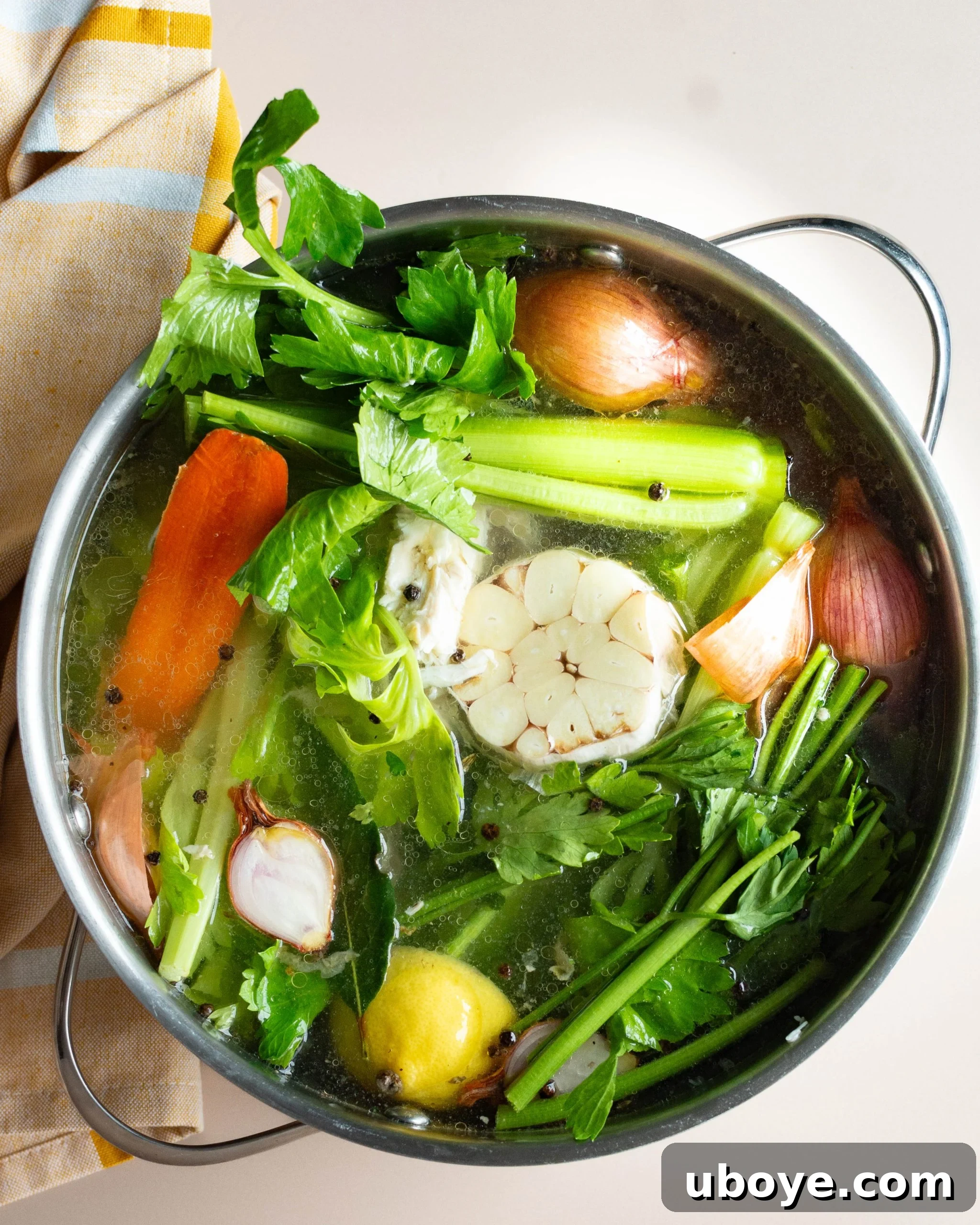
There’s an undeniable magic that happens when a pot of homemade chicken stock simmers gently on the stove. This isn’t just a basic cooking ingredient; it’s a culinary cornerstone, a source of profound comfort, and an incredibly healthy addition to any diet. This guide is dedicated to crafting a chicken stock so rich, so flavorful, and so versatile, it will become your undisputed “master stock” – a fundamental staple for chilly winter days and vibrant year-round cooking.
Jump to Recipe
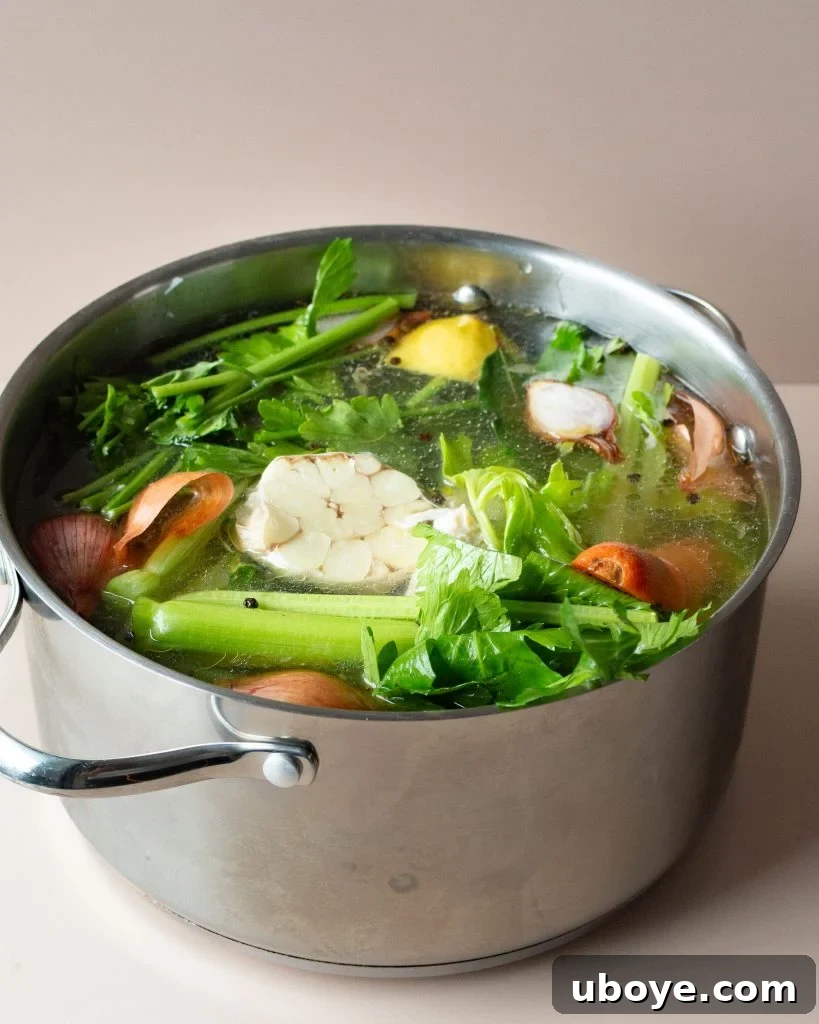
The Remarkable Health Benefits of Homemade Stock (Bone Broth)
The health world is abuzz with conversations about the incredible benefits of bone broth, and homemade chicken stock, when prepared properly, aligns perfectly with this ancient superfood. Beyond its delightful warmth, especially comforting in winter, homemade stock is a powerhouse of nutrition:
- Nourishes Gut Health: Rich in gelatin, collagen, and amino acids like glutamine and glycine, chicken stock plays a crucial role in supporting and potentially healing the gut lining. This can aid digestion, reduce inflammation, and contribute to a healthier gut microbiome. A strong gut is often linked to a robust immune system.
- Boosts Skin Radiance and Joint Support: The abundance of natural collagen extracted from bones is a boon for your skin, promoting elasticity, hydration, and a youthful glow. Furthermore, compounds like glucosamine and chondroitin, naturally present, are vital for maintaining healthy cartilage, reducing joint pain, and supporting overall joint flexibility.
- Supports the Immune System: Often hailed as a traditional remedy for colds and flu, chicken stock is packed with minerals and amino acids that help fortify your body’s natural defenses, making it an excellent choice for immune system support.
- Rich in Minerals: During the long simmering process, essential minerals such as calcium, magnesium, phosphorus, and potassium are leached from the chicken bones into the broth, creating a mineral-rich liquid that contributes to overall well-being.
- Hydration and Electrolytes: A warm cup of stock provides beneficial hydration along with electrolytes, which can be particularly useful during illness or after intense physical activity.
Embracing homemade chicken stock is more than just cooking; it’s a return to an ancient, wholesome way of nourishing your body with delicious, health-promoting food. It’s not just a comforting meal base; it’s a vital component of a holistic approach to health, seamlessly integrating tradition with modern wellness principles.
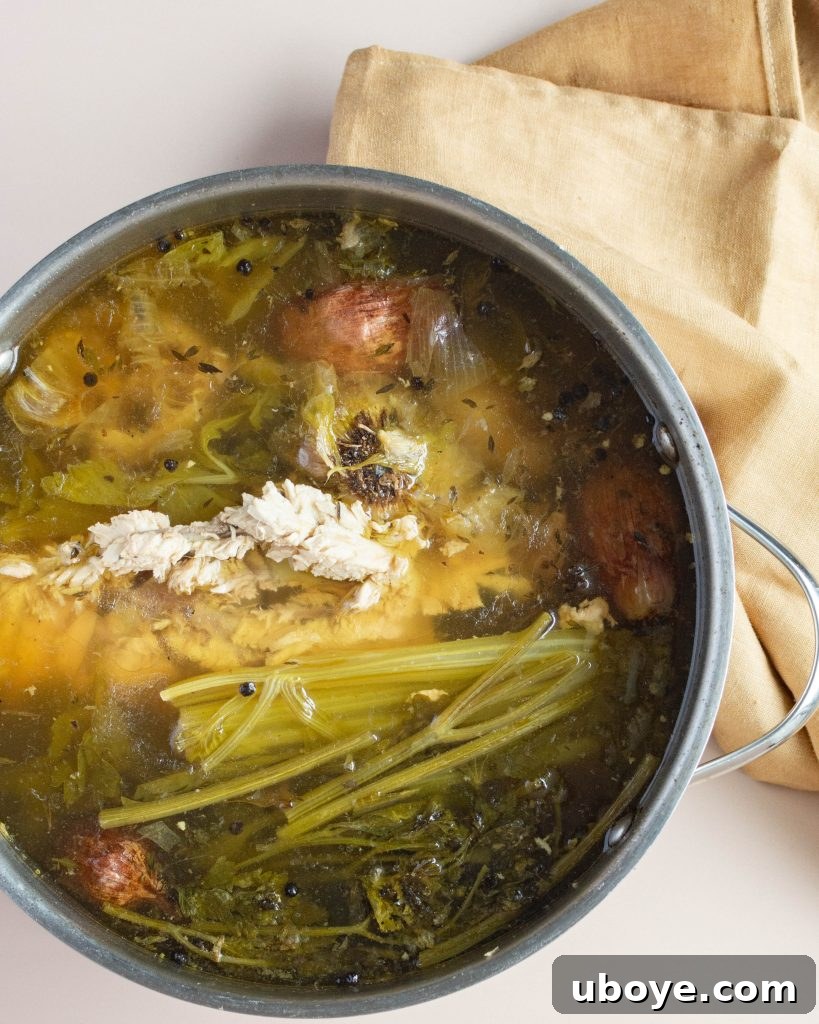
Defining Your “Master Stock”
There’s something uniquely evocative about chicken stock that instantly whispers “winter” and “home.” It’s the inviting aromas permeating every corner of your house, the comforting warmth of a big mug or a steaming bowl, and the promise of nourishment within. Crafting a truly exceptional stock does take time – patiently coaxing out all the nuances of flavor and beneficial nutrients from the chicken carcass and aromatics. Yet, this dedication, this labor of love, is repaid in spades. The reward is a liquid gold that forms the foundation for culinary masterpieces: incredible chicken soups, a rich base for cooking delicate dumplings, or simply a deeply satisfying cup to be savored on its own.
The concept of a foundational, superior stock isn’t unique to one culture. Many culinary traditions across the globe boast their own variations of stock or broth, each perfected over centuries. From the restorative broths cherished in Jewish cuisine to the foundational clear stocks of French gastronomy, and the revered master stocks central to Chinese cooking – a single, continuously replenished stock that serves as the flavor base for countless dishes – the principle is universal. This particular chicken stock recipe is designed to be just that for your kitchen: my personal “master stock.” It’s a recipe honed to deliver maximum flavor, versatility, and health benefits, ensuring it becomes an indispensable part of your culinary repertoire.
Mastering the Art of Chicken Stock: Essential Tips for Perfection
Creating the ultimate homemade chicken stock involves more than just simmering bones in water. By paying attention to a few key techniques and ingredient choices, you can elevate your broth from good to truly exceptional. Here’s how to achieve the best possible results for your master chicken stock:
- The Foundation: Roast Your Chicken First
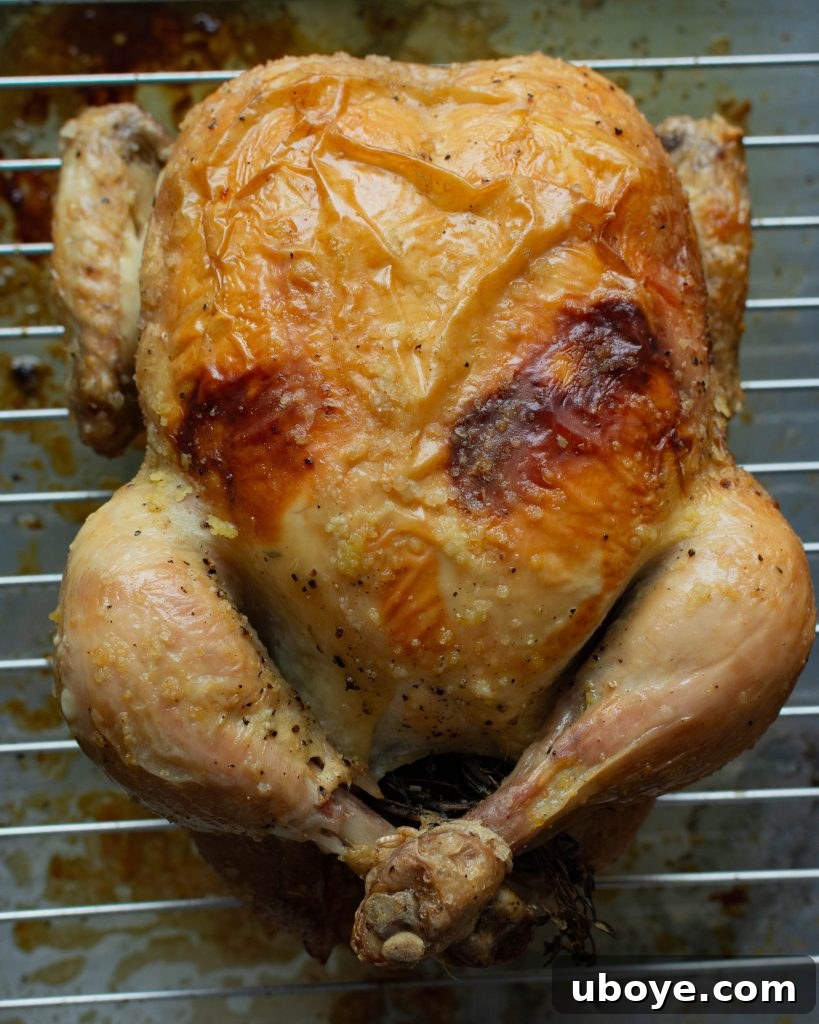
This is perhaps the most critical step for developing profound flavor. By opting to roast a whole chicken beforehand, you achieve a fantastic culinary synergy. Not only do you get to enjoy tender, succulent roasted chicken meat for another delicious meal – perfect for chicken sandwiches, tacos, or a fresh chicken salad – but the carcass and drippings that remain become the perfect base for your stock. The caramelization from roasting the bones and the rich chicken jus rendered in the pan infuse the stock with an incomparable depth of savory flavor and a beautiful golden hue. Make sure to scrape every last bit of goodness from that roasting tin! - Boost Flavor and Body: Incorporate Extra Chicken Parts
For an even richer, more gelatinous, and nutritionally dense stock – akin to a traditional bone broth – don’t hesitate to add extra chicken wings or frames to your stockpot. These parts are particularly high in collagen and fat, which contribute significantly to the mouthfeel and body of your stock. The gelatin will give your cooled stock a jelly-like consistency, a sure sign of its quality and health benefits for your gut and joints. - Aromatic Essentials: The Heart of the Flavor Profile
Beyond the chicken, the aromatics are what truly build the stock’s character. Classic additions like bay leaves and whole black peppercorns are crucial. Fresh herbs, especially thyme, add a bright, earthy note. Feel free to experiment with other additions like a sprig of rosemary, parsley stems (often discarded but packed with flavor), or even a star anise for a subtle, exotic twist, depending on how you plan to use your finished stock. - Fresh or Frugal: The Role of Vegetables
A traditional mirepoix – carrots, celery, and onions – provides essential sweetness and freshness to balance the rich chicken flavor. While using fresh, crisp vegetables is always ideal, stock-making is also a wonderful opportunity for culinary frugality. Don’t be afraid to toss in those vegetables that are slightly past their prime, perhaps a bit soft or bruised, from your vegetable crisper. Their flavors will still contribute beautifully to the broth, and you’ll be minimizing food waste.
- The Secret to Deep Color and Extra Flavor: Onion Skins
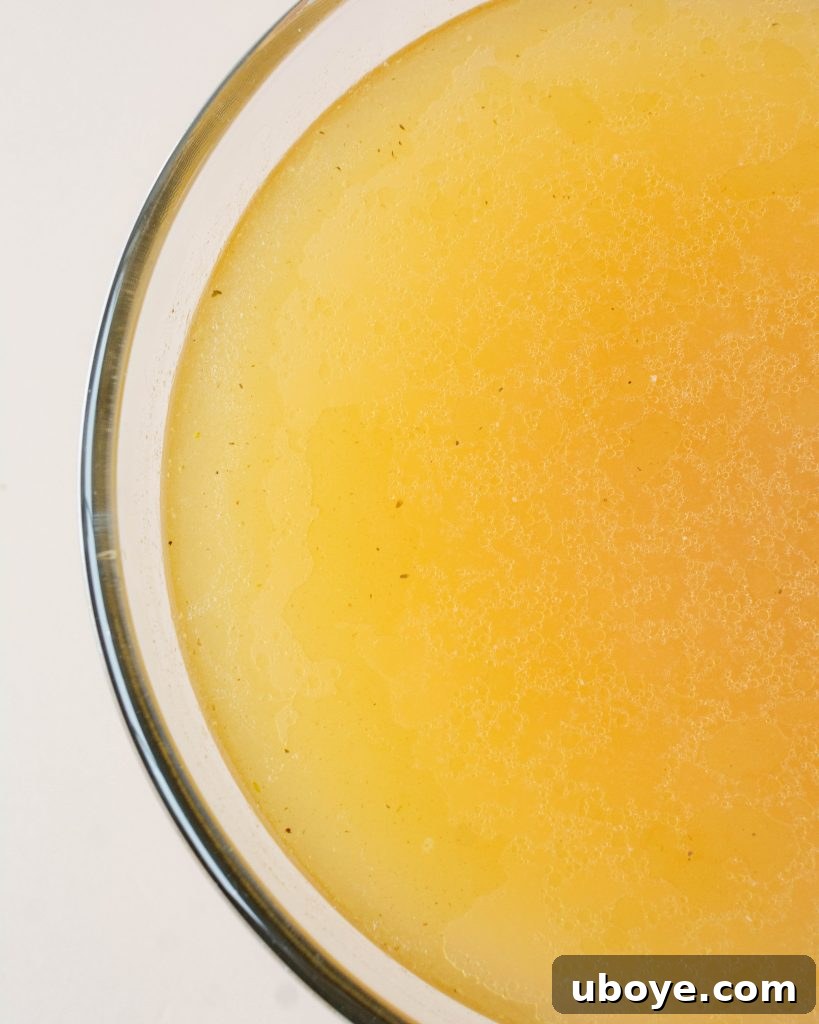
This might seem a little unconventional, but trust me on this one: leave the skins on your onions! Thoroughly washed onion skins contribute an additional layer of subtle, savory flavor and, most noticeably, impart a beautiful, deep golden-amber hue to your finished stock. It’s a simple trick that makes a significant visual and flavor impact. - Equipment Matters: Invest in a Large Stock Pot
To yield a generous quantity of stock that makes your efforts worthwhile and lasts for multiple culinary creations, a large stock pot is indispensable. My personal preference is a 10-liter capacity pot, which allows enough space for all the ingredients and sufficient water to cover them, ensuring a robust and flavorful extraction. - Patience is Key: The Art of the Long Simmer
True magic happens during a slow, sustained simmer. A minimum of 4 hours is essential to extract all the valuable nutrients, collagen, and deep, nuanced flavors from the bones and vegetables. Resist the temptation to boil the stock vigorously, as high heat can emulsify fats, leading to a cloudy broth and sometimes a greasy taste. A gentle, rolling simmer is what you’re aiming for. Remember to skim off any foam or impurities that rise to the surface, especially during the first hour, for a cleaner, clearer stock. - Smart Storage: Preserve Your Liquid Gold
You’ll undoubtedly have ample leftover stock, which is perfect for future meals. Proper storage is crucial for preserving its quality. Allow the stock to cool completely before transferring it to clean, sterilized glass jars or freezer-safe containers. It will keep wonderfully in the refrigerator for up to 5 days or can be frozen for up to 6 months. To make future meal prep easier, I like to divide my stock into convenient 1-liter (or 1-quart) portions. You can even freeze smaller amounts in ice cube trays for quick flavor boosts in sauces or gravies.
Transform Your Cooking: Versatile Uses for Your Homemade Chicken Stock
With a batch of your magnificent homemade chicken stock at the ready, your culinary possibilities will expand exponentially. Its rich, savory depth can elevate nearly any dish, making everyday meals extraordinary. Here are just a few ways to utilize your master stock and bring gourmet flavor to your kitchen:
- Unforgettable Soups and Stews: The most classic and rewarding use. Whether you’re crafting a comforting chicken noodle soup, a creamy potato and leek soup, a simple nourishing pastina, or a hearty winter stew, homemade stock forms an unparalleled flavor base that far surpasses store-bought alternatives.
- Perfect Risottos and Grains: Achieve perfectly creamy and flavorful risottos, like an elegant leek risotto, by using hot chicken stock instead of plain water. It also infuses incredible depth into everyday grains such as rice, quinoa, couscous, or even farro.
- Rich Sauces and Gravies: Elevate your pan sauces and gravies by substituting water or inferior broths with your homemade stock. It’s ideal for deglazing pans after searing meats or vegetables, capturing all those flavorful browned bits.
- Braising and Poaching Liquid: Use chicken stock as the primary liquid for braising tough cuts of meat or poultry, infusing them with tenderness and profound flavor. It’s also excellent for gently poaching chicken breasts or fish, keeping them moist and savory.
- Enhance One-Pan Meals: A splash of stock can significantly enhance the flavor and moisture in one-pan dishes, such as one-pan chicken and rice, contributing to a more cohesive and delicious result.
- Reheating and Revitalizing Leftovers: A small amount of chicken stock can work wonders to moisten and revitalize leftover dishes, preventing them from drying out and adding a fresh burst of flavor.
- Healthy Sautéing: Use a spoonful of stock instead of oil to sauté vegetables for a lighter, yet still flavorful, cooking method.
Recipe: My Master Homemade Chicken Stock
Armed with these insights, you’re now ready to embark on your own journey to create this indispensable kitchen staple. Let’s get cooking and transform simple ingredients into liquid gold!
Pin
Print Recipe
Master Homemade Chicken Stock
This savory, nutrient-dense chicken stock is a foundational recipe for any home cook. Perfect for enhancing flavor, boosting health, and comforting the soul.
Ingredients
- 1.5 kg whole chicken (approx. 3.3 lbs)
- 1 kg chicken wings or chicken frames (optional, approx. 2.2 lbs, for extra richness)
- 2 garlic bulbs
- 1/2 lemon
- Several sprigs of fresh thyme
- 50 g unsalted butter (approx. 1.07 oz)
- 3 tbsp olive oil
- 2 large carrots, roughly chopped
- 2 celery stalks, roughly chopped
- 2 large onions, halved (with skins on for color and flavor)
- 1/2 tbsp fine sea salt
- 1 bunch fresh parsley (stems and leaves)
- 1/2 tbsp black peppercorns
- 4 bay leaves
- 4 L cold water (approx. 4 quarts)
Instructions
- Prepare the Chicken for Roasting: Pat the whole chicken skin thoroughly dry with paper towels and generously season with sea salt flakes all over, including inside the cavity. For extra juicy results, if time permits, place the seasoned chicken uncovered in the fridge overnight to dry brine. Remove the chicken from the fridge 30-60 minutes before roasting to allow it to come to room temperature.
- Preheat Oven: Preheat your oven to 180°C (355°F).
- Flavor Infusion: Carefully separate the skin from the chicken breast using your fingers and evenly stuff with the butter. Season the chicken generously with additional salt and pepper. Place the chicken onto a wire roasting rack set over a roasting tin. Drizzle olive oil all over the chicken and massage it well into the skin with your hands.
- Aromatics for Roasting: Slice about 2-3 cm off the top of the garlic bulbs to expose the cloves, then place them along with the lemon half and thyme sprigs into the cavity of the chicken. Tie the chicken legs together with kitchen string to ensure even cooking.
- Roast and Rest: Bake the chicken for 1 hour and 20 minutes, or until thoroughly cooked through and golden brown. The internal temperature should reach 74°C (165°F). Allow the roasted chicken to rest for 5-10 minutes. Carve the meat off the carcass for another meal, then reserve the entire chicken carcass and all the flavorful juices and browned bits from the roasting tin for your stock.
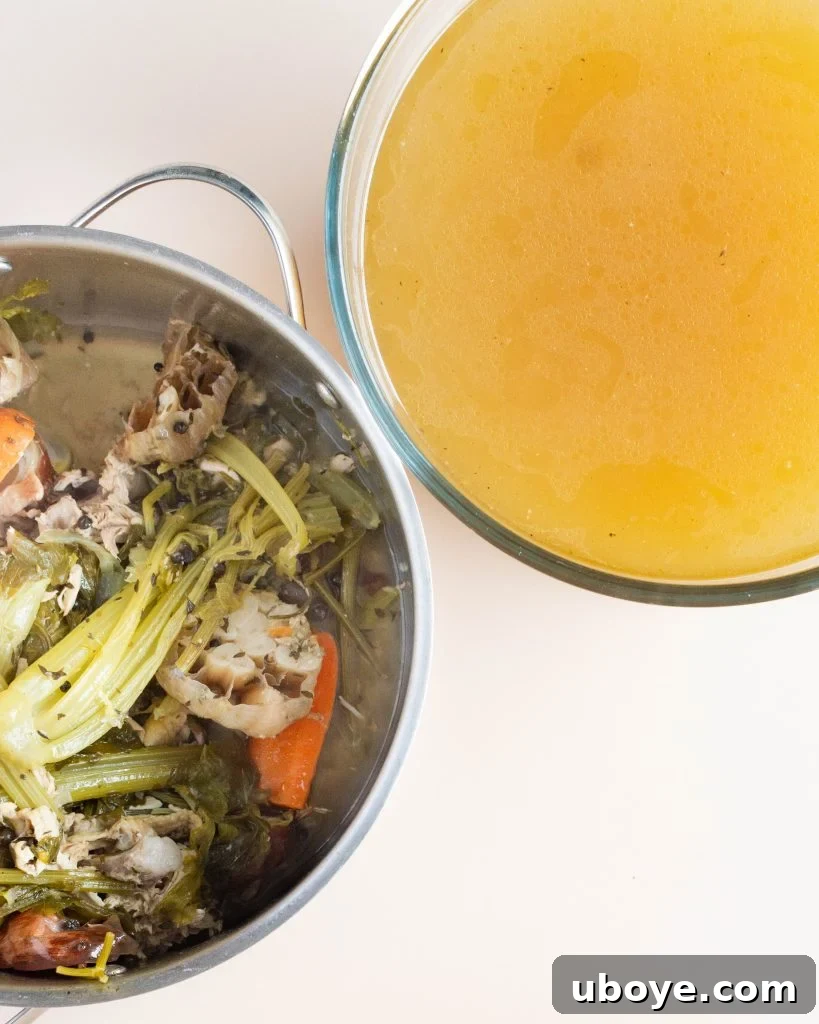
- Simmer the Stock: In a very large stock pot (at least 10L capacity is recommended), combine the reserved chicken jus (roasting juices), the chicken carcass (and optional chicken wings/frames), roughly chopped carrots, celery, halved onions (with skins), parsley bunch, black peppercorns, and sea salt. Add the 4 liters of cold water, ensuring all ingredients are fully submerged. Bring the pot to a boil, then immediately reduce the heat to a very gentle simmer. Partially cover the pot with a lid and simmer for a minimum of 4 hours. Skim off any foam or impurities that rise to the surface during the first hour of simmering for a clearer stock.
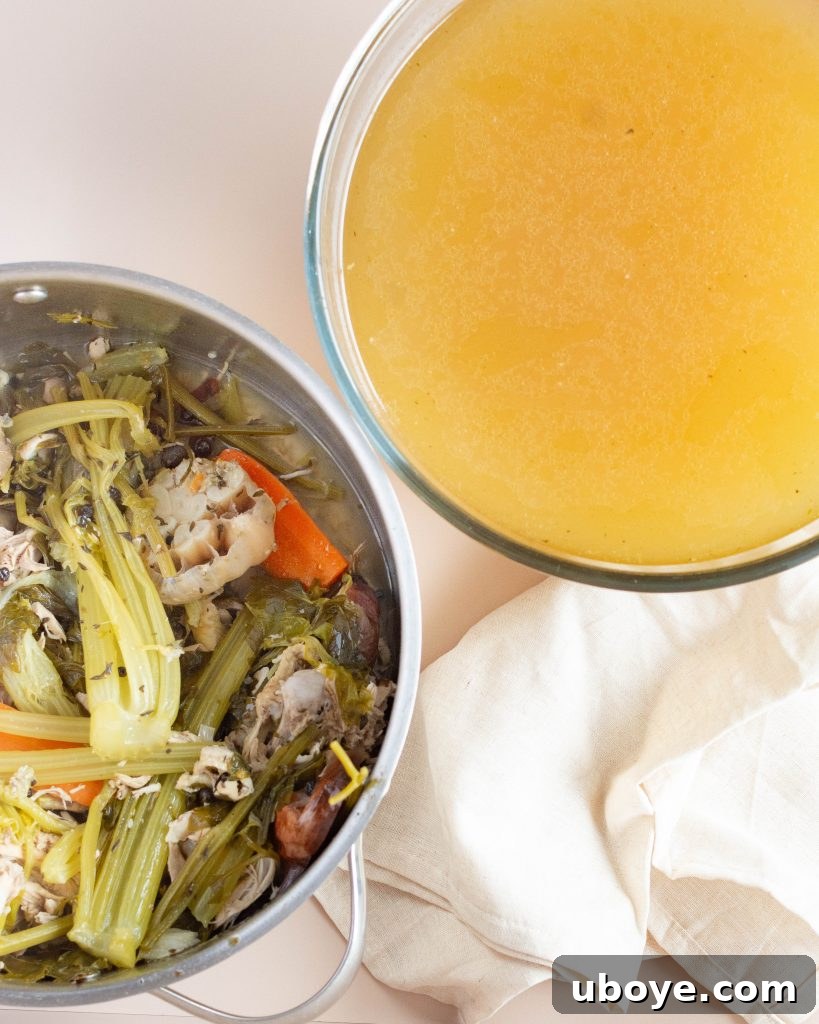
- Strain for Clarity: Once simmered, carefully strain the stock. Line a fine mesh strainer with a cheesecloth or a clean, thin kitchen towel (like a Chux cloth) and place it over a large, clean pot or heatproof bowl. Pour the stock through the lined strainer. For an even clearer stock, repeat this straining step once or twice, avoiding aggressive squeezing of the solids, which can release cloudy particles.
- Cool and Store: Allow the finished stock to cool completely to room temperature before transferring it to sterilized glass jars or freezer-safe containers. Store the chicken stock in the refrigerator for up to 5 days, or freeze it for up to 6 months. Dividing it into 1-liter portions before freezing is highly recommended for convenient future use.
 Enjoyed this recipe? Leave a comment below!
I genuinely hope this comprehensive guide inspires you to embrace the art of making your own nourishing master chicken stock. It’s a culinary endeavor that promises incredible flavor, profound health benefits, and a true sense of accomplishment in your kitchen.
If you make this essential recipe, I would absolutely love to see your wonderful creations! Please share your photos and tag me on Instagram, TikTok, or Pinterest, showcasing what you’ve cooked up from Daen’s Kitchen!
If you have any questions about the recipe or would like to leave a review, please feel free to do so in the comments section below. I always enjoy engaging with your food and recipe-related inquiries and appreciate your valuable feedback on my creations.