
Jump to Recipe
Print Recipe
Jump to Video
Pesto Eggs: Elevate Your Breakfast Experience with a Gourmet Twist
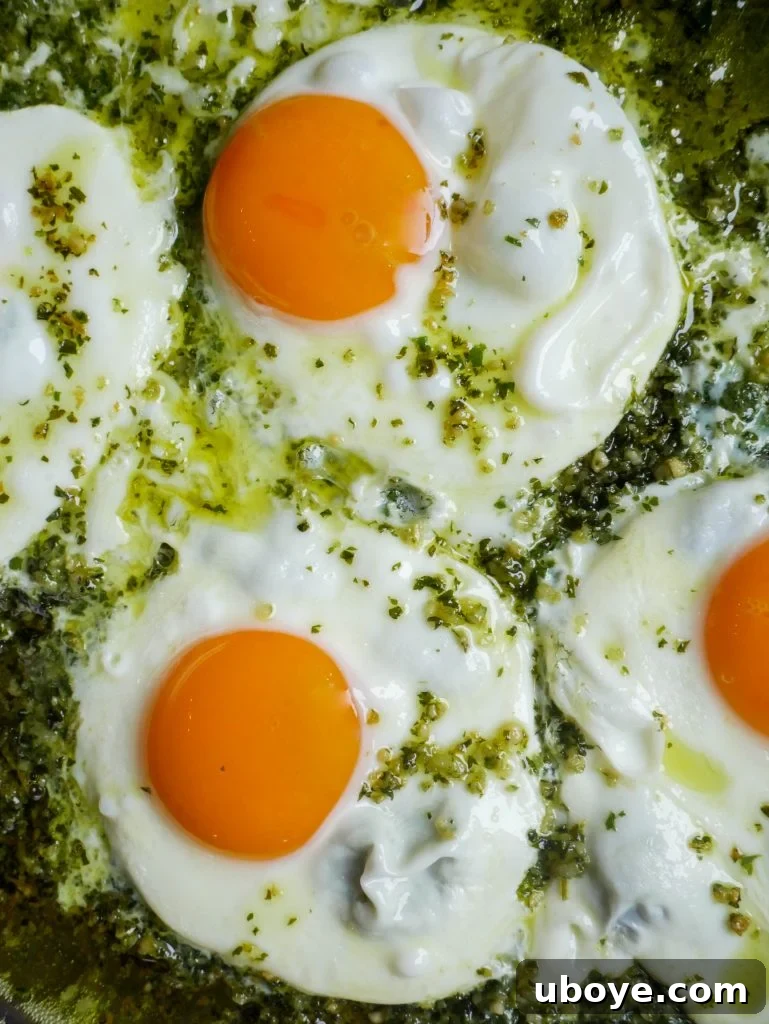
If you had to choose just one way to enjoy eggs for the rest of your life, a perfectly fried egg would undoubtedly rank high for many. There’s an undeniable allure to an egg with beautifully golden, brown, and crispy edges, whites that are puffed and bubbly, and an exquisitely orange yolk that oozes luxuriantly the moment it’s pierced. Traditionally, eggs are fried in rich fats like olive oil or butter, or even decadent chicken fat. However, introducing pesto into this equation is nothing short of a culinary revolution.
Frying your eggs in pesto is an absolute game-changer. These pesto eggs transcend the ordinary, offering a deeply savory flavor profile that’s rich with hints of pungent garlic, creamy cheese, and fragrant basil. The experience is far more complex and delicious than anything a simple olive oil could impart. It’s a breakfast that doesn’t just nourish your body but truly excites your palate, turning a routine meal into a moment of pure culinary delight.
Crafting the Perfect Pesto: Homemade vs. Store-Bought
The secret to truly outstanding pesto eggs lies, naturally, in the pesto itself. While traditionalists might advocate for the artisanal touch of a mortar and pestle, yielding a rustic and robust sauce, modern convenience often calls for a quicker solution. We’ve found a remarkably simple and fuss-free method for creating a vibrant homemade pesto using just a food processor. All you need to do is combine your fresh ingredients, and the processor takes care of all the hard work, transforming them into a fragrant, flavorful sauce in minutes.
Creating your own pesto at home allows for ultimate control over the flavor and texture. You can adjust the garlic to your preference, select the finest olive oil, and ensure your basil is as fresh as possible. This homemade pesto isn’t just destined for eggs; its versatility is one of its greatest assets. It can be effortlessly tossed through hot pasta for a quick weeknight meal, spread onto a gourmet sandwich, dolloped onto roasted vegetables, or even used as a vibrant base for homemade pizzas. Making a larger batch means you’ll have this incredible sauce on hand to elevate countless dishes throughout the week.
For those days when time is of the essence or if you simply prefer a shortcut, good quality store-bought pesto can certainly step in. When selecting a jarred option, look for brands that list fresh basil, olive oil, and pine nuts high up in their ingredient list, avoiding those with excessive fillers or artificial flavors. A premium store-bought pesto will still provide that essential herbaceous and cheesy base that makes pesto eggs so incredibly special, proving that convenience doesn’t always have to compromise deliciousness.
Mastering the Fry: The Essential Technique for Perfect Pesto Eggs
Achieving the ideal pesto egg – with its perfectly cooked white, crispy edges, and runny yolk – hinges on one critical piece of advice: always cook on a low heat. This is the golden rule you cannot afford to break. If the heat is too high, the delicate basil in your pesto will quickly burn, turning bitter and drying out, which will negatively impact both the flavor and appearance of your dish. Gentle, low heat ensures the pesto infuses the eggs beautifully without scorching, allowing the flavors to meld and the eggs to cook to perfection.
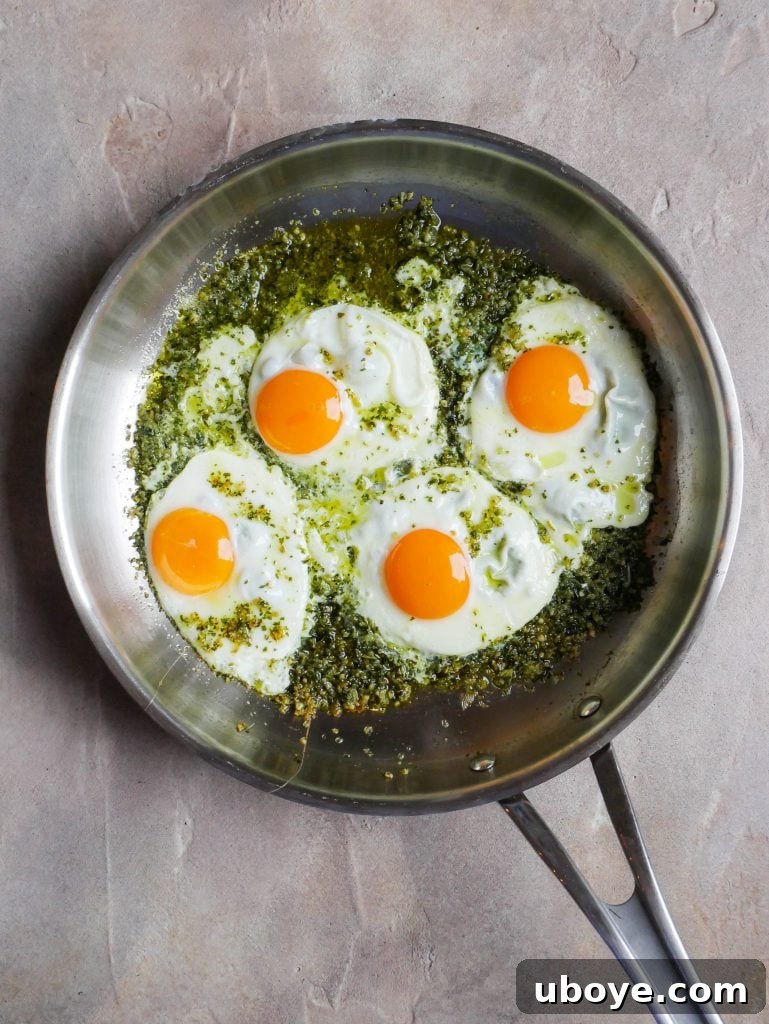
Begin by heating two to three generous tablespoons of your prepared pesto in a large non-stick frying pan over a very gentle, low flame. Watch for the pesto to warm up, becoming fragrant and just slightly sizzling, which indicates it’s ready. Carefully crack your eggs into the pan, ensuring there’s ample space between each one for even cooking. The next step is where the real magic happens: using a spoon, gently scoop the hot, pesto-infused oil from around the eggs and drizzle it over the whites. This basting technique is crucial for creating those coveted puffed, bubbly, and cooked whites with their irresistible crispy edges. It’s important to avoid letting the hot oil directly touch the egg yolks if you desire them to remain beautifully runny and golden. Continue this gentle cooking and basting for approximately 4-5 minutes, or until the egg whites are fully set and your yolks reach your preferred level of runniness – from delicately jammy to luxuriously gooey.
Creative Serving Suggestions for Your Pesto Eggs
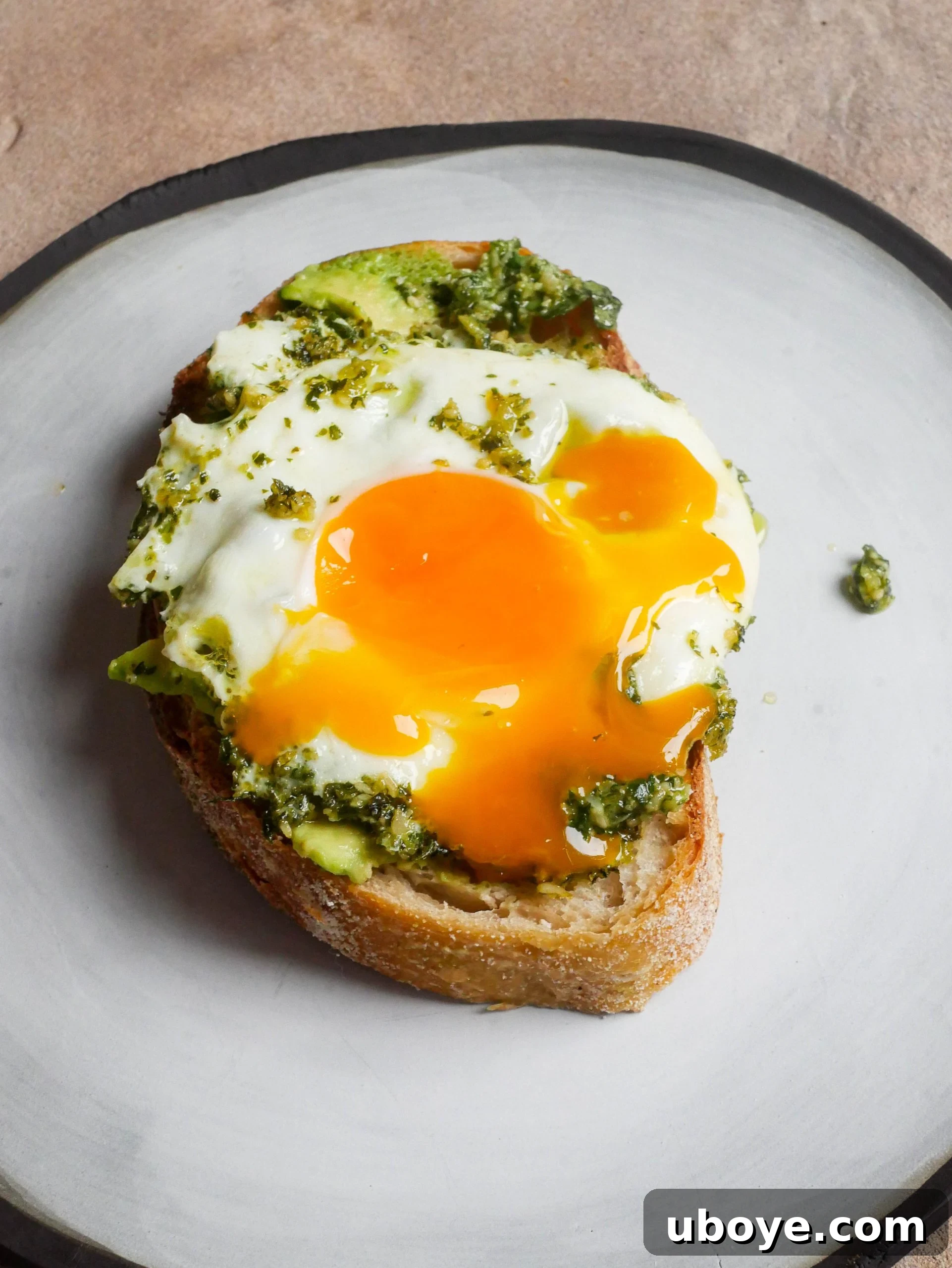
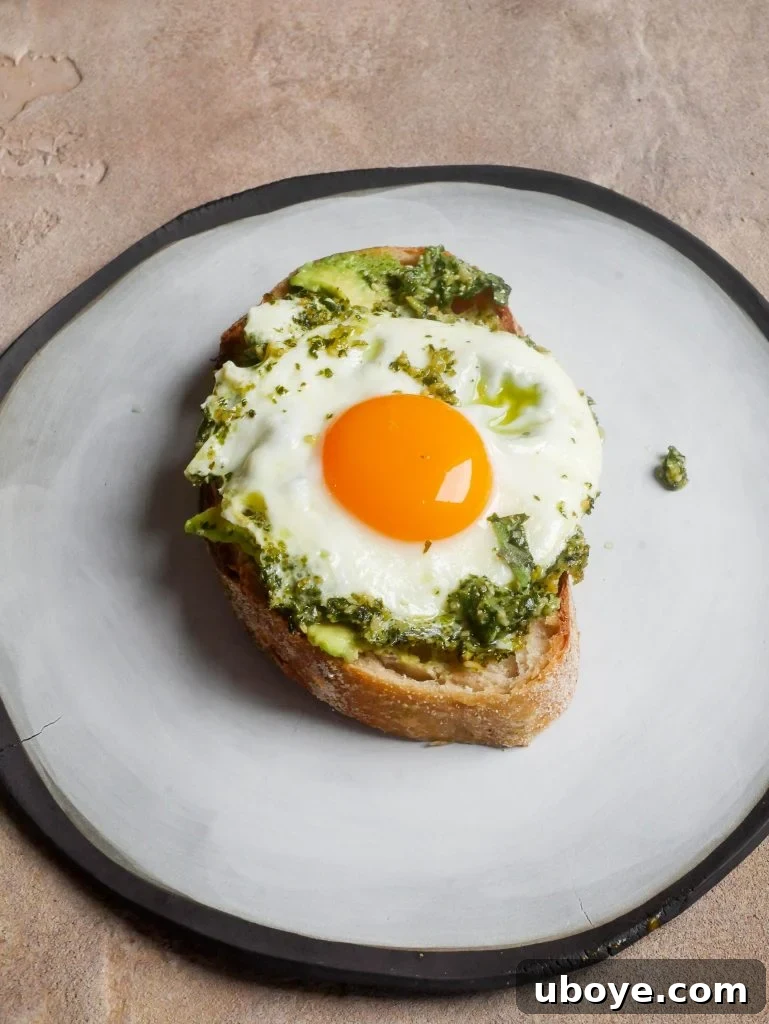
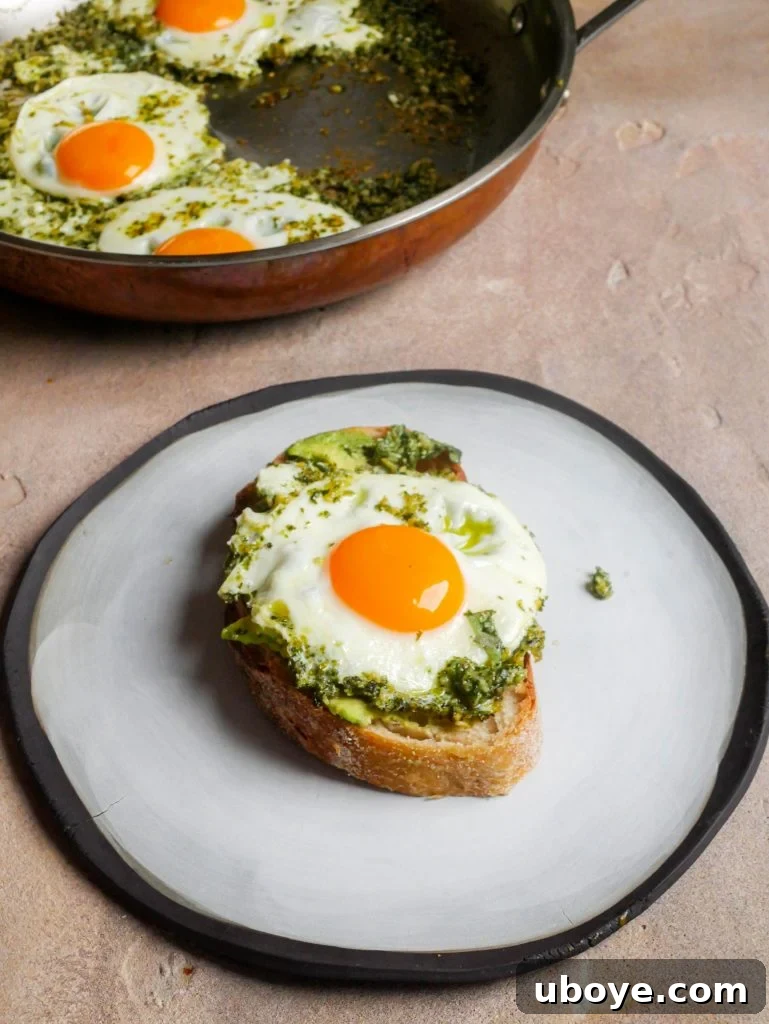
Once your pesto eggs are cooked to perfection, a simple pinch of salt sprinkled over the vibrant yolks is often all the seasoning they need. However, the true beauty of this dish lies in its incredible versatility. Our absolute favorite way to savor these delicious eggs is on a thick slice of toasted sourdough bread, generously adorned with creamy mashed avocado and a sprinkle of tangy goat’s cheese. The combination of textures and flavors creates a truly satisfying and gourmet breakfast or brunch experience.
But the possibilities don’t end there! Pesto eggs are a fantastic base for countless other culinary creations:
- **The Classic Canvas:** Simply enjoy them on their own, perhaps with a sprinkle of red pepper flakes for an extra kick, or alongside any variety of toasted bread – from hearty whole wheat to light gluten-free options.
- **Enhanced Avocado Toast:** Elevate your standard avocado toast by topping it with a warm, flavorful pesto egg for added protein and herbaceous depth.
- **Cheesy Companions:** Experiment with other cheeses! Crumbled feta, delicate Parmesan shavings, or a dollop of fresh ricotta can add an extra layer of creaminess and salty goodness.
- **Green Power:** Serve them over a bed of sautéed spinach, wilted kale, or blanched asparagus for a nutritious and vibrant meal.
- **Hearty Additions:** Pair your pesto eggs with roasted cherry tomatoes, crispy bacon, or delicate smoked salmon for a truly decadent brunch spread.
- **Sandwich & Wrap Stars:** Transform your lunchtime routine by adding a pesto egg to your favorite sandwiches or breakfast wraps for a burst of unexpected flavor.
- **Salad Sensations:** A warm pesto egg makes an excellent, protein-packed topper for any fresh green salad, instantly upgrading it to a more substantial and satisfying dish.
Frequently Asked Questions About Pesto Eggs
Here are answers to some common questions to help you confidently prepare and enjoy this delightful dish:
Can I use store-bought pesto for this recipe?
Yes, absolutely! Store-bought pesto is a perfectly acceptable and convenient option, especially when you’re short on time or not in the mood to make your own from scratch. For the best results, look for a high-quality brand that prioritizes fresh ingredients and has a vibrant green color. While homemade pesto often offers a superior, fresher flavor, a good store-bought alternative will still create wonderfully delicious pesto eggs.
How do you serve pesto eggs for the best experience?
Pesto eggs are incredibly versatile! Our top recommendation is on a slice of toasted sourdough with mashed avocado and tangy goat’s cheese. However, they are also fantastic:
- On their own, perhaps with a sprinkle of fresh herbs or chili flakes.
- Topped onto a fresh green salad or a bowl of grains for a wholesome meal.
- With a side of crusty bread for dipping into the runny yolk and rich pesto.
- As part of a brunch platter alongside roasted vegetables, bacon, or sausages.
- In a breakfast burrito or open-faced sandwich.
The key is to enjoy them while the eggs are still warm and the yolk is delightfully runny!
Can I use the homemade pesto in other recipes?
Certainly! The versatile pesto you make for these eggs is fantastic for many other culinary applications. It’s excellent when tossed through hot pasta for a quick and flavorful dinner, spread as a base on pizzas instead of traditional tomato sauce, mixed into salad dressings, used as a marinade for chicken or fish, stirred into creamy soups, or even as a flavorful dip with vegetables or crackers. Don’t let any leftover go to waste!
How long can I store the homemade pesto?
You can store your freshly made pesto in the refrigerator for up to 1-2 weeks. To maintain its vibrant green color and freshness, transfer it to a sterilized, airtight container or jar and pour a thin layer of olive oil over the surface before sealing. This creates a protective barrier against oxidation. For longer storage, pesto freezes exceptionally well. Portion it into ice cube trays, freeze until solid, then transfer the cubes to a freezer-safe bag. It will keep well in the freezer for several months, ready to be defrosted and used as needed.
What kind of eggs should I use for this recipe?
For the most delicious and visually appealing pesto eggs, we highly recommend using the freshest, highest-quality eggs you can find. Free-range or organic eggs often boast richer, more vibrant yolks and superior flavor, which will significantly enhance the overall taste of your dish. Fresh eggs also tend to hold their shape better during frying.
Can I customize the homemade pesto recipe?
Absolutely! Pesto is wonderfully adaptable to personal taste and dietary needs. You can experiment with different nuts, such as walnuts or cashews, instead of pine nuts. For a milder or nut-free version, even toasted pumpkin or sunflower seeds can work. Feel free to adjust the amount of garlic, or substitute Pecorino Romano with Parmesan cheese, or even a blend of cheeses. Adding a handful of spinach or arugula can also boost the green color and add extra nutrients to your pesto.
Are pesto eggs a healthy breakfast option?
Yes, pesto eggs can be a very healthy and well-balanced breakfast! Eggs are a fantastic source of high-quality protein, essential vitamins (like B12 and D), and minerals. Homemade pesto provides healthy monounsaturated fats from olive oil, as well as antioxidants and vitamins from fresh basil and garlic. When served with whole-grain toast and avocado, it becomes a nutritionally dense meal that promotes satiety and provides sustained energy throughout your morning.
Print Recipe
Rating: 5 out of 5 stars from 1 vote
Pesto Eggs
Daen Lia
20 mins
8 mins
6
Ingredients
- 4 large eggs
- 1 bunch fresh basil (approximately 2 cups packed leaves)
- 2 garlic cloves, peeled
- 1/4 cup pine nuts (lightly toasted for deeper flavor, optional)
- 1/2 cup extra virgin olive oil (divided)
- 1/2 cup freshly grated Pecorino Romano cheese (or Parmesan)
- Pinch of salt and freshly ground black pepper, to taste
Instructions
- **Prepare the Homemade Pesto:** In the bowl of a food processor, combine the fresh basil leaves, peeled garlic cloves, pine nuts, and 1/4 cup of the olive oil. Pulse and blend until the ingredients are well combined but still retain a slightly chunky, textured consistency (avoid making it too smooth). Add the grated Pecorino Romano cheese and the remaining 1/4 cup of olive oil, then pulse briefly again to incorporate. Taste the pesto and adjust seasoning with salt and pepper as desired. (If you prefer a cheesier pesto, you can slowly add a bit more cheese).
- **Heat the Pesto:** Place a large non-stick frying pan over very low heat. Add 2 to 3 tablespoons of the prepared pesto to the pan. Allow the pesto to gently warm for about a minute, until it becomes fragrant and starts to sizzle slightly.
- **Cook the Eggs:** Carefully crack the eggs directly into the warm pesto in the pan, ensuring they are spaced apart. Continue to cook the eggs on this low heat. Using a spoon, gently scoop the hot, pesto-infused oil from around the eggs and drizzle it continuously over the egg whites. This basting technique helps the whites to puff up, become bubbly, and cook through, creating delightful crispy edges, while preserving a perfectly runny yolk. Be cautious not to let the hot oil directly touch the egg yolks if you want them runny. Cook for approximately 4-5 minutes, or until the whites are fully set and the yolks reach your preferred consistency.
- **Serve and Store:** Carefully remove the pesto eggs from the pan. Season the egg yolks with a final pinch of salt. Serve immediately on toasted sourdough bread or with your chosen accompaniments. Store any leftover homemade pesto in an airtight jar in the refrigerator for up to 1-2 weeks, ensuring a thin layer of olive oil covers the surface to prevent oxidation and keep it fresh.
Video Tutorial

Did you love this recipe? We’d be thrilled to hear your thoughts! Leave a comment and review below to share your experience. Your feedback helps us improve and inspire other home cooks!
Don’t forget to tag us on Instagram, TikTok, or Pinterest with your wonderful pesto egg creations!