
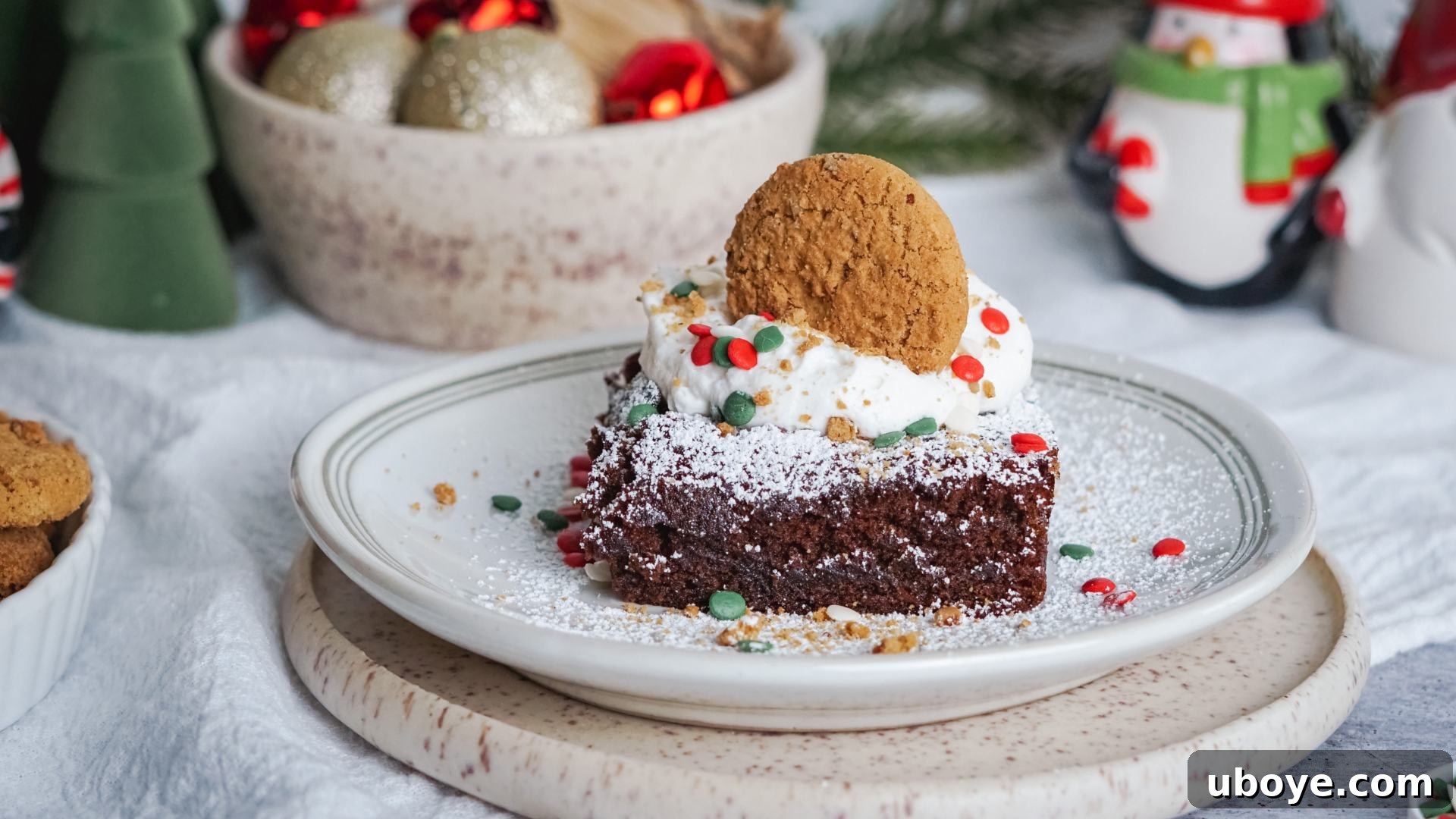
Step into the festive season with the ultimate holiday treat: a truly incredible and irresistibly soft Vegan Gingerbread Cake. This delightful dessert captures all the warmth and spice you adore in classic gingerbread, but in a tender, moist cake form that’s entirely plant-based. Infused with rich molasses, fragrant ginger, and aromatic cloves, it’s then beautifully crowned with fluffy vegan whipped cream and a sprinkle of crunchy Gingersnap Cookie Sprinkles. Prepare to make this your new favorite holiday baking tradition!
There’s something truly magical about the aroma of gingerbread wafting through your home during the colder months. It instantly conjures images of cozy evenings, festive gatherings, and heartwarming flavors. This recipe brings that quintessential holiday experience to life in a stunning cake that’s not only delicious but also completely dairy-free and egg-free, making it perfect for everyone to enjoy.
The Magic of Vegan Gingerbread Cake: A Holiday Favorite
What exactly is gingerbread cake? Imagine everything you love about those wonderfully crisp, warmly spiced gingerbread cookies – now transformed into a soft, fluffy, and deeply moist cake. Our Vegan Gingerbread Cake is a celebration of holiday spices, boasting a rich blend of cinnamon, ground ginger, and cloves that dance on your palate. Each bite delivers a tender texture and a comforting flavor profile so authentic, you’d swear it came straight from Santa’s very own bakeshop. The deep, earthy sweetness of molasses perfectly complements the vibrant spices, creating a truly unforgettable dessert that embodies the spirit of the festive season.
Gingerbread has a long and storied history, evolving from ancient spice bread into the beloved treats we know today. Its distinctive flavor comes from a careful balance of spices, and this vegan version honors that tradition while offering a delightful twist. It’s a dessert that feels both nostalgic and refreshingly new, proving that plant-based baking can achieve, and often surpass, the decadence of traditional recipes.
Why You’ll Love This Vegan Gingerbread Cake Recipe
This recipe isn’t just another cake; it’s a testament to how incredible vegan baking can be. You’ll fall in love with its:
- Perfectly Fluffy and Moist Texture: Forget dry vegan cakes! This recipe uses clever plant-based substitutes to ensure every slice is incredibly tender and moist.
- Authentic Holiday Flavor: The robust combination of ginger, cinnamon, and cloves, paired with rich molasses, delivers that classic gingerbread taste everyone craves during the holidays.
- Simple & Straightforward Process: Despite its impressive results, this cake is surprisingly easy to make, even for novice bakers.
- Inclusive Indulgence: Being entirely vegan means it’s a fantastic option for those with dietary restrictions or anyone looking to explore more plant-based desserts without compromising on flavor or texture.
- Versatile Toppings: From creamy whipped toppings to crunchy cookie sprinkles, this cake is a canvas for your favorite festive garnishes.
Essential Ingredients for the Perfect Vegan Gingerbread
Crafting a truly spectacular vegan cake relies on understanding the unique roles of plant-based ingredients. This recipe incorporates a few key elements that elevate it from good to extraordinary, ensuring it’s never dry and always flavorful.
Understanding Molasses: The Heart of Gingerbread
Molasses is non-negotiable for authentic gingerbread flavor. It imparts a deep, caramelized sweetness and a distinct, slightly smoky undertone that defines the cake. However, not all molasses is created equal. For this recipe, it’s crucial to use unsulphured molasses. Blackstrap molasses, while potent, is much darker, thicker, and has a more bitter, less sweet flavor that can overpower delicate spice notes. Unsulphured molasses (often labeled ‘light’ or ‘dark’ molasses) is made from mature sugarcane and has a milder, sweeter profile, making it ideal for the balanced flavors of this gingerbread cake. It’s the secret to that signature dark color and rich, complex taste.
The Power of Vegan Egg Substitutes: Flax Eggs and Pumpkin Puree
One of the biggest hurdles in vegan baking can be replacing eggs, which act as binders, leaveners, and moisturizers. This recipe ingeniously uses two powerful egg substitutes: a flax egg and canned pumpkin puree.
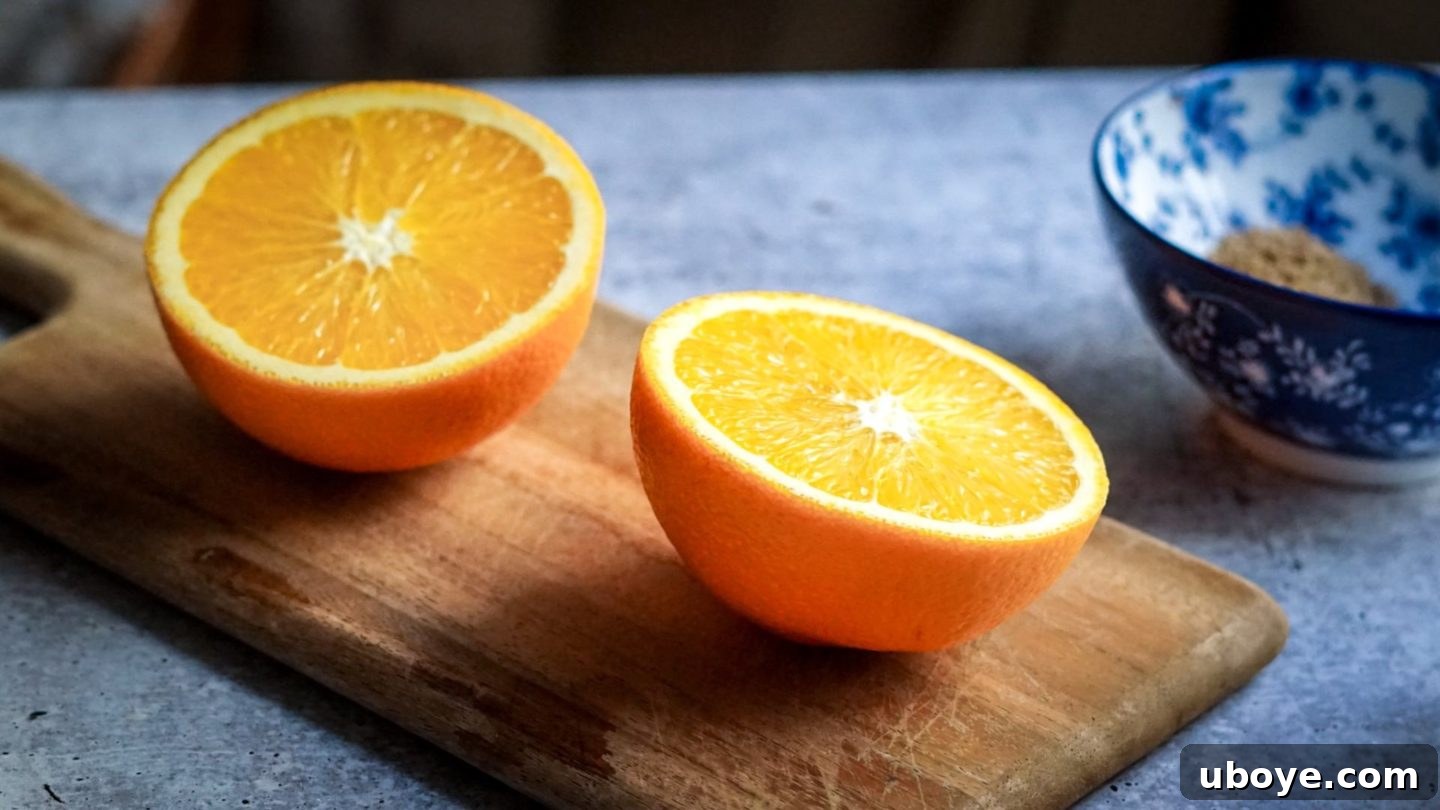
- Flax Egg: A flax egg is made by mixing ground flax seeds with liquid (typically water). In this recipe, we elevate it by using orange juice instead of water. The ground flax seeds absorb the liquid and form a gelatinous, egg-like consistency that acts as an excellent binder, holding your cake together beautifully. The orange juice adds a subtle, bright citrus note that beautifully complements the warming gingerbread spices, enhancing the overall flavor profile without being overtly “orangey.”
- Canned Pumpkin Puree: While it might seem unconventional in a gingerbread cake, pumpkin puree is a true game-changer in vegan baking! Don’t worry, your cake won’t taste like pumpkin bread or pie. The pumpkin’s role here is purely functional: its natural starches act as an additional binder, further eliminating the need for traditional eggs. Crucially, pumpkin puree also excels at retaining moisture. This allows us to reduce the amount of oil in the recipe while still achieving an incredibly tender, moist, and decadent crumb. It’s a brilliant way to ensure your vegan gingerbread cake is never dry.
Refined Coconut Oil: The Neutral Fat Choice
Choosing the right fat is vital for flavor and texture. We opt for refined coconut oil in this recipe. Virgin or unrefined coconut oil retains a distinct coconut flavor and aroma, which, while delicious in some applications, would compete with the delicate gingerbread spices we want to shine. Refined coconut oil, on the other hand, is a neutral-tasting oil. It provides the necessary moisture and richness without imparting any coconut flavor, allowing the star spices of ginger, cinnamon, and cloves to truly take center stage and create that authentic holiday taste.
How to Bake Your Incredible Vegan Gingerbread Cake: A Step-by-Step Guide
Baking this vegan gingerbread cake is a straightforward and rewarding process. Follow these detailed steps to ensure a perfect, flavorful result every time.
Preparing Your Workspace and “Flax Egg”
Begin by setting yourself up for success. Preheat your oven to 350 degrees Fahrenheit (175°C). Line a 9×13 inch baking pan with parchment paper and lightly grease it with coconut oil. This prevents sticking and makes for easy cake removal. Next, prepare your special flax egg: in a small bowl, combine the ground flax seeds with the orange juice. Give it a good stir and set it aside for 5-10 minutes. During this time, the flax seeds will absorb the liquid and thicken into a gelatinous consistency, ready to act as your perfect egg substitute.
Combining Dry and Wet Ingredients for Success
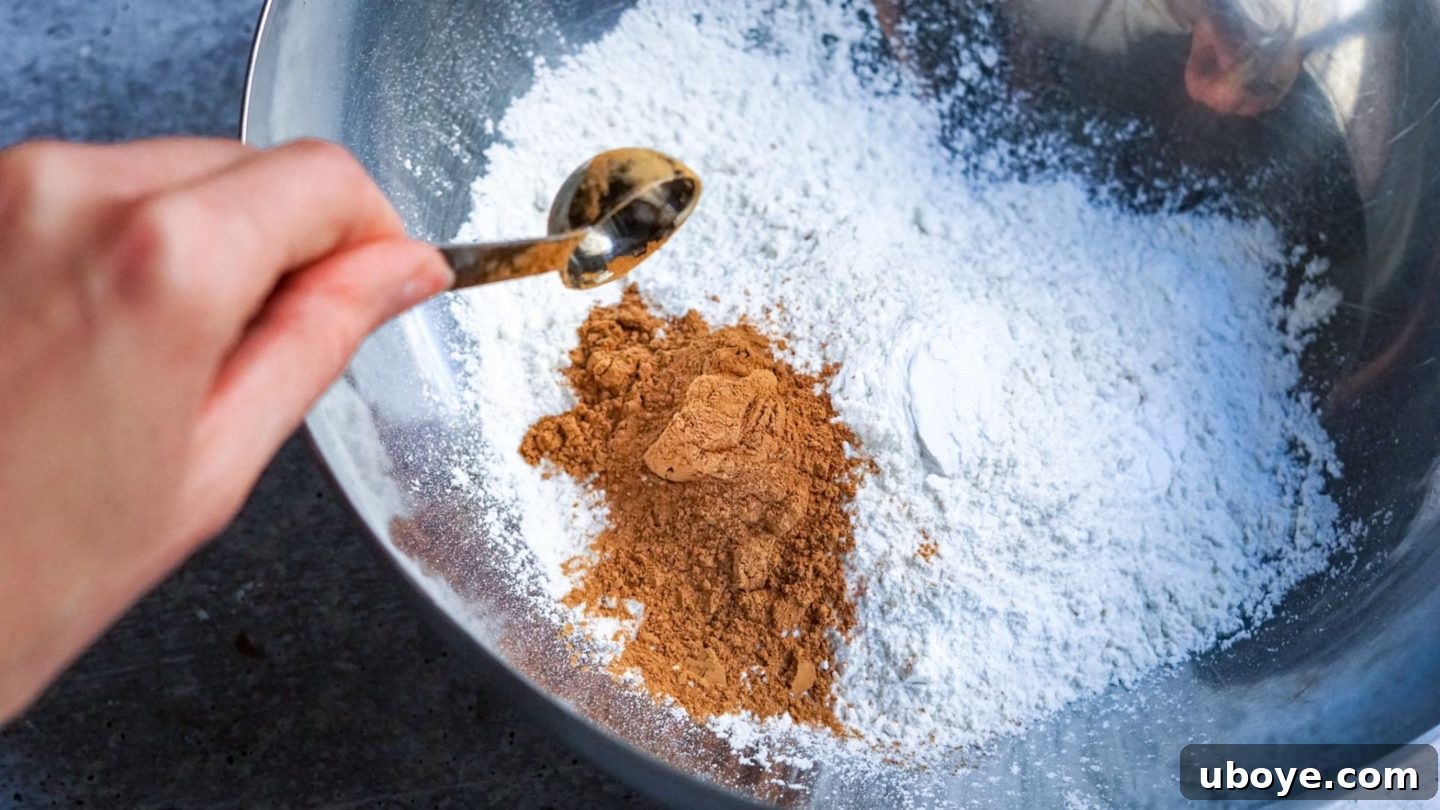
While your flax egg is setting, tackle the dry ingredients. In a large mixing bowl, whisk together the all-purpose flour, baking powder, baking soda, cinnamon, ground ginger, ground cloves, and sea salt. Whisking ensures these ingredients are thoroughly combined and the leavening agents and spices are evenly distributed throughout the batter. Set this bowl aside.
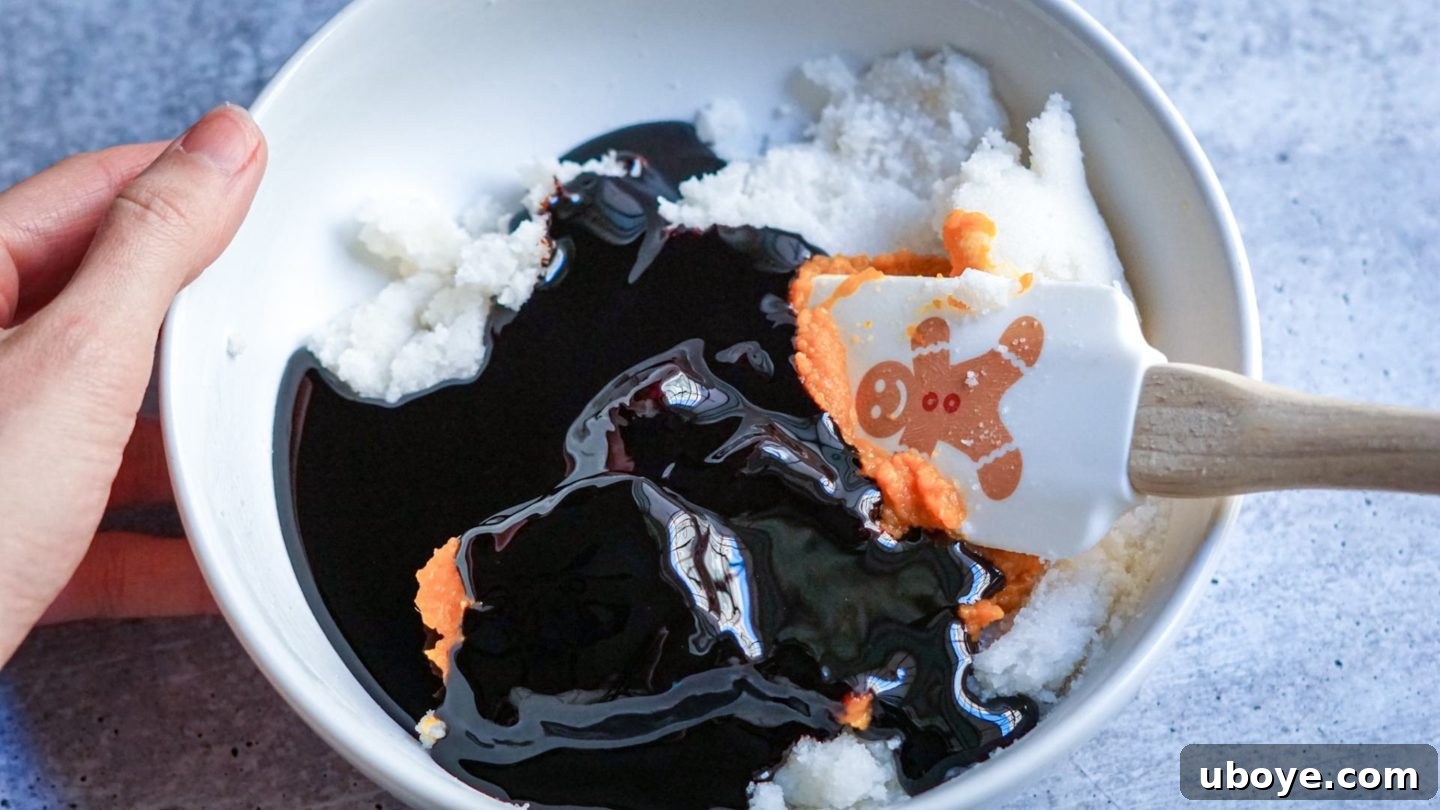
Now for the wet ingredients. In a separate large bowl, combine the cane sugar and melted refined coconut oil. Using an electric mixer, beat these two together for about one minute until the mixture is smooth and light. This step helps to dissolve the sugar and incorporate air, which contributes to the cake’s fluffy texture. Next, add the rich unsulphured molasses, canned pumpkin puree, the now-thickened flax egg, and vanilla extract. Continue to beat this mixture for another 1-2 minutes until it becomes noticeably light and very fluffy. This is a critical stage where thorough mixing is highly beneficial, as it aerates the batter and lays the groundwork for a tender crumb. Note: the hot water isn’t added yet – that comes later to avoid affecting the consistency too early. If your kitchen is cool, the coconut oil might start to firm up slightly; rest assured, the hot water later will re-melt it.
The Secret to a Tender Crumb: Mixing Technique
Once you begin incorporating the dry ingredients into the wet, your approach to mixing changes dramatically. At this stage, overmixing is the enemy of a tender cake. To prevent a tough, dense texture, we’ll use a specific technique:
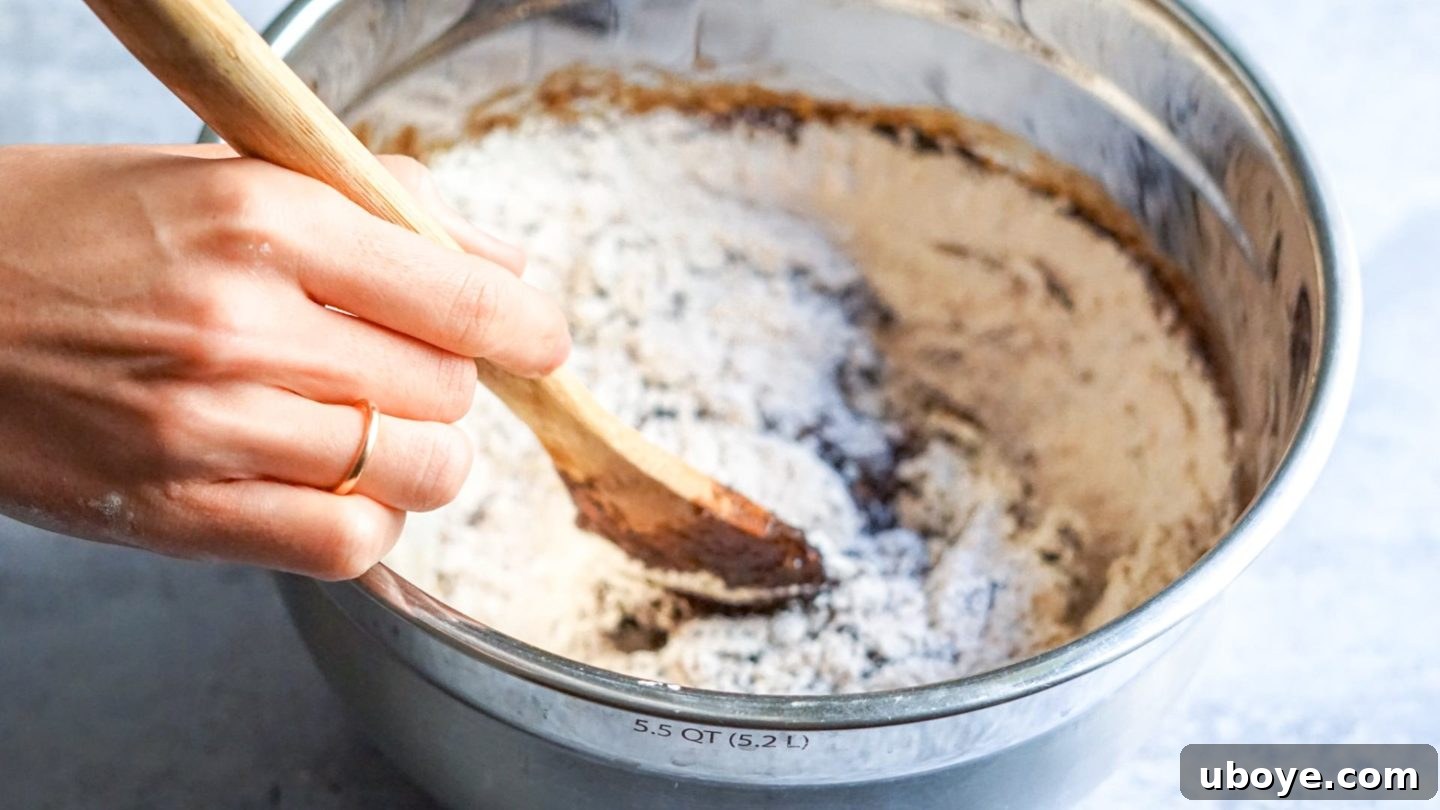
Add half of the dry flour mixture into the bowl with the wet ingredients. Mix gently, just until no streaks of dry flour are visible. Then, add half of the hot water. Mix until the water is mostly absorbed into the batter. Follow this by adding the remaining dry flour mixture, mixing just until combined, and finally, add the remaining hot water, mixing only until smooth. This “half-and-half” method for incorporating flour and water helps to hydrate the flour evenly without overworking the gluten, resulting in that wonderfully soft, tender texture we’re aiming for in the finished cake. The batter will be quite thick at this point, which is perfectly normal, so don’t be alarmed!
Baking to Perfection
Carefully transfer the thick, aromatic batter into your prepared 9×13 inch baking pan. Use a spatula to spread it evenly and smooth the top. Place the pan on the center rack of your preheated oven and bake for 25-30 minutes. The cake is done when a toothpick inserted into the center comes out clean. In my oven, this usually takes almost exactly 30 minutes, but oven temperatures can vary, so keep an eye on it. Once baked, remove the cake from the oven and allow it to cool completely in the pan, set on a wire cooling rack. This allows air to circulate around the bottom of the pan, which is key for developing a good crumb structure and preventing any sogginess.
Serving Suggestions to Elevate Your Gingerbread Experience
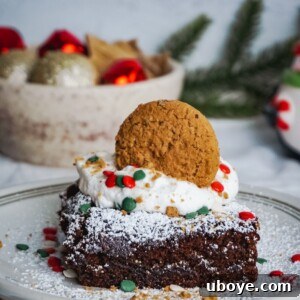
This Vegan Gingerbread Cake is undeniably delicious on its own, but its warm, spicy profile makes it a fantastic canvas for creative toppings. I absolutely love serving it warm with a generous dollop of fluffy vegan whipped cream. For an added layer of flavor and delightful crunch, crumble some store-bought gingersnap cookies on top to create festive “cookie sprinkles.” If you’re feeling a little fancy and want to add some sparkle, a scattering of vegan-friendly sprinkles, like these beautiful natural sequin sprinkles, can really elevate its presentation. For a rich and decadent pairing, a scoop of vegan vanilla ice cream melting over a warm slice is pure bliss. Another fantastic option is the creamy vegan cream cheese glaze I use for my Danishes – it adds a delightful tangy sweetness that perfectly complements the spiced cake. Don’t forget to check out the recipe for it in the notes section of the recipe card!
FAQs for Vegan Gingerbread Cake Success
Can I Use Gluten-Free Flour Instead of All-Purpose?
This particular Vegan Gingerbread Cake recipe was rigorously tested and perfected using standard all-purpose flour to achieve its optimal texture and flavor. Therefore, for the very best results, I strongly recommend sticking with all-purpose flour if your dietary needs allow. However, if you need a gluten-free option, a good quality 1:1 gluten-free baking flour blend, such as those from Bob’s Red Mill, would be your best bet for a successful substitution. These blends are specifically formulated to mimic the properties of wheat flour. It’s important to avoid using single-ingredient gluten-free flours like almond flour or coconut flour, as their different absorbency and fat content would significantly alter the cake’s delicate balance and texture, leading to less than ideal results.
Why Refined vs. Virgin Coconut Oil?
The choice between refined and virgin coconut oil makes a significant difference in this recipe. Virgin (or unrefined) coconut oil undergoes minimal processing and retains its distinct, characteristic coconut flavor and aroma. While delicious in many dishes, this strong coconut taste would compete with and potentially mask the delicate balance of gingerbread spices we want to highlight. Refined coconut oil, on the other hand, is a more processed version that has a neutral flavor and aroma. By using refined coconut oil, we ensure that the rich, warming notes of ginger, cinnamon, and molasses are the stars of the show, allowing them to truly shine through and create that authentic, irresistible gingerbread experience without any unwanted tropical undertones.
Storage Tips for Your Vegan Gingerbread Cake
To keep your Vegan Gingerbread Cake fresh and delicious, allow it to cool completely before storing. Once cooled, place the cake in an airtight container. It will stay wonderfully moist at room temperature for up to 3 days. If you’d like to extend its freshness, you can refrigerate it for up to a week. Just be sure to bring it back to room temperature or gently warm it before serving for the best flavor and texture. For longer storage, slices of the cake can be individually wrapped in plastic wrap and then placed in a freezer-safe bag or container, where they will keep well for up to 2-3 months. Thaw frozen cake slices at room temperature or warm them gently in the microwave.
Can I Make This Cake Ahead?
Absolutely! This Vegan Gingerbread Cake is an excellent candidate for making ahead, which is a huge bonus during the busy holiday season. You can bake the cake a day or two in advance and store it at room temperature in an airtight container. If you plan to frost or glaze it, it’s best to do so closer to serving time to maintain the freshest appearance and texture of the topping. Making it ahead allows the flavors to meld and deepen even further, resulting in an even more delicious and aromatic cake when you’re ready to serve it. This flexibility makes it a perfect addition to your holiday entertaining menu.
I hope you’re excited to try this delightful Vegan Gingerbread Cake! It’s a recipe born from many trials and errors in my vegan baking journey, and it truly is a triumph. Understanding how plant-based ingredients work together has unlocked a world of delicious possibilities, proving that vegan desserts can be just as, if not more, satisfying than their traditional counterparts. This cake is loved by both my vegan and non-vegan friends alike, which, after many failed attempts in my early vegan days, feels like a huge win! If you love this recipe, please leave a comment and rate this post below! And if you’re on Instagram, be sure to tag me in a pic so I can see your beautiful recreation! @nikkivegan. For more free vegan recipes and baking inspiration, don’t forget to check out my YouTube channel here.
Vegan Gingerbread Cake
By: Nicole Vranjican
A soft and fluffy holiday Gingerbread Cake made with molasses, ginger, and cloves, generously topped with vegan whipped cream and Gingersnap Cookie Sprinkles!
Cook: 30 mins
Servings: 1 9x13in cake
Rate Recipe
Print Recipe
Ingredients
Dry Ingredients
- 1¾ cup all purpose flour
- 1 tsp baking powder
- ¼ tsp baking soda
- 2 tsp cinnamon
- 1 tsp ground ginger
- ¼ tsp ground cloves
- ½ tsp sea salt
Wet Ingredients
- 1 cup cane sugar
- ½ cup melted refined coconut oil, room temp
- 1 tsp vanilla extract
- ½ cup unsulphured molasses, (do not use blackstrap molasses)
- ½ cup canned pumpkin puree
- ½ cup hot water
Flax Egg
- 2 tbsp ground flax seeds
- 4 tbsp orange juice
Toppings (Optional)
- Vegan whipped cream or ice cream
- Store-bought gingersnap cookies (for crumbling as cookie sprinkles!)
Instructions
Prep
- Start by mixing the ground flax seeds and orange juice in a small bowl. Stir well and set aside for 5-10 minutes to thicken.
- Next, preheat your oven to 350 degrees F (175 C). Prepare a 9×13 inch baking pan by greasing it lightly with coconut oil and lining it with parchment paper, leaving an overhang on the sides for easy lifting.
Mix the Dry Ingredients
- In a large mixing bowl, combine the all-purpose flour, baking powder, baking soda, cinnamon, ground ginger, ground cloves, and sea salt. Whisk thoroughly to ensure all dry ingredients and spices are evenly distributed. Set aside.
Mix the Wet Ingredients
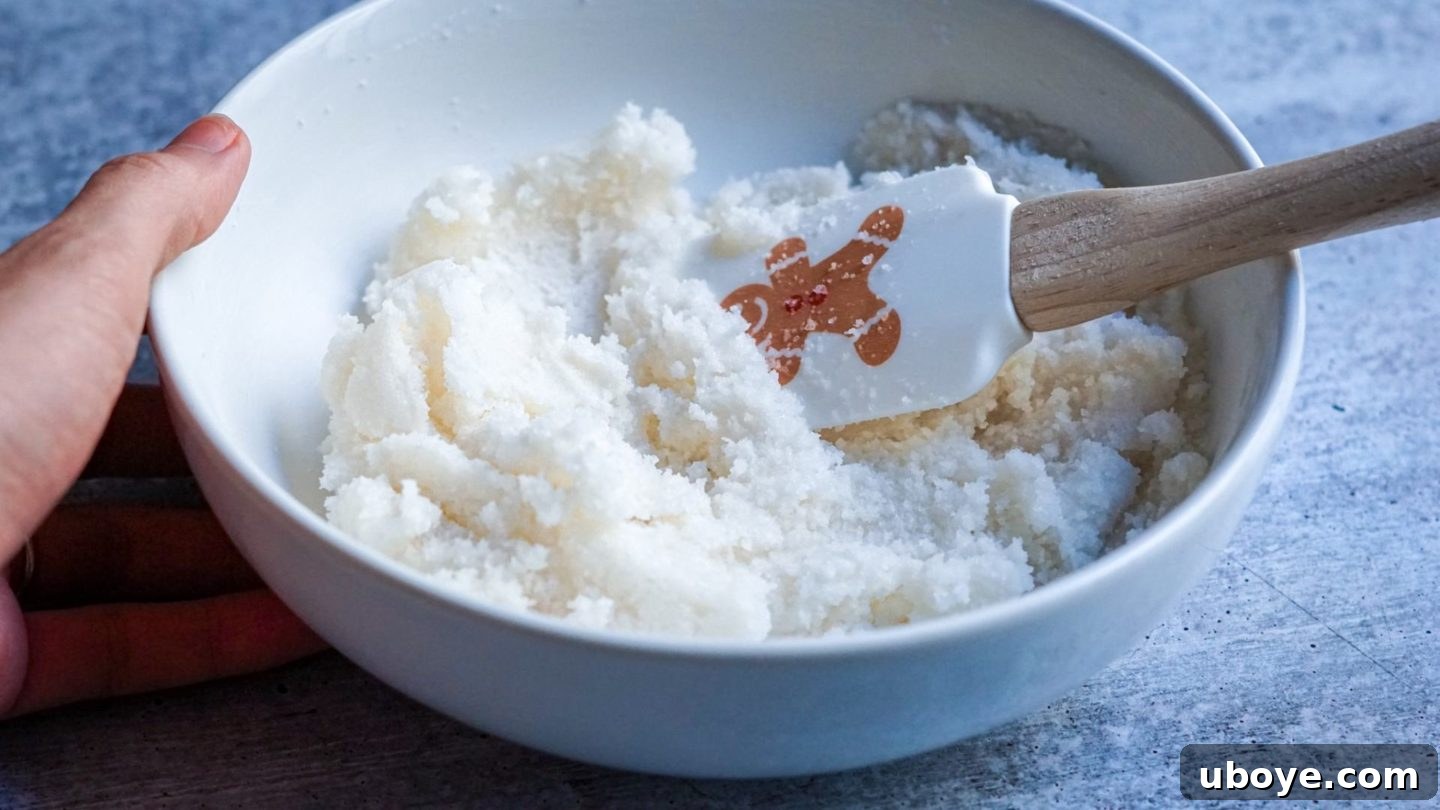
- In another large bowl, using an electric mixer, beat the cane sugar and melted refined coconut oil for about 1 minute until the mixture is smooth and appears slightly lighter in color.
- Add the unsulphured molasses, canned pumpkin puree, vanilla extract, and the prepared flax egg to the wet mixture. Continue beating for 1-2 minutes until the mixture is very light and fluffy. This vigorous mixing at this stage helps to incorporate air and is crucial for a tender cake crumb. Do not add the hot water yet.
- NOTE: If your kitchen is very cold, the coconut oil might start to re-harden slightly. Do not worry; the hot water added in a later step will help re-melt it and ensure a smooth batter.
Combine and Bake
- Add half of the dry flour mixture into the bowl with the wet ingredients. Mix gently with a spatula or on low speed just until combined. Be careful not to overmix at this point, as overworking the gluten can lead to a tough cake.
- Pour in half of the hot water and mix gently until the water is mostly absorbed into the batter.
- Add the remaining dry flour mixture, mix until no dry flour streaks are visible, and then incorporate the remaining hot water, mixing just until the batter is smooth. This alternating “half-and-half” technique helps create a wonderfully tender and moist texture in the finished cake.
- Transfer the thick, fragrant batter into your prepared 9×13 inch baking pan and spread it evenly with a spatula. The batter is supposed to be thick, so don’t be alarmed.
- Bake on the center rack for 25-30 minutes, or until a toothpick inserted into the center of the cake comes out clean. (It takes almost exactly 30 minutes in my oven).
Cool & Serve
- Allow the warm gingerbread cake to cool completely in the pan on a wire cooling rack. This is crucial for proper air circulation around the bottom, which helps prevent sogginess and contributes to a perfect crumb structure.
- Once cooled, you can dust the cake with powdered sugar, slice, and serve. For an extra festive touch, top generously with vegan whipped cream or a scoop of vegan ice cream. Create delightful “cookie sprinkles” by crumbling store-bought gingersnap cookies on top for a lovely crunch and enhanced ginger flavor!
- Optional Topping: You might also enjoy drizzling the cake with the Vegan Cream Cheese Icing recipe provided in the notes below for a different, tangy-sweet flavor profile. Enjoy your delicious homemade vegan gingerbread cake, and happy holidays! ❤️
Notes
Vegan Cream Cheese Icing (Optional)
- ¼ cup vegan cream cheese, softened to room temp
- 3 tbsp powdered sugar
- 2-3 tbsp almond milk (or other plant-based milk)
- Pinch of salt
Cream the softened vegan cream cheese, salt, and powdered sugar in a bowl until smooth. Gradually whisk in the plant milk, one tablespoon at a time, until you achieve a runny, drizzle-able consistency. Adjust milk quantity as needed to reach your desired thickness.