
Print Recipe
Jump to Recipe
The Soul-Warming Embrace of Authentic Ragu Bolognese
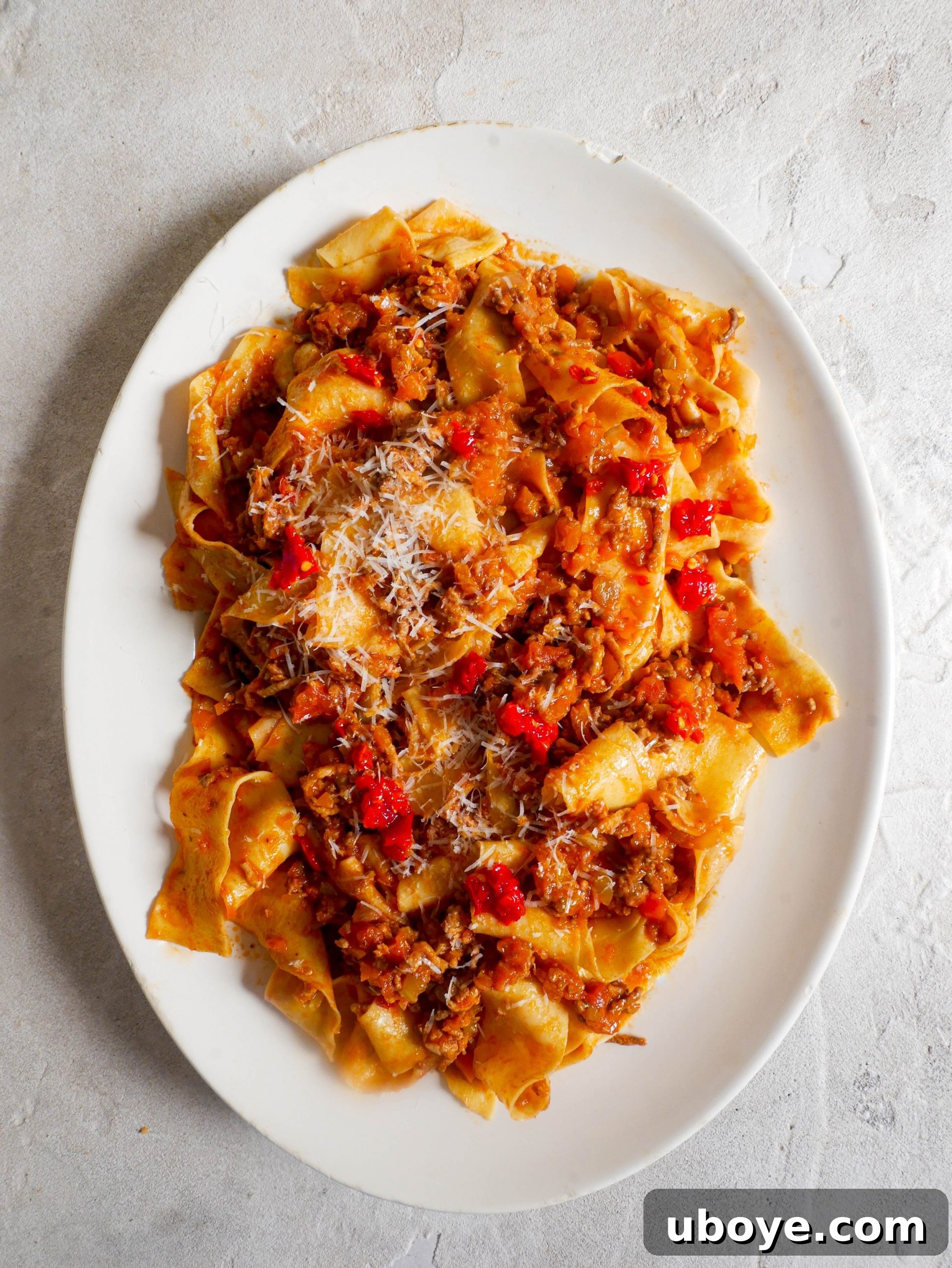
There are very few recipes in my culinary collection that consistently call my name, promising to generously feed my entire family or any cherished guests who walk through my door. My Ragu Bolognese stands proudly as one of these cherished staples, a testament to the comforting power of Italian home cooking.
This Ragu Bolognese isn’t just a recipe; it’s a family legacy, a flavor memoir that transports me back to my childhood. From my earliest memories, the rich, savory aroma wafting from a bubbling pot on my mother’s stove was a signal of warmth, love, and a delicious meal to come. That same scent now fills my own home, instantly conjuring images of my childhood kitchen and the comforting embrace of family.
I always prepare a generous batch of this Bolognese in a large Dutch oven. Not only does it effortlessly cater to several meals over a few days, but the magic truly happens with time. Each reheating deepens the flavors, allowing the sauce to mature and become even more incredibly rich and complex. It’s a dish that truly improves with age, making it perfect for meal prepping or entertaining.
Understanding Traditional Ragu Bolognese: More Than Just Meat Sauce
When we talk about Ragu Bolognese, we’re delving into a culinary tradition that distinguishes itself from a simple meat sauce. This is an authentic Italian ragu, originating from the Emilia-Romagna region, renowned for its depth of flavor achieved through a slow, patient simmer. Unlike many quick pasta sauces, a true Bolognese is characterized by its meat-forward profile, a foundational soffritto, a splash of wine, and a gentle, extended cooking period in a tomato-based liquid.
The journey begins not with a rush, but with the meticulous browning and caramelizing of the meat. This crucial initial step locks in profound flavors and creates a beautiful texture that forms the backbone of the sauce. I insist on using a generous amount of olive oil to achieve this, ensuring the mince develops a rich, browned crust before it’s removed from the pot, leaving behind a flavorful fond.
The Holy Trinity of Meats and Soffritto Foundation
The heart of a traditional Bolognese lies in its “holy trinity” of meats: a combination of beef, pork, and sometimes lamb mince. While this blend offers unparalleled depth and richness, don’t despair if you can only source beef and pork; the result will still be wonderfully flavorful. The different fat contents and textures of these meats contribute uniquely to the sauce’s body and taste.
Once the meat is seared, the stage is set for the soffritto – the aromatic foundation of finely diced onions, carrots, and celery. These vegetables are sautéed slowly in the remaining olive oil and meat juices until they become incredibly tender and fragrant, releasing their sweet, earthy notes. This process is about building layers of flavor, not rushing them.
Next, tomato paste is added and cooked on a higher heat. This isn’t just to warm it through; it’s to caramelize it, intensifying its sweetness and eliminating any raw, metallic taste. The paste develops a deep, rich red color as it browns, adhering slightly to the bottom of the pot, ready to be rescued.
Deglazing with White Wine for Depth
The caramelization process leads to one of the most satisfying steps: deglazing the pot with a generous pour of white wine. The wine scrapes up all the delicious browned bits (the fond) from the bottom of the pan, incorporating them into the sauce and adding a vital layer of acidity and complexity. My philosophy? The more white wine, the better! It evaporates, leaving behind only its exquisite flavor.
With the pan deglazed, the browned meat returns, ready to merge with a blend of fresh and tinned tomatoes. This combination ensures a balanced tomato profile – the freshness of ripe tomatoes complemented by the concentrated sweetness of passata or quality tinned varieties. A touch of water is added to facilitate the long simmer, ensuring the sauce remains luscious and never dries out.
Elevating Flavor with Bippi’s Italian Style Chili Oil
To take my family Bolognese to an exciting new level, I often incorporate Bippi’s Italian style chili oil. The gentle heat from the chili oil provides the perfect counterpoint to the rich, savory red sauce, adding a vibrant kick that awakens the palate. I prefer to drizzle it over my finished pasta just before serving, allowing everyone to customize their spice level. However, for those who love a uniform warmth throughout, it can also be stirred directly into the sauce during the final minutes of simmering.
Essential Tips for Your Perfect Ragu Bolognese
- Brown Meat in Batches: Overcrowding the pot lowers the temperature, steaming the meat instead of browning it. Cook your mince in two or three batches to ensure a beautiful caramelization, which is crucial for flavor development.
- Don’t Skimp on Soffritto Time: The onions, carrots, and celery need time on low heat to soften and release their full aromatic potential. Patience here pays off immensely.
- Caramelize Tomato Paste: This step is often overlooked but vital. Cooking the tomato paste until it darkens intensifies its flavor and sweetness.
- Quality Wine Matters: Use a white wine you would enjoy drinking. It adds depth and acidity. While some recipes call for milk, white wine is a hallmark of classic Bolognese.
- Slow Simmer is Key: The magic of Bolognese happens during its long, gentle simmer. This allows the flavors to meld, the meat to tenderize, and the sauce to reduce and thicken beautifully.
- Season Throughout: Don’t wait until the end to season. Taste and adjust salt and pepper at various stages, especially after deglazing and adding tomatoes.
- Pasta Water is Gold: Reserve some of the starchy pasta water. Stirring it into the sauce at the end helps to create a silky emulsion that clings beautifully to the pasta.
- Leftovers are Best: Seriously, the flavor deepens overnight. Make a big batch!
Serving Your Delicious Ragu Bolognese
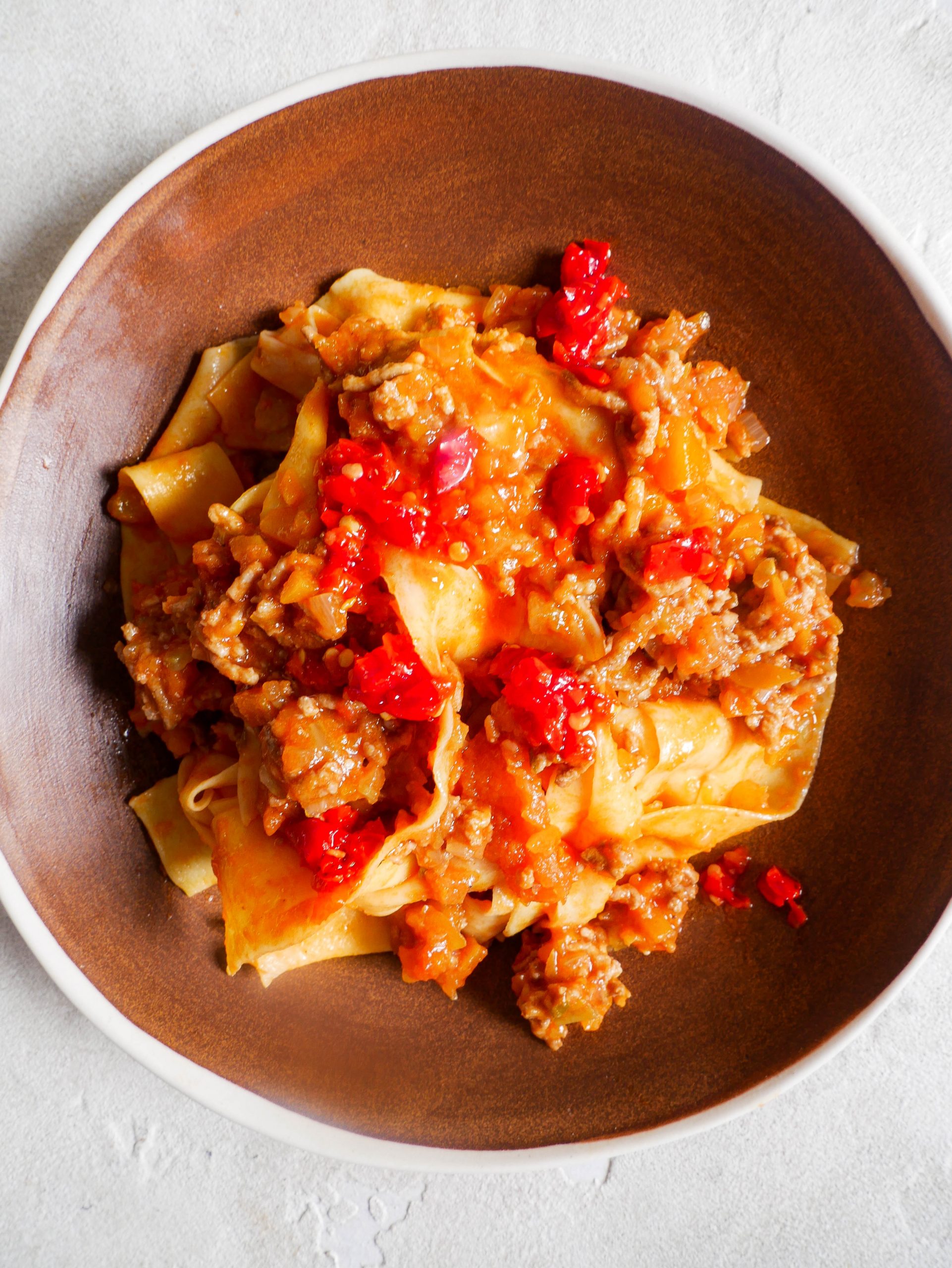
While tagliatelle is the traditional pasta choice for Bolognese in Emilia-Romagna, any broad, flat pasta like pappardelle or fettuccine works wonderfully to capture the rich sauce. You can also serve it with short pasta shapes like rigatoni or paccheri. Beyond pasta, Bolognese makes an excellent base for lasagna, a hearty topping for polenta, or even a flavorful sauce for gnocchi. A generous grating of Pecorino Romano or Parmigiano-Reggiano and a drizzle of good quality olive oil (or Bippi’s chili oil, if you like a kick) are the perfect finishing touches.
Making this Ragu Bolognese is a truly rewarding experience, transforming simple ingredients into a dish that’s rich in flavor, tradition, and comfort. It’s an invitation to slow down, savor the process, and enjoy the delicious results with loved ones.
Share Your Creations!
If you embark on this culinary journey and make this incredible recipe, please tag me on
Instagram,
TikTok, or
Pinterest
so I can admire your wonderful creations!
Should you have any questions about the recipe or wish to share your feedback, please don’t hesitate to leave a comment below. I always enjoy answering your food and recipe-related queries and hearing how my recipes turn out for you!
Ragu Bolognese
Daen Lia
30 mins
3 hrs
8
Ingredients
- 500 g Beef mince
- 500 g Pork mince
- 4 tbsp olive oil
- 2 White onions, finely diced
- 2 Carrots, finely diced
- 3 Stalks celery, finely diced
- 4 Garlic cloves, crushed
- 2 tbsp Tomato paste
- 1/2 cup White wine
- 700 g Passata
- 4 Tomatoes, peeled and diced
- 1 cup water
- 500 g Pasta, of your choice
- 1/2 cup Pasta water (reserved from cooking)
- Pecorino Romano, grated (for serving)
Instructions
- Season your mince generously with salt and pepper. In a large, heavy-bottomed pot or Dutch oven set over high heat, add 2 tablespoons of olive oil and let it heat until shimmering. Add half of the seasoned mince into the pan and fry for about three minutes, breaking it down with your spoon and stirring occasionally. It’s crucial to cook your mince in batches to prevent overcrowding the pot, which would cause it to steam rather than brown and caramelize. Once browned, remove the meat from the pot with a slotted spoon and set aside, reserving any juices. Repeat this step with the remaining mince. Don’t worry if the meat is not completely cooked through; it will finish cooking in the sauce, and this step is solely for building rich flavor and texture.
- In the same pot, add the remaining two tablespoons of olive oil. Reduce the heat to low and add the finely diced onions, carrots, celery, and crushed garlic. Cook gently for 12-15 minutes, or until the vegetables are fragrant, softened, and translucent, forming a beautiful soffritto base. Increase the heat to medium-high and add the tomato paste to the pot. Cook the tomato paste for 3 minutes, stirring frequently, allowing it to caramelize and deepen in color to a rich, deep red. It should almost begin to stick to the bottom of the pan.
- Deglaze the pot with the white wine, stirring vigorously with a wooden spoon to scrape up all the delicious browned bits from the bottom. Continue to stir until about 80% of the liquid has been absorbed and evaporated, leaving behind concentrated flavors.
- Return the cooked mince and all its accumulated juices to the pot. Add the passata, diced peeled tomatoes, water, and season with salt and pepper to taste. Stir everything together thoroughly to combine. Bring your ragu to a gentle boil, then immediately reduce the heat to very low and allow it to simmer uncovered for 2 to 2.5 hours. Simmering with the lid off or slightly ajar allows the sauce to reduce and thicken, concentrating its flavors beautifully. Taste your sauce periodically as it cooks, adjusting seasonings (sugar, salt, or pepper) to achieve your desired balance.
- While the sauce is simmering towards the end of its cooking time, bring a large pot of heavily salted water to a rolling boil. If you are using fresh pasta, cook it for approximately 2 minutes, or until it is very al dente (firm to the bite). If you are using dried pasta from a packet, follow the instructions on the packaging for al dente pasta, but drain your pasta about 2 minutes before the suggested cooking time. This ensures it retains a bite, as it will continue to cook when tossed with the hot sauce. Remember to reserve about 1/2 cup of the starchy pasta water before draining.
- Combine your drained, al dente pasta with the simmering Bolognese sauce in the pot. Add the reserved 1/2 cup of pasta water and stir everything through on a low heat for about 2 minutes. This step helps the sauce cling perfectly to the pasta, creating a silky, emulsified finish. Serve immediately, garnished with a generous sprinkling of freshly grated Pecorino Romano cheese and, if desired, a drizzle of Bippi Italian style chili oil for an extra kick.
Video Tutorial

Like this recipe? Leave a comment below!