
Jump to Recipe
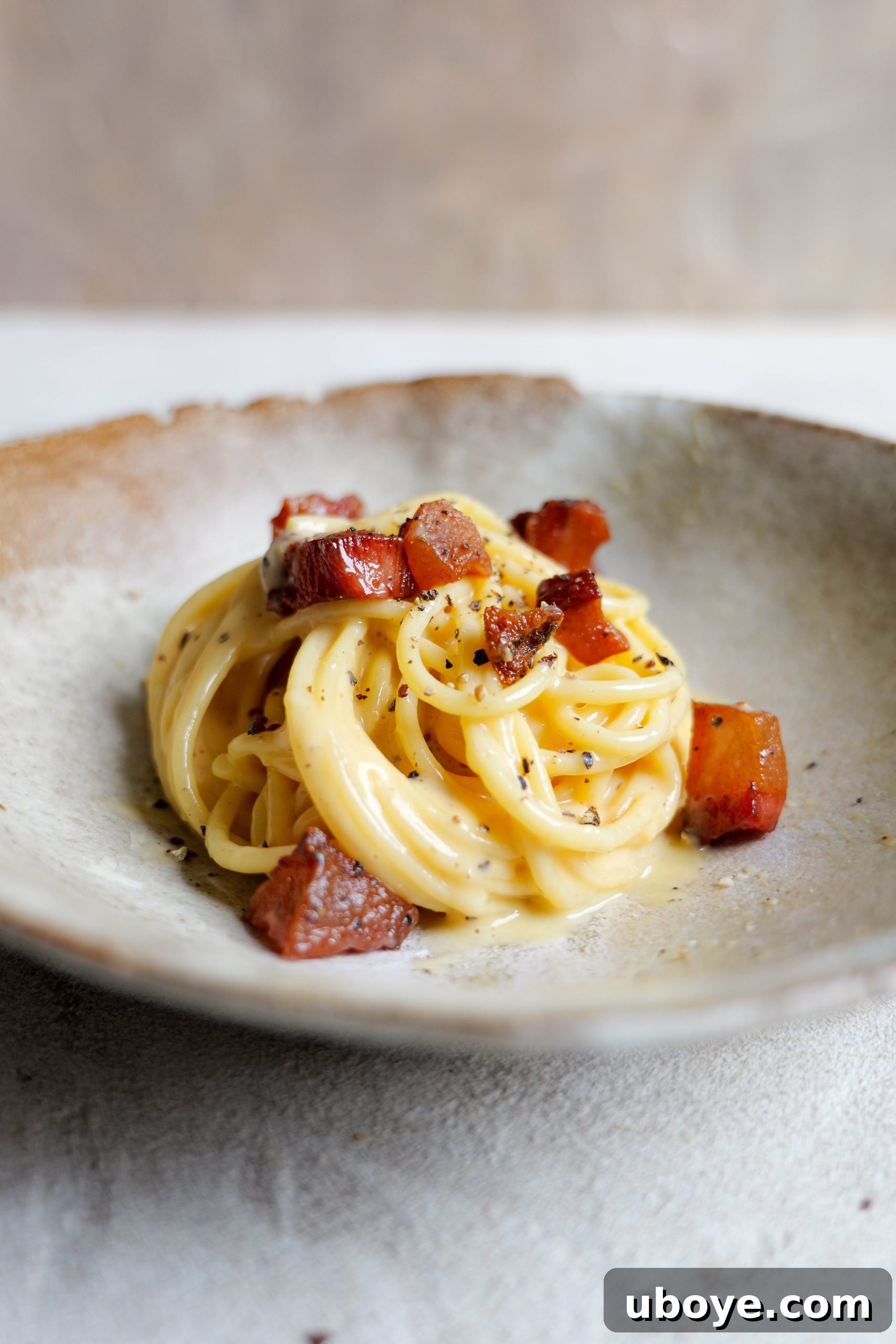
Authentic Carbonara: The Timeless Roman Masterpiece (No Cream!)
Have you ever encountered someone who claims not to like carbonara? It’s a common declaration, often followed by a telling detail: “Oh, you mean the one with cream?” This instant clarification reveals a widespread misconception. The version of carbonara served in countless chain restaurants, laden with heavy cream, diced bacon, garlic, and sometimes even a surprising addition of mushrooms or parsley, is a far cry from the revered classic.
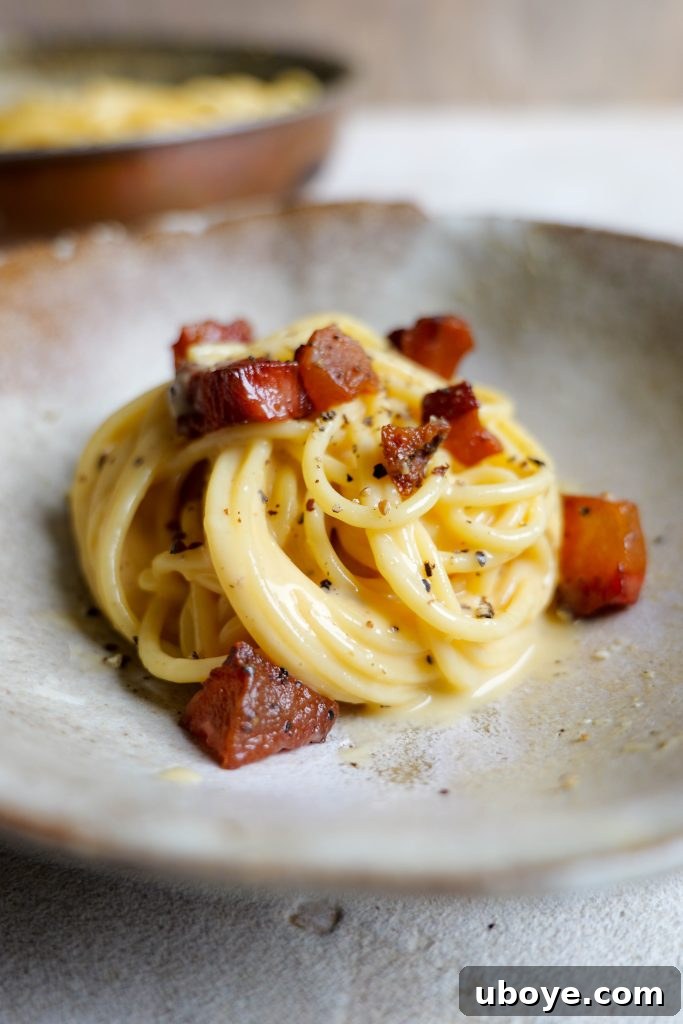
True, authentic Carbonara is a symphony of simplicity and precision. It’s a silky, rich pasta dish, created with just a handful of carefully selected, high-quality ingredients, bound together by masterful technique. Far from a labor of love, it’s a dish of meticulous timing and understanding, rewarding those who respect its heritage with an unparalleled depth of flavor. Like other iconic Italian dishes such as Aglio e Olio, Carbonara exemplifies how simple ingredients, when handled with expertise, can create culinary magic. When executed correctly, every single morsel is an absolute delight.
So, what exactly defines the perfect plate of classic Carbonara? Let’s delve into the core elements that elevate this dish from merely good to truly unforgettable.
Essential Ingredients for Classic Carbonara
The secret to an exquisite Carbonara lies not in a long list of ingredients, but in the quality and authenticity of a few key components. These are the pillars upon which a truly Roman Carbonara stands.
Guanciale: The Heart of Carbonara
While many households opt for readily available bacon or pancetta when whipping up a quick carbonara, the traditional and superior choice is guanciale. This cured pork cheek, hailing from Central Italy, boasts a significantly higher fat content than bacon, which is crucial for the dish’s signature richness. As it renders, guanciale releases a flavorful, smoky fat that forms the foundation of the sauce, imparting an unparalleled depth and a softer, more succulent texture to the meat itself.
Finding guanciale can sometimes be a challenge, as it’s not a staple in every supermarket. However, a visit to a specialty Italian deli or a well-stocked butcher often proves fruitful. If guanciale remains elusive, fear not! High-quality streaky bacon or pancetta can serve as a worthy substitute, though they won’t quite replicate the unique intensity of guanciale. But if you ever spot authentic guanciale, seize the opportunity – because tonight is destined for an extraordinary Carbonara experience!
Pecorino Romano: The Creamy Tang
Just like its counterpart guanciale, Pecorino Romano is frequently overlooked in favor of its more popular cousin, Parmesan. However, for a truly authentic Carbonara, Pecorino Romano is indispensable. Unlike Parmesan, Pecorino Romano is a hard, salty cheese made from sheep’s milk. Its sharper, tangier flavor profile and slightly softer texture are essential for creating the incredibly silky and creamy emulsion that defines the sauce.
When combined with the egg yolks and pasta water, Pecorino Romano melts into a luscious, smooth sauce that perfectly coats every strand of pasta. Its robust flavor stands up beautifully to the richness of the guanciale, ensuring a balanced and incredibly satisfying dish without the need for any dairy cream.
High-Quality Egg Yolks: The Binding Magic
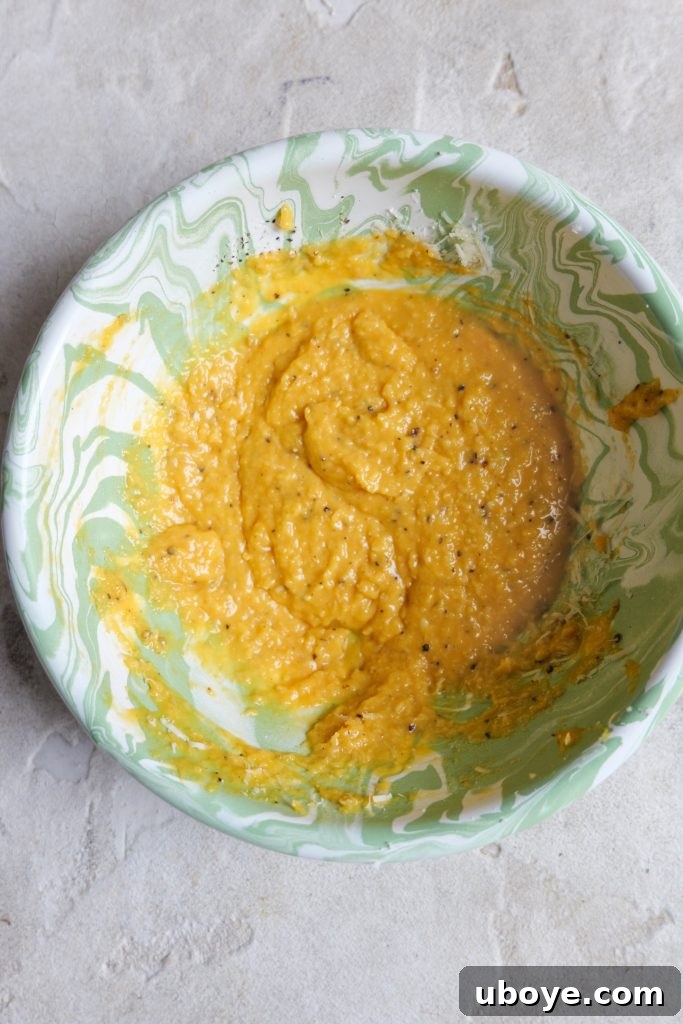
Eggs are, without a doubt, the soul of Carbonara. While the internet debates whether to include egg whites, purists firmly believe that only the yolks should be used. When rich egg yolks are whisked with the rendered guanciale fat, grated Pecorino Romano, and that precious liquid gold – starchy pasta water – they create the most opulent, silkiest, and creamiest sauce imaginable. This magical emulsion happens without a single drop of heavy cream, proving that traditional methods are often the most decadent.
Using fresh, high-quality eggs will significantly impact the flavor and color of your finished dish, lending a vibrant golden hue to the sauce.
The Right Pasta: A Perfect Canvas
The choice of pasta can truly make or break a Carbonara. Should it be short or long? Wide or thin? For Carbonara, simplicity and quality are paramount. While spaghetti is the most iconic choice, other shapes like bucatini (thick, hollow spaghetti) or rigatoni can also work wonderfully, particularly because their ridges or hollows are excellent for trapping the luscious sauce.
The key is to select a high-quality pasta, preferably bronze-die extruded, as its rougher surface will cling to the sauce better. While many artisanal brands exist, some supermarket options, like Cucina Matese spaghetti (an exclusive found at Coles in Australia, as mentioned in the original text), can also deliver excellent results. The starch released from cooking good quality pasta is vital for creating the creamy emulsion, so don’t underestimate its importance!
Freshly Ground Black Pepper: The Aromatic Finish
Often referred to as “cacio e pepe” (cheese and pepper) in its simplest form, freshly ground black pepper is more than just a seasoning in Carbonara; it’s a fundamental ingredient. Its pungent aroma and subtle heat cut through the richness of the guanciale and Pecorino, adding a crucial layer of complexity. Always use freshly cracked black peppercorns for the best flavor, rather than pre-ground pepper.
Mastering the Carbonara Technique
This is where many aspiring Carbonara chefs falter, yet it’s the core of achieving that unparalleled silky texture. Carbonara teeters on a delicate tightrope between a perfectly emulsified sauce and a plate of scrambled eggs. Success hinges on two critical factors: temperature control and the intelligent use of pasta water.
The Delicate Balance of Heat
The pan should be warm enough to encourage the emulsion but crucially, it must be OFF direct heat when you introduce the egg mixture. Introducing eggs to a hot pan still on the burner is a direct path to scrambled eggs, not a luscious sauce. The residual heat from the cooked pasta and the warmth of the pan are sufficient to gently cook the eggs without solidifying them, allowing them to form a smooth, velvety coating.
The Magic of Pasta Water
The starchy, salty water left over from cooking your pasta is your most valuable asset. It’s truly “liquid gold.” This water plays several vital roles: it helps deglaze the pan, incorporates the rendered guanciale fat, and, most importantly, provides the necessary moisture and starch to emulsify the egg and cheese mixture into a smooth, glossy sauce. By slowly incorporating pasta water, you maintain complete control over the sauce’s consistency, adjusting it until it reaches that perfect, coveted silkiness.
Common Mistakes to Avoid for Perfect Carbonara
- Adding Cream: This is the cardinal sin. Authentic Carbonara achieves its creaminess from egg yolks, cheese, and pasta water, not dairy cream.
- Overcooking the Eggs: This leads to a lumpy, curdled sauce. Remove the pan from direct heat before adding the egg mixture.
- Not Reserving Pasta Water: This essential ingredient is non-negotiable for emulsifying the sauce.
- Using Wrong Ingredients: Substituting regular bacon for guanciale, or Parmesan for Pecorino Romano, will significantly alter the flavor and texture.
- Adding Garlic or Onions: While delicious in other pasta dishes, these flavors are not traditional for Carbonara and distract from its simple elegance.
- Using Cold Ingredients: Ensure all ingredients, especially the eggs, are at room temperature to help with emulsification.
Crafting pasta for your loved ones is a rewarding experience. Explore my other pasta recipes and embark on a delicious culinary journey!
If you prepare this recipe, I’d love to see your creations! Please tag me on Instagram, TikTok, or Pinterest. Your feedback is invaluable, so feel free to leave any questions or reviews below. I always enjoy hearing about your cooking experiences and answering your food-related queries.
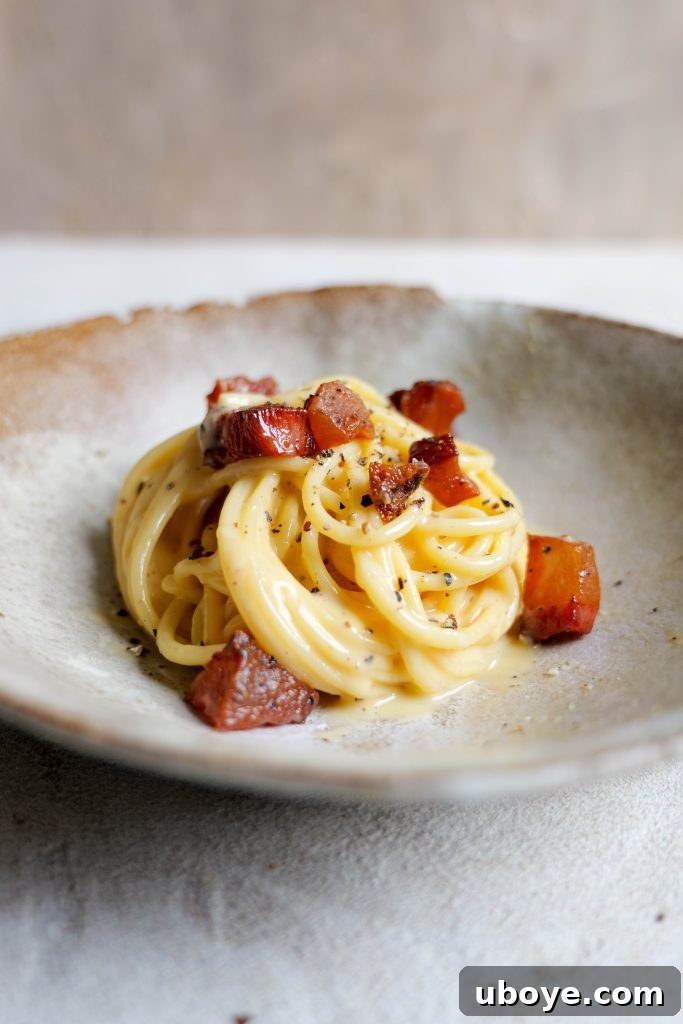
Carbonara
By Daen Lia
A classic take on the popular Italian staple, made authentically without cream.
Prep Time: 5 mins
Cook Time: 10 mins
Servings: 2 people
Ingredients
- 250 grams Cucina Matese Spaghetti (Exclusive from Coles, or other high-quality spaghetti)
- 4 large egg yolks
- 120 g Pecorino Romano, grated (plus extra for serving)
- 1 tsp fresh black peppercorns, freshly ground
- 200 g guanciale, diced
Instructions
- Bring a large pot of heavily salted water to a rolling boil. Add the spaghetti and cook until al dente (approximately 10 minutes, or according to package directions). Before draining, reserve up to 1 cup of the starchy pasta water. Drain the pasta well.
- While the pasta cooks, prepare the guanciale. Remove the rind and slice the guanciale into small, even cubes. Place the diced guanciale in a cold, dry pan (no oil needed – its fat will render). Turn the heat to medium-high and cook for 3-4 minutes, or until the guanciale is crispy and has rendered a significant amount of its fat. Carefully strain the rendered fat into a small bowl, reserving it. Set the crispy guanciale aside.
- In a separate small bowl, vigorously whisk together the egg yolks, grated Pecorino Romano, and freshly ground black pepper. Add two tablespoons of the reserved guanciale fat to this mixture and whisk until well combined and smooth.
- Return the pan used for the guanciale to a warm, but OFF-HEAT burner. Deglaze the pan with a splash of hot pasta water, scraping up any delicious bits from the bottom. Add the drained pasta to this pan.
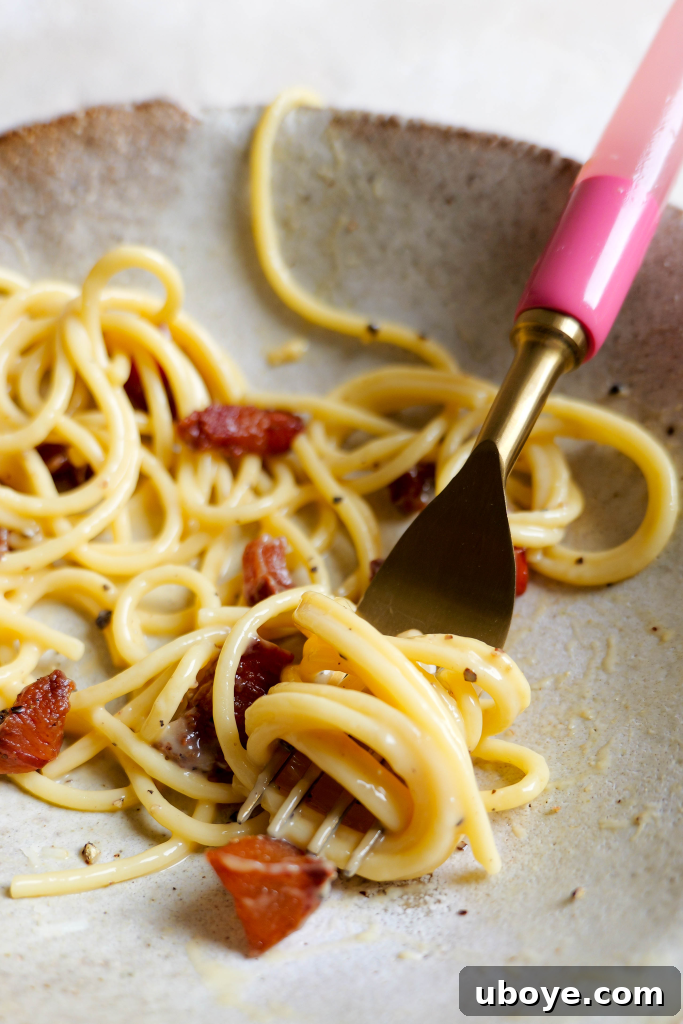
- Immediately pour the egg and cheese mixture over the pasta. Working quickly, stir the pasta continuously with tongs while slowly incorporating the reserved pasta water, one tablespoon at a time. The goal is to create a smooth, glossy, and silky sauce that coats the pasta without scrambling the eggs. You may not need all of the pasta water; stop when you achieve the desired consistency.
- Add three-quarters of the crispy guanciale to the pasta and toss to combine.
- Serve immediately, garnished with the remaining crispy guanciale, an extra sprinkle of grated Pecorino Romano, and a final flourish of freshly ground black pepper. Enjoy!

Liked this recipe? Leave a comment or review above!