
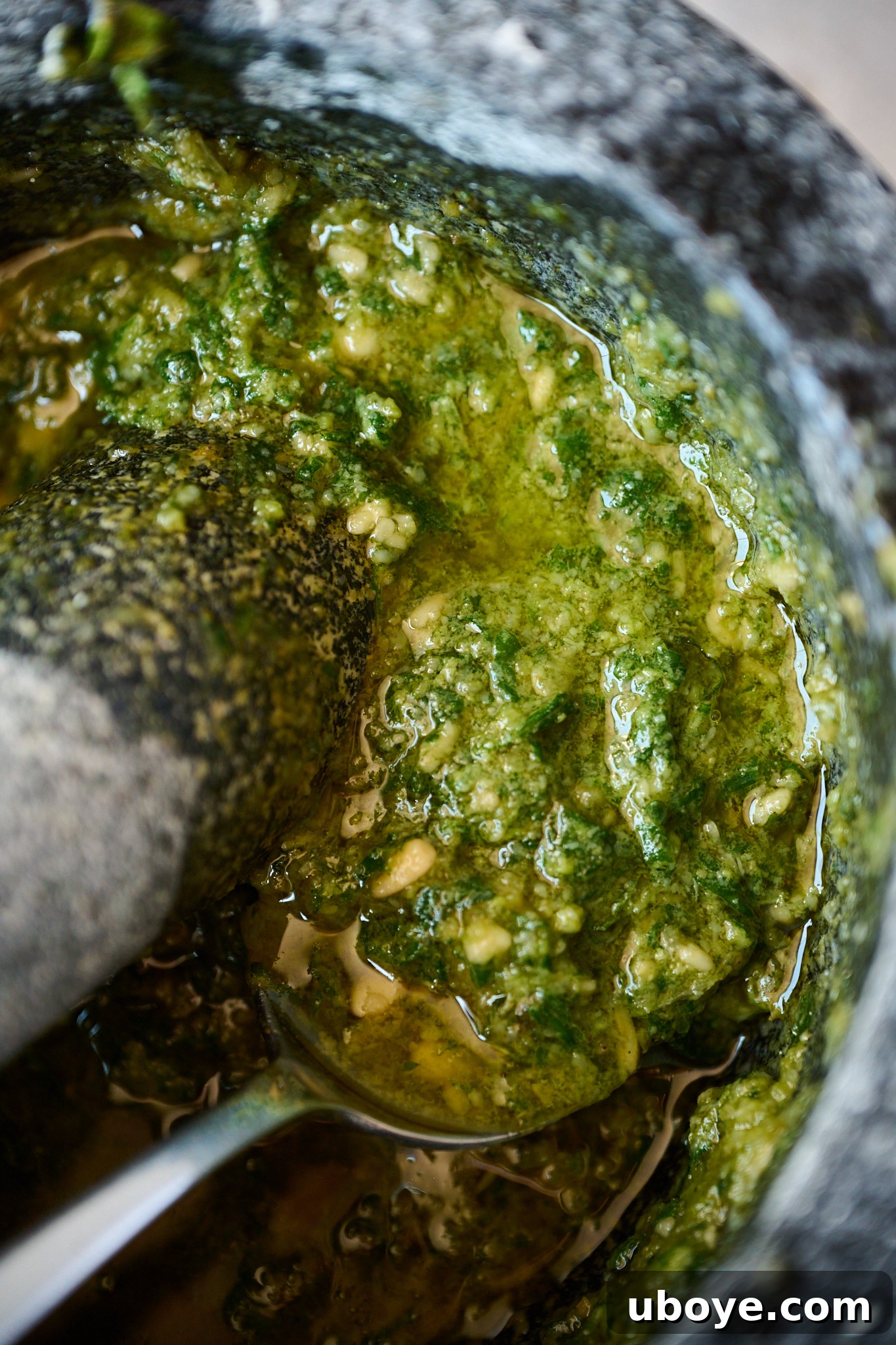
Authentic Mortar & Pestle Pesto: Unlocking Genovese Flavors
If you’ve never experienced the magic of making authentic pesto by hand, you’re in for an extraordinary culinary journey. This recipe for Authentic Mortar & Pestle Pesto is more than just a dish; it’s a direct connection to the heart and soul of traditional Genovese cooking. Forget the food processor for a moment and embrace an old-world technique that transforms simple, fresh ingredients into a vibrant, deeply flavorful sauce with an unmatched rustic texture and intoxicating aroma. The manual process gently coaxes out the essential oils from each component, creating a pesto that store-bought varieties can only dream of matching.
This exquisite sauce is incredibly versatile. Beyond its classic pairing with pasta, explore its potential in a vibrant and summery tomato tart, drizzled generously over a no-cook tomato pasta dish, or elevating a delicious chicken parmesan focaccia sandwich. Once you taste the difference that a mortar and pestle makes, you’ll understand why this method has been cherished for centuries.
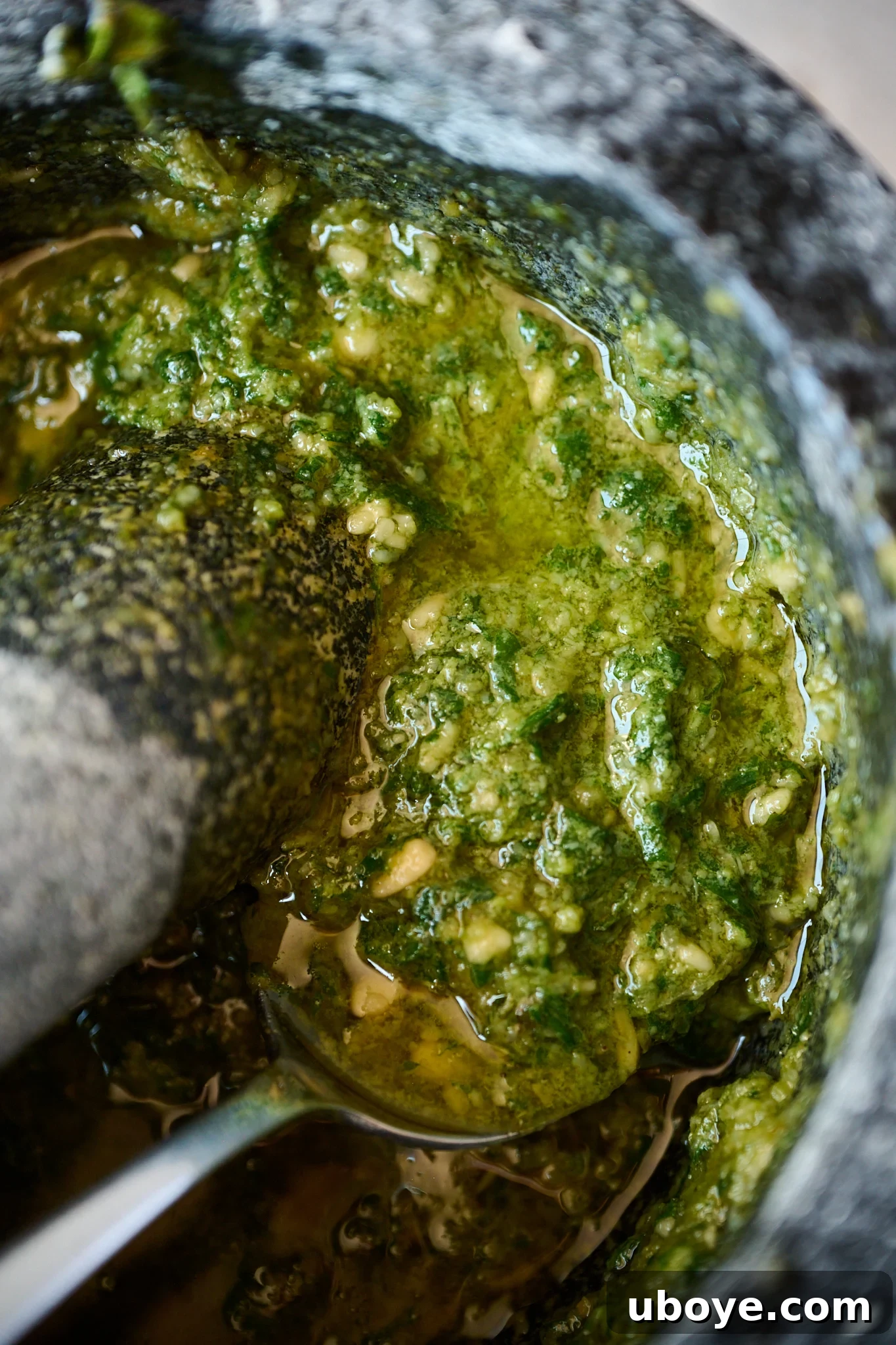
There’s a profound satisfaction that comes from slowing down and allowing high-quality, simple ingredients to truly shine. Authentic Mortar & Pestle Pesto embodies this philosophy perfectly. Hailing from Genoa, Italy, this classic recipe relies on the finest fresh basil, pungent garlic, delicate pine nuts, a blend of authentic Italian cheeses, and rich olive oil. The real secret to its superiority lies not just in these ingredients, but in the time-honored traditional method of preparation.
The Magic of the Mortar and Pestle
While modern kitchen appliances like food processors offer speed, they often compromise the integrity of delicate ingredients. A blender or food processor chops and slices ingredients, introducing heat and often bruising the basil, which can result in a slightly bitter, less aromatic pesto with a uniform, sometimes watery texture. In contrast, using a mortar and pestle works by crushing and grinding. This gentle yet firm action slowly breaks down the cell walls of the basil leaves and garlic, releasing their flavorful oils and aromas without introducing excessive heat or aeration. The result is a pesto that’s incredibly creamy, intensely aromatic, and boasts a wonderfully rustic, slightly coarse texture that truly speaks of its handmade origins.
This superior texture and flavor profile make mortar and pestle pesto a culinary revelation. It’s perfect on freshly cooked pasta, but its applications are limitless. Imagine it drizzled lavishly over a summer pasta salad, spread thickly on a warm slice of homemade focaccia sandwich, spooned onto a gourmet salami and burrata pizza, or even used to effortlessly elevate your morning fried eggs. The depth of flavor it brings to any dish is truly unparalleled.
Why This Traditional Pesto Recipe Will Become Your Favorite
- Unmatched Flavor & Texture: The primary reason to embrace the mortar and pestle is the unparalleled depth of flavor and delightful rustic texture it imparts. The gentle grinding method extracts the maximum aromatic compounds from the basil and garlic, creating a sauce that is far more vibrant and complex than any machine-made version.
- Impressively Versatile: From enhancing simple pasta dishes to serving as a sophisticated spread on artisan bread, or a vibrant accompaniment to grilled vegetables and meats, this pesto elevates virtually any meal with its robust, fresh taste.
- Celebration of Simple, Honest Ingredients: With a short list of high-quality components – fresh basil, garlic, pine nuts, a blend of traditional cheeses, and premium olive oil – this recipe truly celebrates the beauty of natural, whole ingredients, letting their inherent flavors shine through.
- A Relaxing & Rewarding Culinary Experience: Stepping away from electric gadgets and engaging in the mindful process of making pesto by hand can be incredibly therapeutic. It’s a rewarding culinary experience that connects you to generations of Italian cooking traditions.
The Pillars of Authentic Pesto: Quality Ingredients
The success of any simple recipe hinges on the quality of its ingredients, and this holds especially true for authentic Genovese pesto. Freshness is paramount, and sticking to traditional choices is key to capturing that true, iconic flavor profile. Seek out the best-quality components you can find; they truly make all the difference.
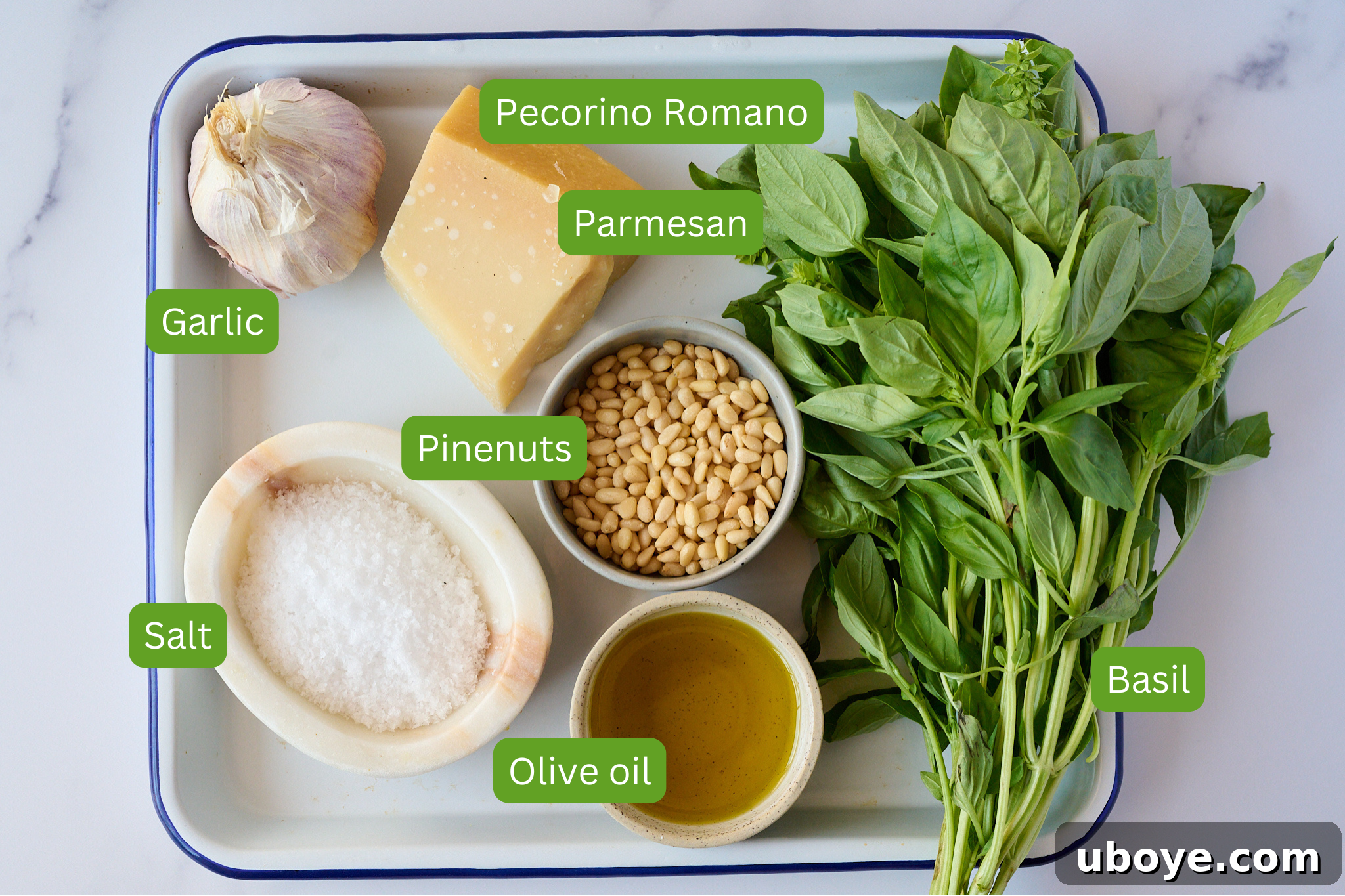
- Fresh Basil: This is the star of the show. Sweet, intensely aromatic Genovese basil with smaller leaves is the ideal choice. These younger leaves are more tender, less prone to bitterness, and yield that signature bright green color and delicate, sweet-spicy flavor. Avoid basil with large, overly dark leaves, as they can sometimes lead to a slightly peppery or minty taste.
- Pine Nuts: Traditionally used in classic Italian pesto, pine nuts (or “pinoli”) contribute a subtle, buttery nuttiness and help achieve a creamy, emulsified texture. While lightly toasting them can enhance their depth of flavor, it’s optional for traditional pesto.
- Parmigiano-Reggiano & Pecorino Romano: This duo of hard Italian cheeses creates a perfectly balanced flavor profile. Authentic Parmigiano-Reggiano offers a mellow, nutty, and slightly sweet richness, while Pecorino Romano, made from sheep’s milk, delivers a sharper, saltier, and more piquant kick. Together, they round out the pesto beautifully, adding complex umami notes.
- Fresh Garlic: Use a small amount of fresh garlic, as its flavor intensifies when crushed. Its pungent warmth is crucial for authentic pesto. Adjust quantity to your preference, but remember a little goes a long way.
- Extra Virgin Olive Oil: Opt for a high-quality, cold-pressed extra virgin olive oil with a mild, fruity flavor. A robust, peppery olive oil can overpower the delicate basil. The oil is essential for both flavor and achieving the desired emulsified consistency.
- Sea Salt: Coarse sea salt isn’t just for seasoning; it acts as an abrasive, helping to break down the garlic and basil leaves against the mortar. It also brightens the flavors and helps preserve the pesto’s vibrant color.
How to Craft Authentic Mortar & Pestle Pesto: A Step-by-Step Guide
Making pesto with a mortar and pestle is a meditative and surprisingly simple process. With just a few steps of crushing, grinding, and stirring, you’ll create a vibrant, aromatic, and truly traditional pesto in minutes. Patience and a gentle touch are your best tools here.
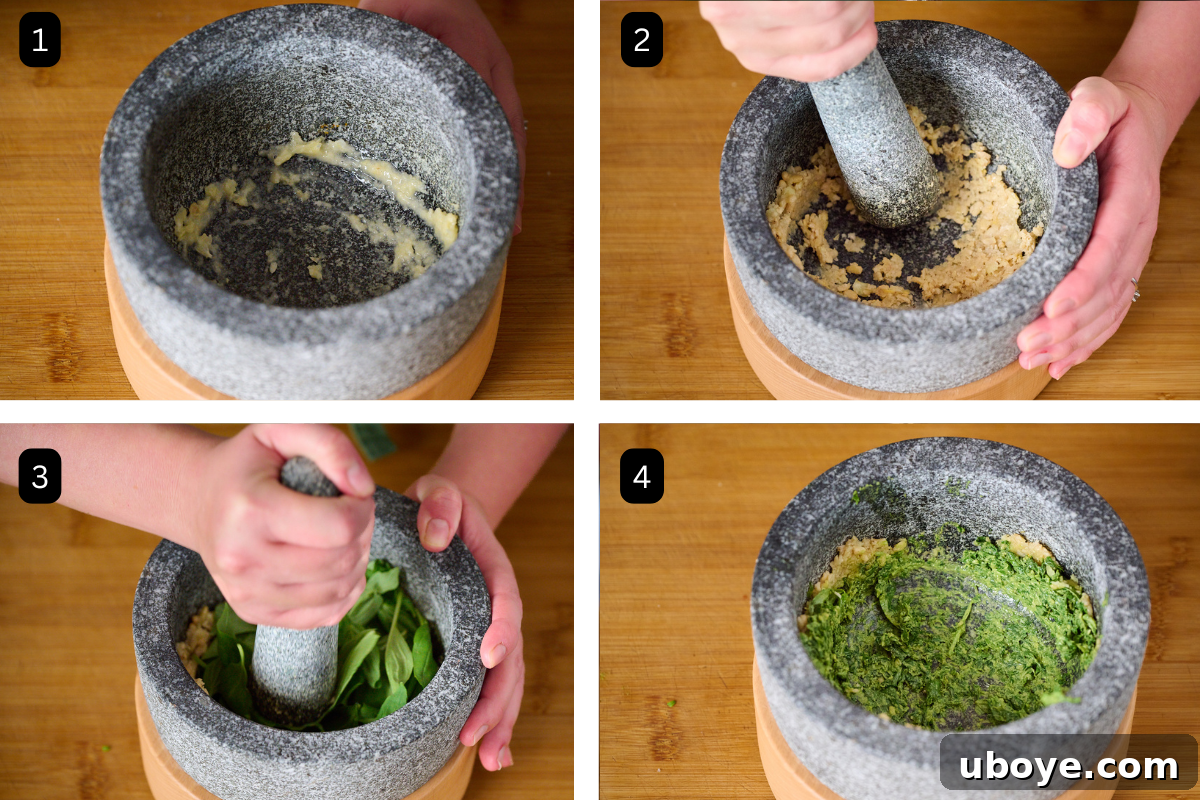
- Step 1: Prepare the Basil. Carefully remove the basil leaves from their stems. For extra crispness and to help retain their vibrant green color, soak the basil leaves in a bowl of iced water for about 5 minutes. Gently remove them and pat them thoroughly dry with paper towels. Any excess water can dilute the pesto’s flavor.
- Step 2: Create the Garlic Paste. Place the garlic cloves along with a generous pinch of coarse sea salt into your mortar. Using the pestle, begin to crush and grind them with a circular motion until a smooth, fragrant paste forms. The salt helps break down the garlic fibers efficiently. (See Image 1)
- Step 3: Incorporate the Pine Nuts. Add the pine nuts to the garlic paste. Continue to pound and grind them with the pestle. Aim for a texture where they are broken down, releasing their oils, but still retain some slight texture – not a completely smooth butter. (See Image 2)
- Step 4: Add the Basil in Batches. Introduce the dried basil leaves into the mortar in three or four smaller batches. This prevents overcrowding and allows for easier grinding. Pound and gently rotate the pestle to crush the basil against the sides of the mortar. Continue this process until all the basil has been added and you have achieved a bright green, somewhat coarse paste. (See Images 3 & 4)
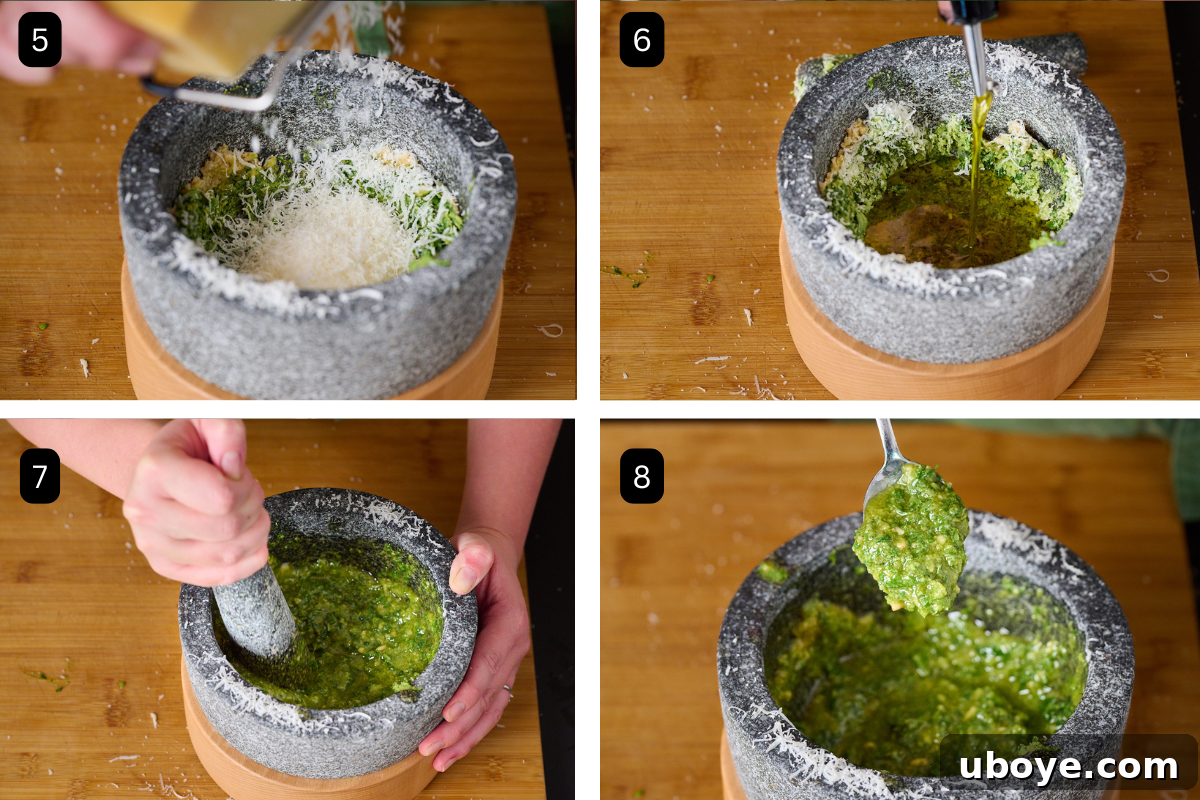
- Step 5: Mix in the Cheeses. Add the grated Pecorino Romano and Parmigiano-Reggiano cheeses to the basil mixture in three separate batches. After each addition, use the pestle to gently mix and incorporate the cheese thoroughly until it is well combined. (See Image 5)
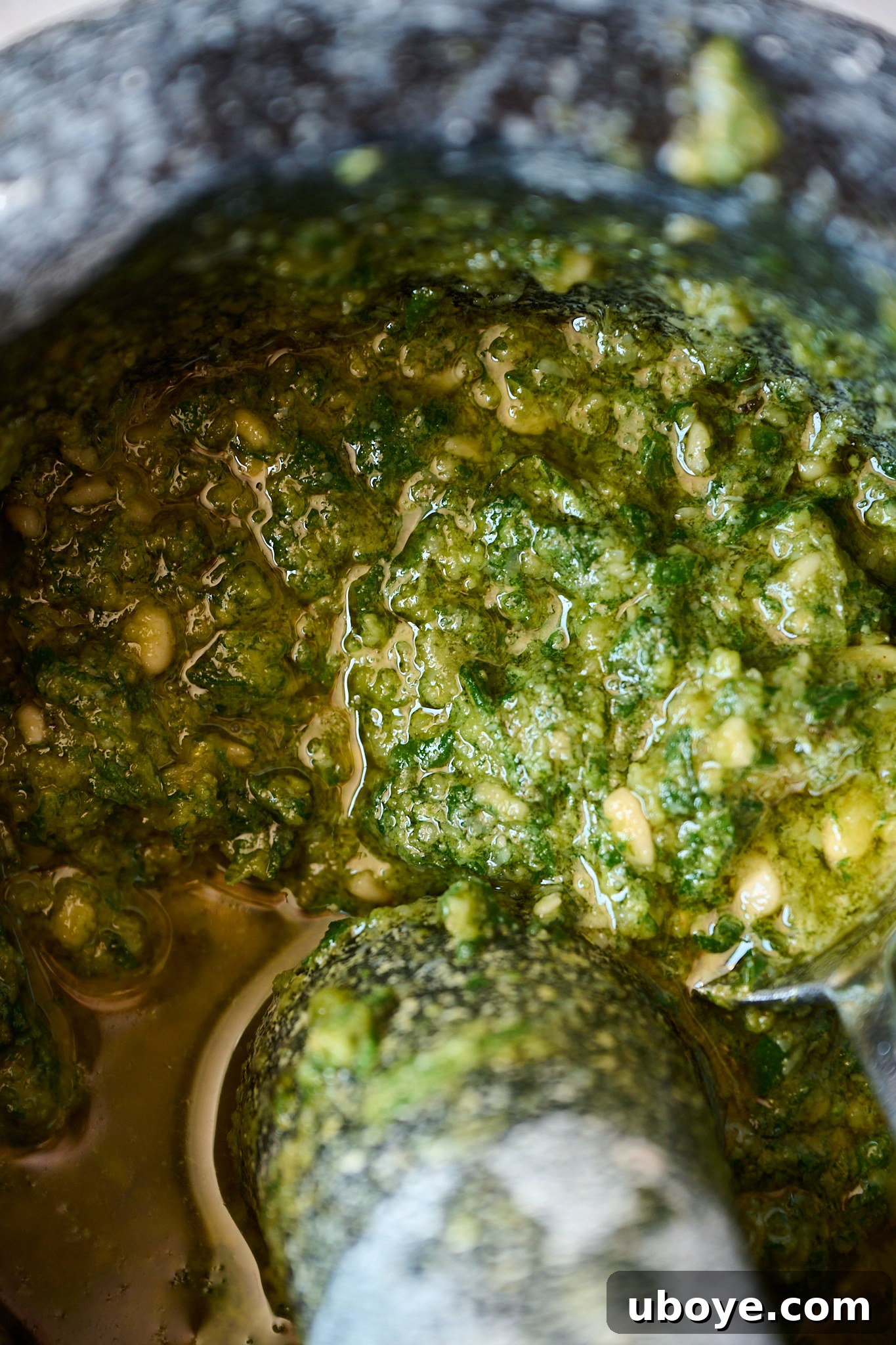
- Step 6: Gradually Add Olive Oil. Slowly drizzle in the extra virgin olive oil while continuously stirring with the pestle or a spoon. Continue adding oil and mixing until the pesto reaches your desired consistency – typically a creamy, spoonable sauce. Taste and adjust seasoning with additional salt if needed. (See Images 6, 7 & 8)
Frequently Asked Questions About Authentic Pesto
Yes, for convenience, pesto can certainly be made in a food processor or blender. However, it’s important to understand that the result will have a different texture and often a less vibrant flavor compared to the traditional mortar and pestle method. The manual grinding gently extracts the essential oils from the basil and garlic, leading to a creamier, more aromatic, and truly authentic pesto. If using a machine, pulse in short bursts to avoid over-processing and overheating the ingredients.
For an authentic Genovese pesto, small-leaf Italian basil or specifically Genovese basil is highly recommended. This variety possesses a sweeter, more delicate flavor profile compared to larger-leaf types. It’s crucial for achieving the classic vibrant green color and the fresh, nuanced aroma that defines true Genovese pesto.
While pine nuts are the traditional choice and contribute uniquely to the flavor and texture of Italian pesto, you can use substitutes if necessary. Good alternatives include walnuts, almonds, or cashews. Be aware that each nut will impart a slightly different flavor and texture to your pesto. For the most authentic and classic result, pine nuts should always be your first choice.
Pesto can oxidize and turn dark green or brown when exposed to air. To minimize this, ensure your basil is thoroughly dried after washing, use fresh, high-quality olive oil, and consider briefly blanching your basil (though this is less traditional). For storage, always cover the surface of the pesto with a thin layer of olive oil or plastic wrap pressed directly onto the surface to create an airtight seal.
Storing Your Homemade Pesto
While mortar & pestle pesto is undoubtedly best enjoyed fresh, its vibrant flavors can be preserved for later use. For short-term storage, transfer your pesto to a small, airtight container and store it in the refrigerator for up to 3 days. To prevent oxidation and maintain its beautiful green color, pour a thin layer of extra virgin olive oil over the surface of the pesto before sealing the container. For longer storage, pesto freezes exceptionally well. Spoon it into ice cube trays, freeze until solid, then transfer the pesto cubes to a freezer-safe bag or container. This method allows you to thaw just the right amount whenever you need a burst of fresh flavor. It can be stored frozen for several months.
Creative Ways to Serve Your Authentic Pesto
This traditional mortar and pestle pesto truly shines when tossed with fresh homemade egg pasta. Classic Ligurian shapes like trofie or trenette are perfect, but it also pairs beautifully with spaghetti, gnocchi, or even whole-grain varieties for a healthier twist. Beyond pasta, its versatility knows no bounds. Spread it generously on warm slices of homemade crispy focaccia or crusty bruschetta for an irresistible appetizer. Use it as a vibrant finishing touch for roasted vegetables such as potatoes, carrots, zucchini, or bell peppers. Stir a spoonful into creamy soups, fold it into warm grains or quinoa bowls for an instant flavor boost, or even mix a little into homemade mayonnaise or Greek yogurt to create a flavorful sandwich spread or dip. It makes an excellent base for a summery tomato tart or a gourmet pizza sauce. Don’t be afraid to experiment – your authentic pesto will elevate almost any dish!
Have questions or want to leave a review? Please do so below the recipe card! We always love answering your questions and hearing your feedback on our recipes.
If you make this recipe, please follow us and tag us on Instagram, Tik Tok, or Pinterest so we can see your wonderful creations!
Pin Recipe
Print Recipe
Authentic Mortar & Pestle Pesto
Daen Lia
10 mins
8
Ingredients
Pesto
- 1 garlic clove
- 1/2 tsp salt (sea salt recommended)
- 1/4 cup pine nuts
- 1 cup fresh basil (Genovese basil preferred)
- 1.4 ounces Pecorino Romano cheese, grated
- 0.7 ounce Parmesan cheese (Parmigiano-Reggiano), grated
- 3/4 cup olive oil, extra virgin (mild, fruity type)
Measurements are provided in Imperial (US).
Instructions
Making the Pesto
-
Soak Basil: Remove the basil leaves from the stems and soak them in a bowl of iced water for 5 minutes. This helps them stay vibrant. Remove and pat them thoroughly dry with paper towels to prevent watering down the pesto.
-
Make a Paste: Place the garlic clove and salt into a mortar and pestle and crush until a fine paste forms. Then, add the pine nuts and pound until they are broken down and have released their oils, but still retain some texture. Next, add the basil leaves in three or four small batches and continue to pound and grind until you achieve a bright green, semi-smooth paste.
-
Add Cheese & Oil: Add the grated Pecorino Romano and Parmesan cheeses in three batches, mixing thoroughly with the pestle between each addition. Gradually stir in the extra virgin olive oil until the pesto reaches your preferred consistency – typically thick but pourable. Taste and adjust seasoning if necessary.
Video
Notes
- Mortar and Pestle vs. Food Processor: While this recipe is optimized for a mortar and pestle for superior texture and flavor, a food processor can be used for convenience. If using a machine, pulse the ingredients in short bursts to avoid over-processing and bruising the basil, which can lead to a less vibrant color and a slightly bitter taste.
- Customize Your Pesto: This recipe provides an excellent foundation. Feel free to tweak it to suit your palate. Add a pinch of red chili flakes for a subtle kick, a squeeze of fresh lemon juice for brightness, or incorporate different herbs alongside the basil for a unique twist.
- Storage Tip: To keep your homemade pesto fresh in the refrigerator for up to 3 days, always pour a thin layer of olive oil over the top before sealing the container. This creates a barrier against air and helps prevent browning.
Nutrition
Calories: 241kcal
Carbohydrates: 1g
Protein: 3g
Fat: 25g
Saturated Fat: 4g
Polyunsaturated Fat: 4g
Monounsaturated Fat: 16g
Cholesterol: 7mg
Sodium: 245mg
Potassium: 43mg
Fiber: 0.2g
Sugar: 0.2g
Vitamin A: 202IU
Vitamin C: 1mg
Calcium: 89mg
Iron: 1mg
Nutrition information is automatically calculated, so should only be used as an approximation.

Like this? Leave a comment below!