
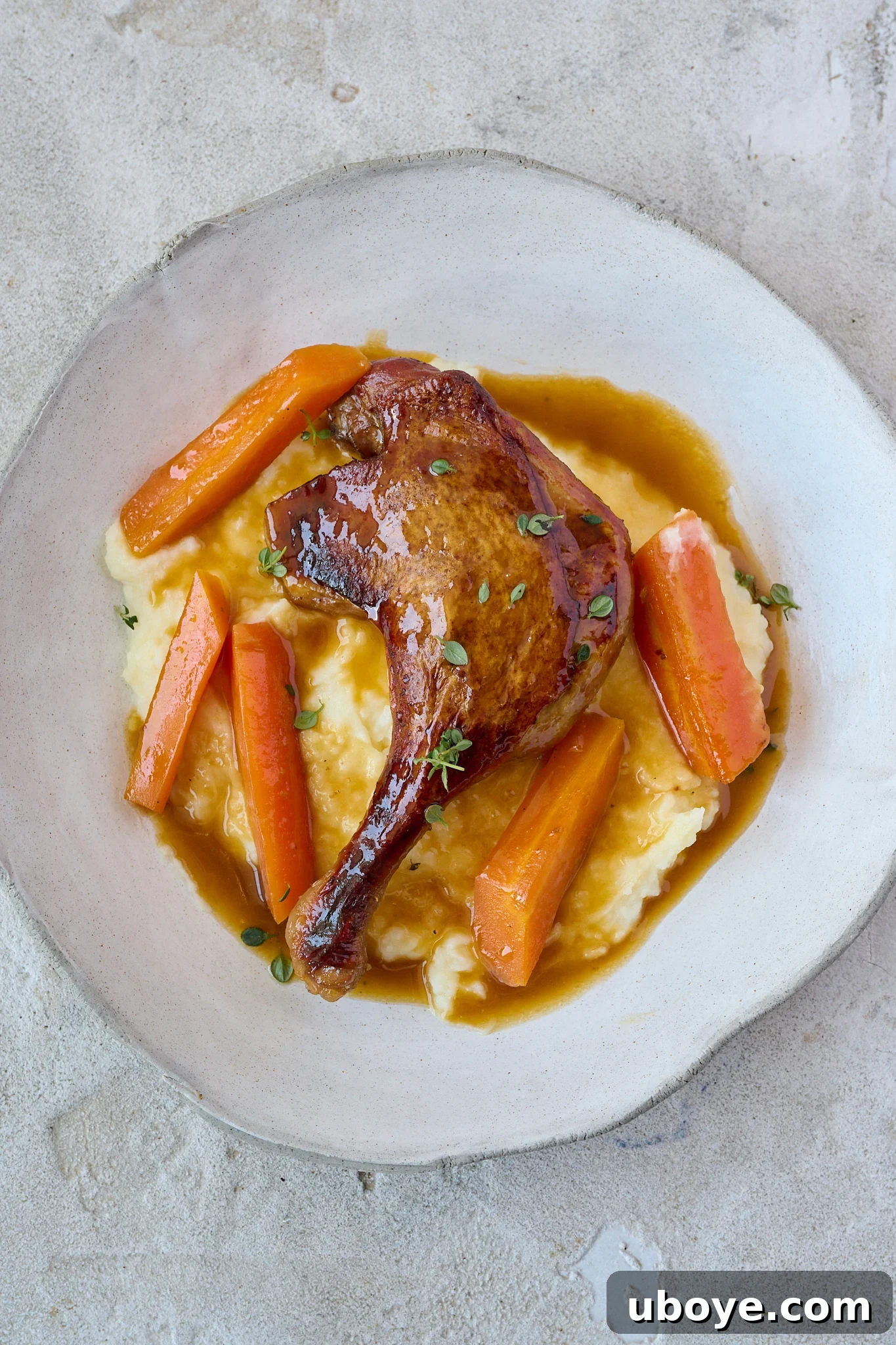
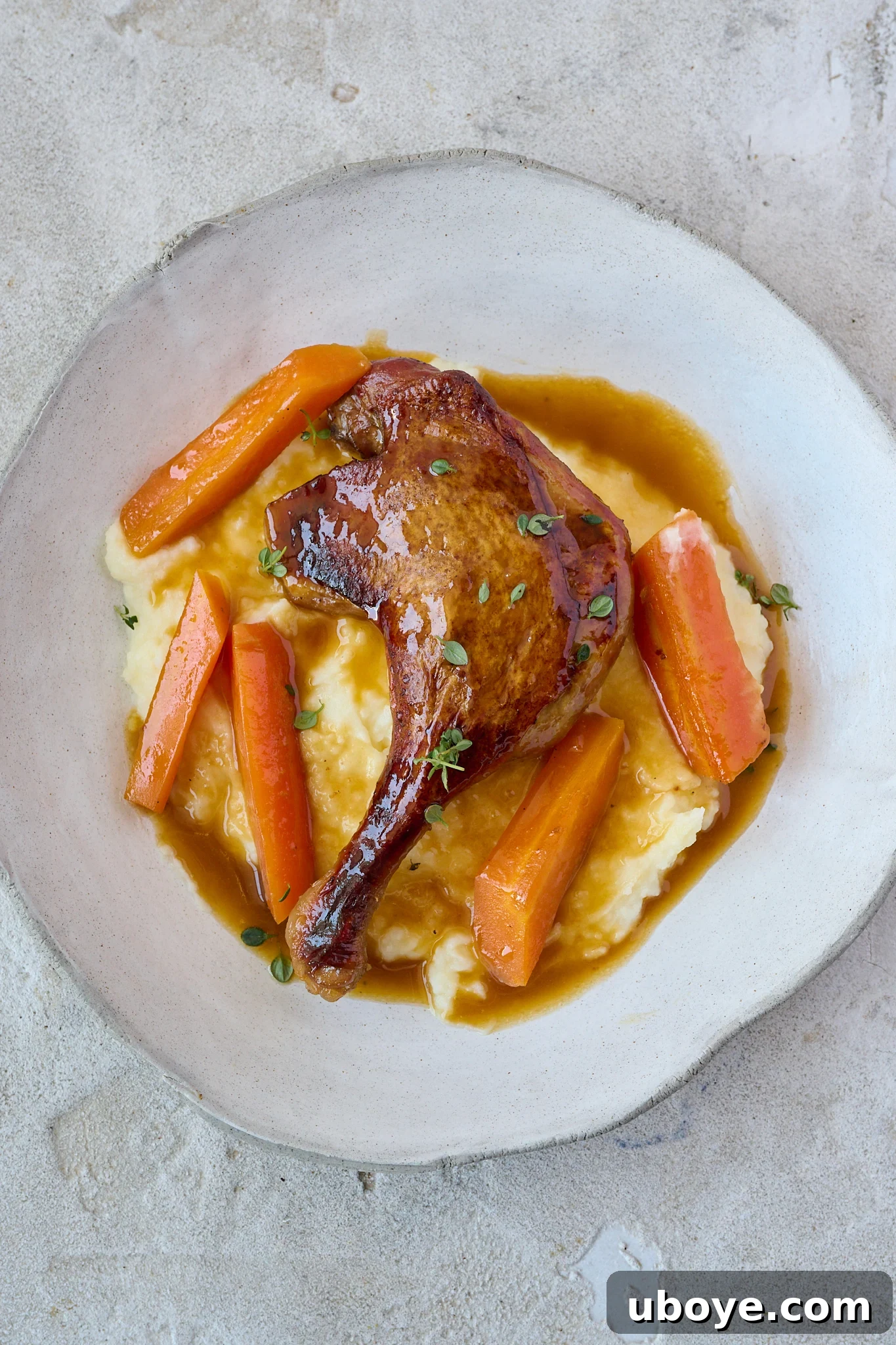
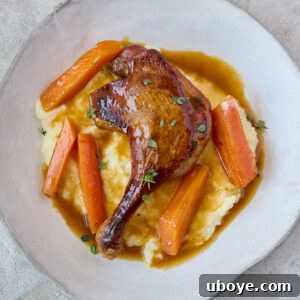
Embark on a culinary journey with this exquisite recipe for Crispy Braised Duck Legs with Spiced Orange Sauce. This dish offers a sophisticated yet approachable take on the beloved French classic, Duck à l’Orange. Imagine succulent duck legs, pan-fried to achieve a beautifully crisp skin, then slowly braised alongside tender carrots in an aromatic sauce that perfectly balances sweet, savory, and tangy notes. Each bite promises meltingly tender meat that effortlessly falls off the bone, enveloped in a rich, sticky orange glaze infused with warm spices. Serve this masterpiece with a generous helping of creamy mashed potatoes, and you’ll experience a comforting and truly unforgettable meal that tastes like pure indulgence.
✨ Don’t let any of that precious duck fat go to waste! It’s culinary gold. Transform it into incredibly flavorful crispy duck fat roasted potatoes for another delicious side dish. You’ll thank yourself later!
Unlock the Secret to Perfectly Cooked Duck Legs!

For many home cooks, duck can seem like an intimidating protein, often reserved for restaurant menus or special occasions. The fear of ending up with tough meat or rubbery skin often deters even experienced chefs. However, I’m here to demystify the process and assure you that preparing duck at home doesn’t have to be daunting at all. With the right technique, you’ll be rewarded with an unparalleled culinary experience: incredibly tender, juicy meat encased in a beautifully rendered, shatteringly crisp skin.
This recipe specifically utilizes duck legs, also affectionately known as Marylands, which are ideally suited for a low, slow, and moist cooking environment. Unlike leaner duck breasts, duck legs thrive when given ample time to break down their connective tissues, resulting in a remarkably tender texture. Our method employs a brilliant combination of pan-frying and braising, a two-step approach designed to deliver the best of both worlds: that coveted crisp, golden skin and exquisitely tender, fall-off-the-bone meat.
The journey begins by pan-frying the duck legs until their skin is rendered and golden. They are then gently braised alongside sweet carrots in our signature spiced orange sauce – a symphony of sweet, savory, and subtly sticky flavors. This vibrant sauce, a modern twist on the classic, benefits immensely from peak-season citrus, making the dish particularly delightful during the winter months. It’s an absolutely perfect main course, especially when served with a generous side of creamy mashed potatoes, ensuring every last drop of the glorious sauce is savored. Beyond being a fantastic weeknight treat, its elegant presentation and rich flavors make it an unexpected yet brilliant centerpiece for your Christmas dinner or any festive gathering.
Essential Ingredients for Crispy Braised Duck Legs
Crafting this restaurant-quality dish might sound complex, but the ingredient list for our crispy braised duck with spiced orange sauce is surprisingly straightforward. It features a harmonious blend of everyday pantry staples and a few select special ingredients that elevate the flavor profile to extraordinary heights. Each component plays a crucial role in achieving the perfect balance of taste and texture.
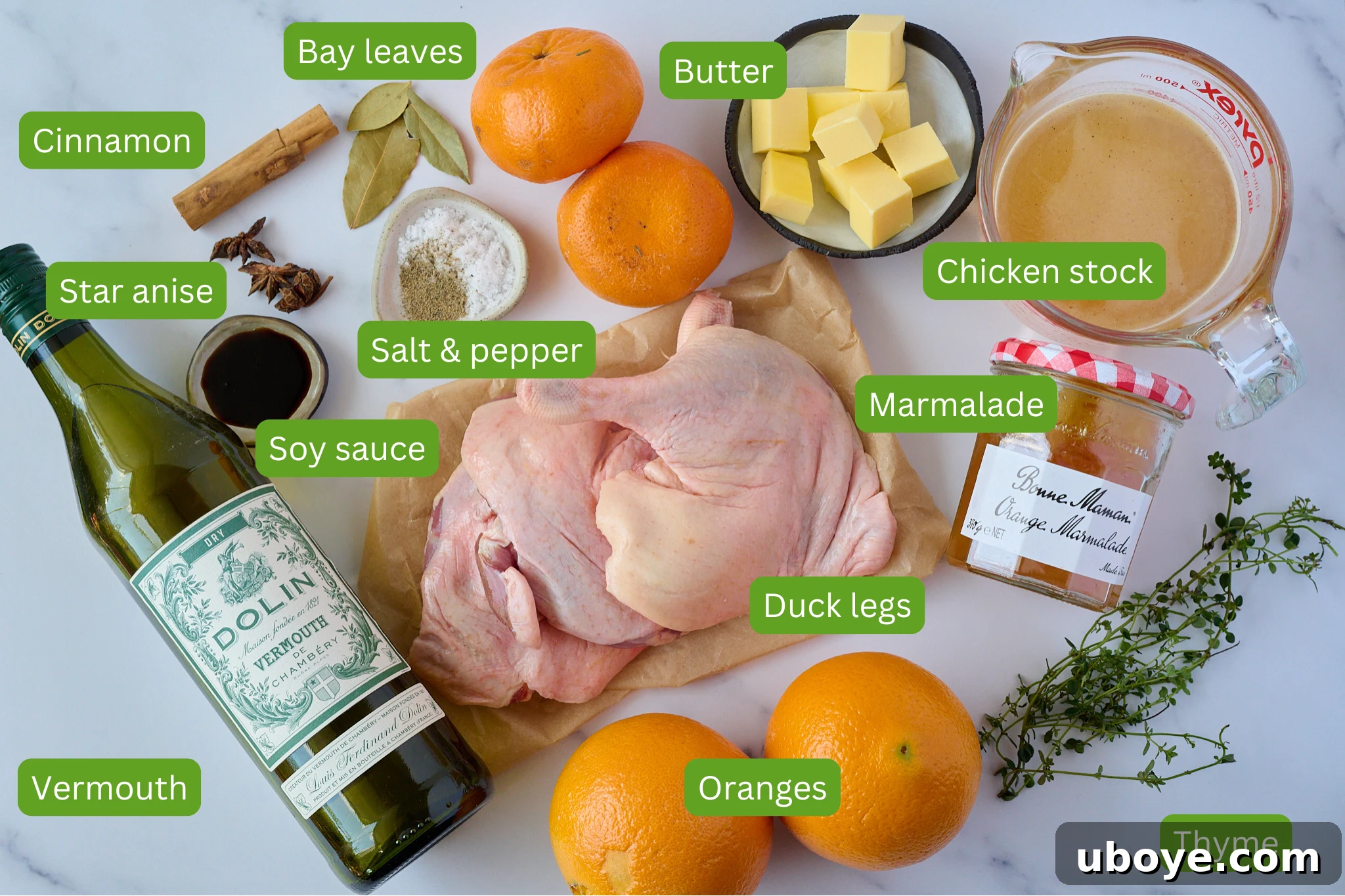
- Duck Legs (Marylands): These are the star of our dish. Duck legs are naturally rich and succulent, with ample fat that renders beautifully, yielding a wonderfully crisp skin and exceptionally tender meat when slow-cooked. Look for plump, fresh duck legs at your local butcher or specialty meat counter for the best quality.
- Fresh Oranges: Integral to the classic Duck à l’Orange profile. You’ll utilize both the vibrant zest and the bright, tangy juice. For an added layer of complexity and sweetness, consider incorporating mandarins or clementines into the sauce, especially when they are in season and at their sweetest.
- Warm Spices: A thoughtful blend of cinnamon, star anise, and bay leaves gently infuses the sauce with an irresistible warmth and depth. It’s crucial to use a whole cinnamon stick here; ground cinnamon can alter the sauce’s texture and cloud its clarity. These whole spices release their aromatics slowly during the braising process, creating a nuanced, fragrant backdrop.
- Soy Sauce: While it might seem an unconventional addition to a classic French-inspired dish, soy sauce is a non-negotiable ingredient in this recipe. Its profound umami notes and savory depth expertly balance the sweetness of the orange, creating a more complex and well-rounded flavor profile that keeps you coming back for more.
- Butter: Introduced at the very end of the cooking process, butter is swirled through the reduced sauce. This final touch emulsifies the sauce, transforming it into a luxuriously glossy, silky, and rich gravy that perfectly coats the duck and complements its flavors. It binds all the elements into a cohesive, velvety finish.
- Vermouth: A delightful secret weapon for deglazing the pan. Dry vermouth adds a subtle sweetness and aromatic depth without overpowering the delicate orange and spice flavors. It effectively lifts all the caramelized brown bits (fond) from the bottom of the pan, which are packed with incredible flavor. For a more traditional rendition often found in classical Duck à l’Orange, Cointreau can be used as a fragrant orange liqueur alternative. A dry white wine is also a suitable substitute if vermouth or Cointreau aren’t available.
- Carrots: While not pictured in our ingredient image (a minor oversight!), large, robust carrots are essential. Peeled and halved lengthways, they braise alongside the duck, absorbing the rich flavors of the sauce and becoming wonderfully tender and sweet. They add a lovely earthiness and textural contrast to the dish.
For a precise breakdown of quantities and a comprehensive list of all ingredients, please refer to the detailed recipe card at the bottom of this article.
Step-by-Step Guide: How to Make Crispy Braised Duck Legs
Conquering the art of cooking duck is easier than you think! Follow this easy-to-understand, step-by-step guide, complete with visual cues, and you’ll soon be preparing these crispy braised duck legs with the confidence of a seasoned chef. This method ensures both tender meat and irresistibly crispy skin every single time.
Step 1: Perfecting the Pan-Fry
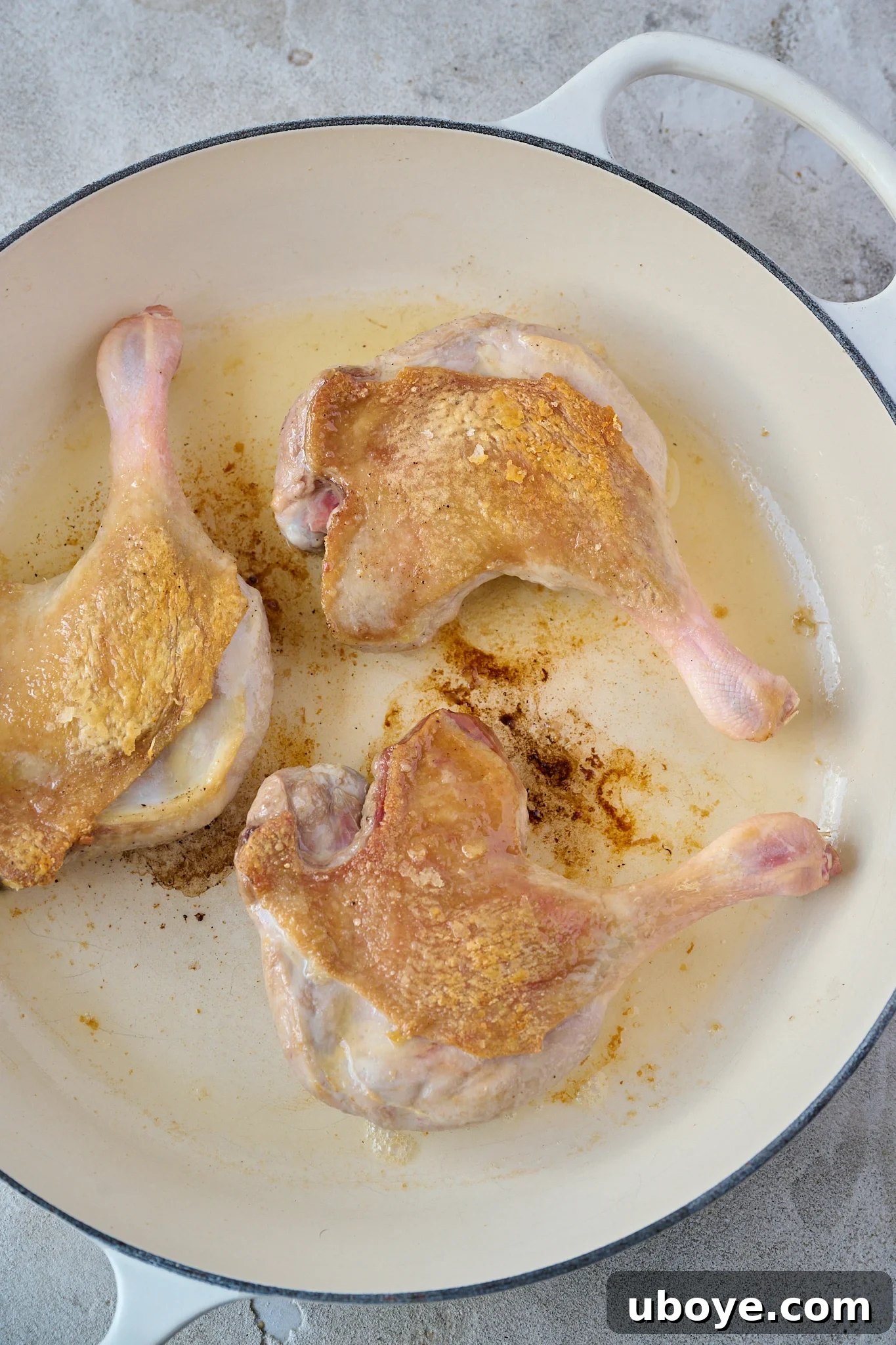
Begin by generously seasoning the duck legs on all sides with salt and freshly ground black pepper. Allowing them to sit at room temperature for about 15 minutes before cooking helps achieve a more even sear. Now, here’s a crucial tip for truly crispy skin: place the duck legs, skin-side down, into a cold pan. This allows the fat to render slowly and evenly. Turn the heat to low and cook for 8-10 minutes. During this initial phase, resist the urge to touch or disturb the duck; patience is key here. You’ll notice the fat slowly rendering out, and the skin gradually becoming golden. After this, increase the heat to medium and continue cooking for an additional 1-2 minutes. This higher heat burst helps to further crisp the skin without burning. Remember, we don’t need the skin to be fully crispy at this point, as it will continue to crisp up in the oven during braising. Finally, flip the duck legs over and cook for another 2-3 minutes on the flesh side to get a nice color.
Step 2: Crafting the Spiced Orange Sauce
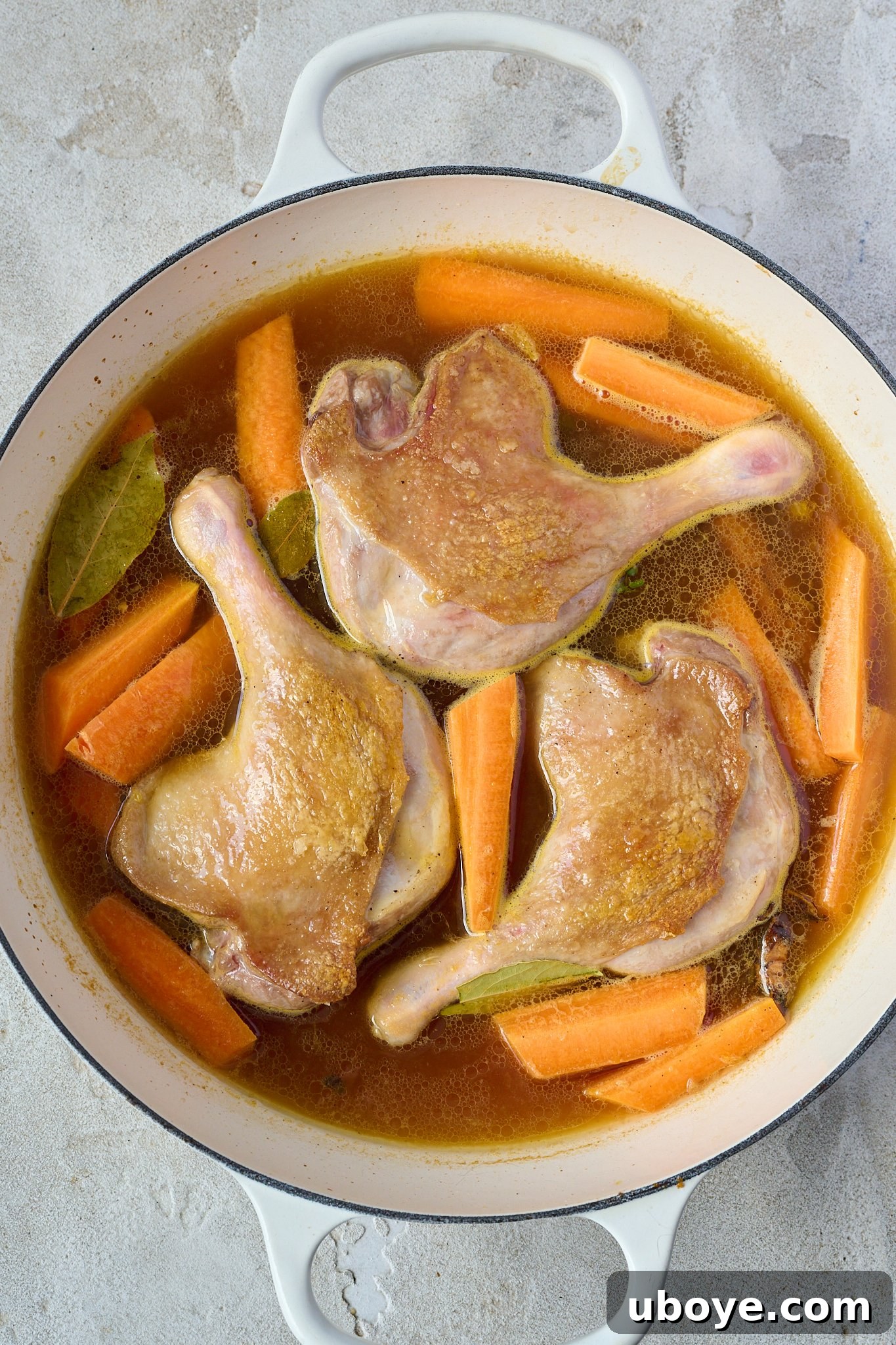
Carefully remove the pan-fried duck legs and set them aside. Pour off almost all of the rendered duck fat from the pan, leaving approximately 1 tablespoon behind – this fat is packed with flavor. You can reserve the extra duck fat in a sterilized jar in the refrigerator for up to a week; it’s liquid gold for roasting vegetables! Now, deglaze the pan by pouring in the vermouth (or Cointreau/dry white wine). Use a wooden spoon to vigorously scrape up all those delicious brown, caramelized bits (the ‘fond’) from the bottom of the pan. These bits are flavor bombs and will add incredible depth to your sauce. Cook for 1 minute, allowing the alcohol to reduce slightly. Stir in the marmalade and soy sauce until fully dissolved and smooth. Next, add the chicken or duck stock, fresh orange juice, whole cinnamon stick, star anise, bay leaves, thyme sprig, and a pinch of salt and pepper. Bring this mixture to a rolling boil, then carefully return the duck legs to the pan, skin-side up. Ensure the sauce comes only halfway up the duck legs; the skin should remain above the liquid to preserve its crispiness. Scatter the peeled and halved carrots around the duck, then bring the sauce back to a gentle simmer.
Step 3: Braising to Perfection
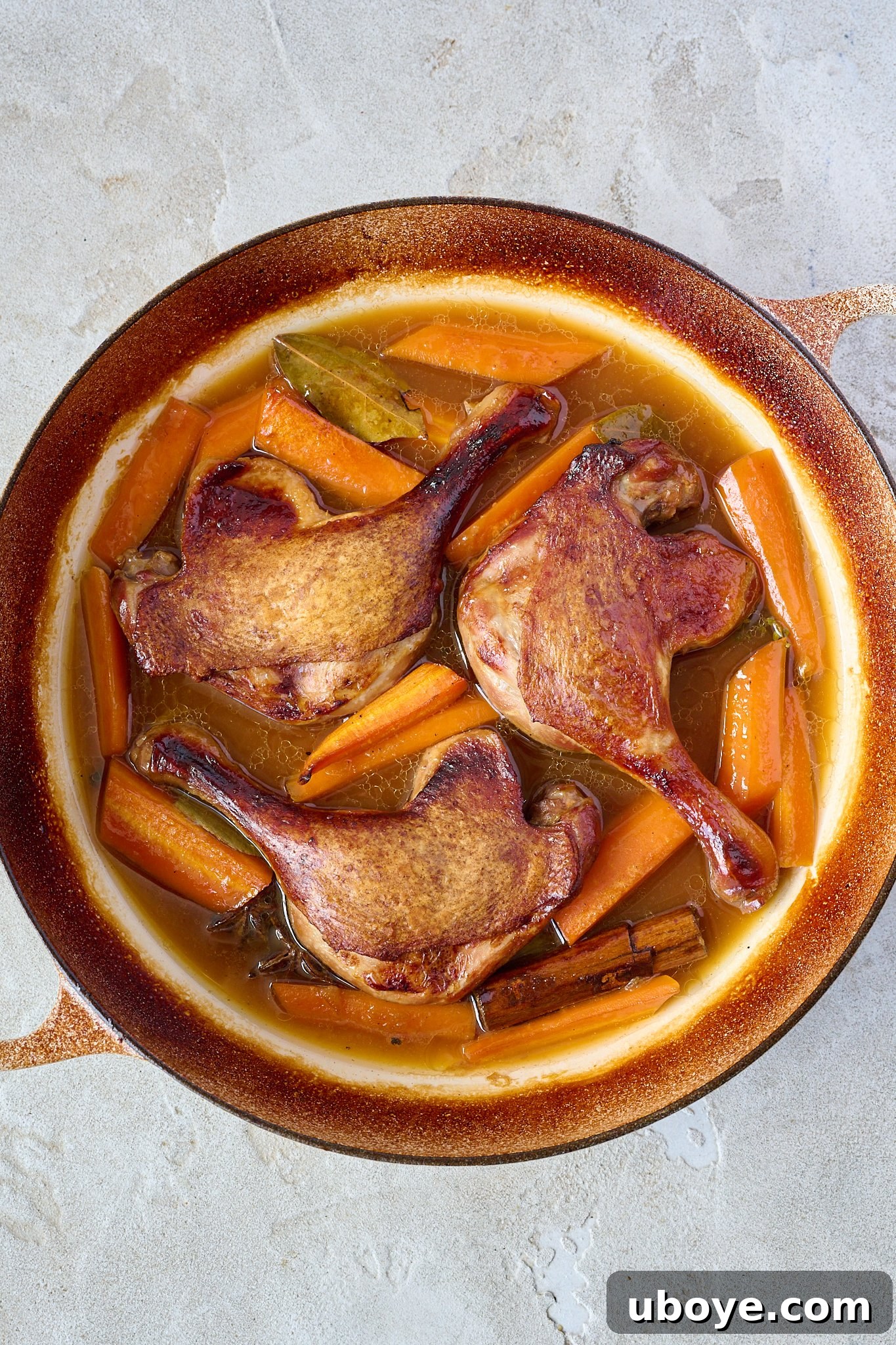
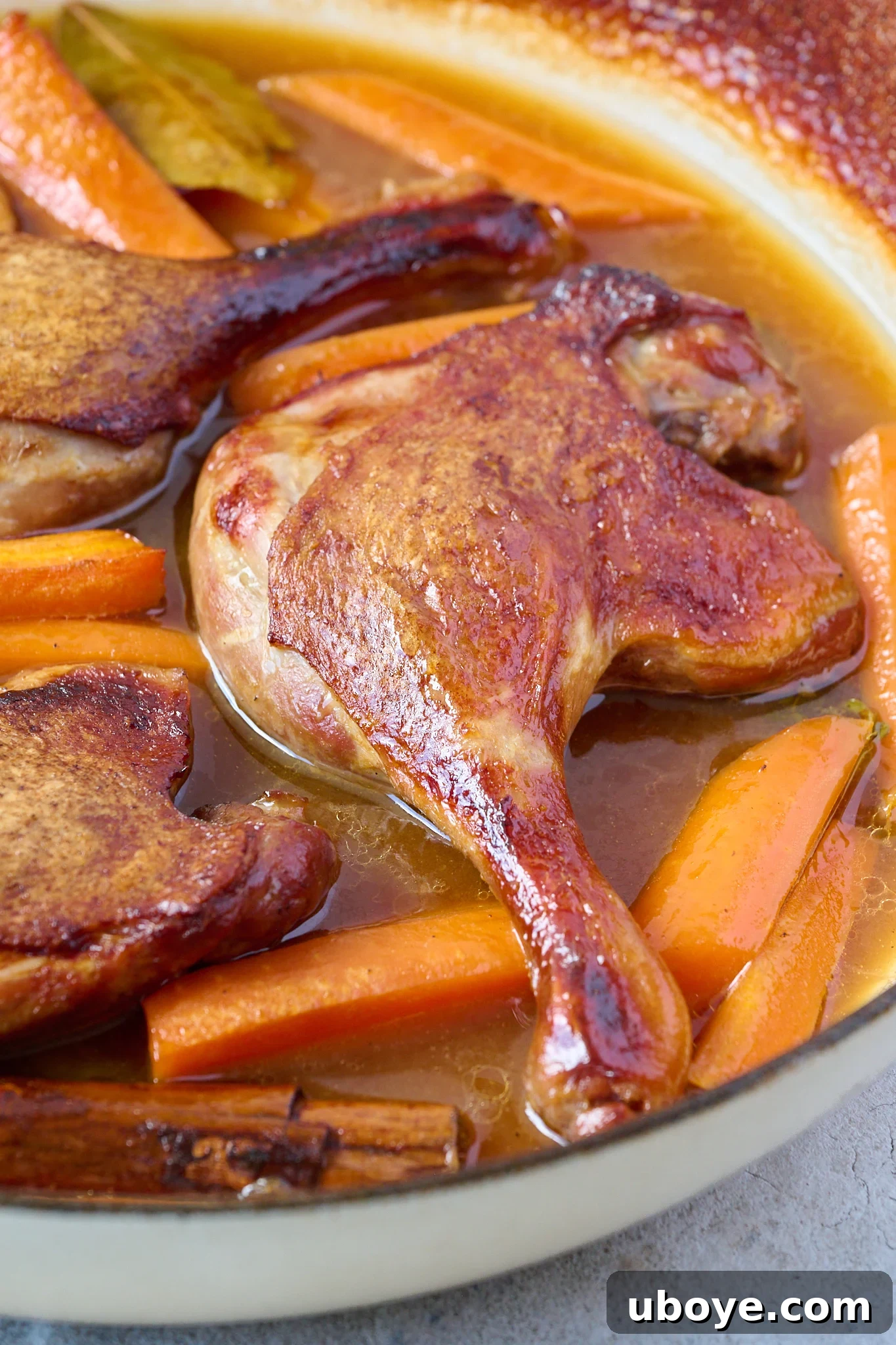
Preheat your oven to 350°F (180°C). Once the sauce is simmering gently, cover the pan tightly with a lid or aluminum foil. Transfer the pan to the preheated oven and bake for 60 minutes. This slow braising allows the duck meat to become incredibly tender. After 60 minutes, remove the lid. This is a critical step for re-crisping the skin. Continue to bake for an additional 10-15 minutes, or until the duck skin is beautifully golden brown and irresistibly crisp, and the carrots are fork-tender and slightly caramelized. The aromas filling your kitchen will be absolutely divine! Carefully remove the pan from the oven.
Step 4: Finishing the Glossy Sauce & Serving
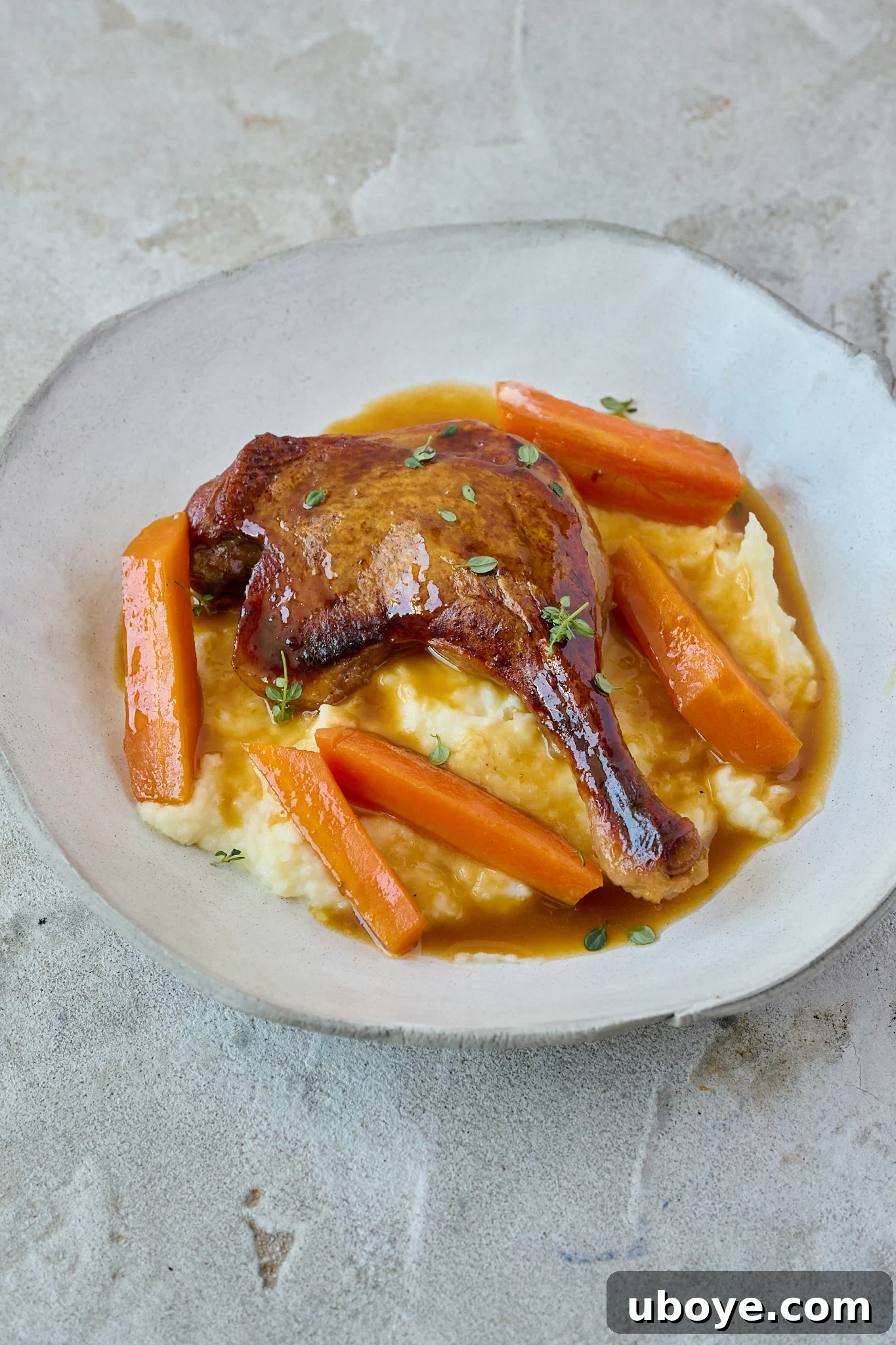
Gently remove the braised duck legs, carrots, and the whole spices (cinnamon stick, star anise, bay leaves, thyme sprig) from the pan and set them aside. At this point, you may wish to strain the remaining sauce through a fine-mesh sieve to remove any small impurities and ensure a perfectly smooth gravy. Return the strained sauce to the pan over high heat and bring it to a vigorous boil. Aggressively reduce the sauce by about half, allowing it to thicken and concentrate its flavors. Once reduced, lower the heat to low-medium. Now for the magic: slowly add the butter cubes, one at a time, stirring continuously until each cube is fully melted and incorporated. This process, known as emulsification, will transform your sauce into a thick, glossy, and incredibly rich gravy. Taste the sauce and adjust for seasoning with additional salt and pepper if needed. While this step is optional, it is highly recommended as it creates the most delicious, restaurant-worthy gravy that elevates the entire dish! To serve, artfully arrange the crispy braised duck legs and tender carrots over a mound of creamy mashed potatoes. Drizzle generously with the silky, spiced orange sauce, and finish with a fresh sprinkling of thyme for a pop of color and aroma. Prepare for rave reviews!
Expert Tips & Tricks for Cooking Duck Legs
Achieving perfectly cooked duck legs with crispy skin and tender meat is within your reach. Keep these expert tips in mind to ensure spectacular results every time:
- Start with a Cold Pan for Optimal Fat Rendering: This is arguably the most critical step for crispy skin. Placing the duck legs skin-side down in a cold pan and then gradually increasing the heat to low allows the fat to render slowly and thoroughly. This gentle process prevents the skin from seizing up or burning before the fat has had a chance to melt away, leading to a much crispier finish.
- Patience is a Virtue – Let the Skin Cook Undisturbed: Resist the temptation to poke, prod, or move the duck legs during the initial pan-frying stage. Let them cook undisturbed until the skin is deeply golden brown and most of the fat has rendered out. This “hands-off” approach ensures maximum contact with the pan, promoting even browning and crispness.
- Boost the Heat for Extra Crispy Skin: Once the fat has largely rendered out from the initial low-and-slow cook, turn up the heat to medium-high for 1-2 minutes. This final burst of higher heat will ensure that the skin becomes extra crispy and beautifully golden. Flip the duck over briefly to brown the flesh side for a few more minutes.
- Keep the Skin Above the Braising Liquid: During the braising process, it’s essential that the liquid in the pan only comes halfway up the duck legs, leaving the skin exposed. If the skin is submerged in the liquid, it will become soft and lose its crisp texture. Exposing the skin to the oven’s dry heat allows it to crisp up beautifully.
- Rest the Duck for Ultimate Succulence: Just like any roasted or braised meat, allowing the duck legs to rest after they come out of the oven is crucial. This resting period (which you can do while you finish reducing and emulsifying the sauce) allows the juices to redistribute throughout the meat, ensuring it remains incredibly succulent and moist.
- Finish the Sauce with Butter for a Rich, Glossy Gravy: Don’t skip the final step of stirring cold butter into the reduced sauce. Straining the sauce first removes any solids for a smoother texture, then whisking in butter off the heat (or over very low heat) emulsifies it. This technique creates a luxurious, glossy, and intensely flavorful gravy that perfectly complements the rich duck and elevates the entire dish. It’s the secret to a restaurant-quality finish.
- Utilize Leftover Duck Fat: After rendering, you’ll have a good amount of duck fat. Don’t discard it! Store it in a clean, airtight jar in the refrigerator for up to a week (or freeze for longer). It’s fantastic for roasting potatoes, searing vegetables, or even making flaky pie crusts, adding incredible depth of flavor to anything it touches.
Frequently Asked Questions (FAQs)
No, this recipe is specifically designed for duck legs, also known as Marylands. Duck breast is a much leaner cut of meat and cooks very differently – typically quickly seared to medium-rare. The low-and-slow braising method used here would cause duck breast to become tough and dry, so it is not a suitable substitute. For optimal results and the intended tender, fall-off-the-bone texture with crispy skin, please stick to duck legs.
Achieving crispy duck skin involves several key steps. First, start by placing the duck legs skin-side down in a cold pan and gradually bring the heat to low; this slowly renders the fat. Second, ensure that during braising, the skin of the duck legs remains above the braising liquid, allowing it to be exposed to the oven’s dry heat. Finally, removing the lid for the last 10-15 minutes of baking allows the skin to re-crisp and achieve a beautiful golden-brown color.
For a more traditional French “Duck à l’Orange” flavor profile, you can swap vermouth for an orange liqueur like Cointreau or Grand Marnier. Alternatively, a dry white wine such as Sauvignon Blanc or Pinot Grigio makes an excellent substitute, offering a similar acidic balance. If you prefer to avoid alcohol entirely, you can simply omit it and use an equal amount of additional chicken or duck stock, or even orange juice, though the flavor profile will be slightly different.
Yes, this dish is fantastic for making ahead! You can braise the duck legs and prepare the sauce entirely, then store them separately in airtight containers in the refrigerator for up to 2-3 days. When ready to serve, gently reheat the duck in the oven until warmed through, and reheat the sauce on the stovetop, whisking in a pat of butter to refresh its glossy texture. For best crispy skin results, you might want to finish the duck under a broiler for a few minutes before serving, ensuring it’s beautifully re-crisped.
Store any leftover crispy braised duck legs and sauce in separate airtight containers in the refrigerator for up to 3-4 days. To reheat, gently warm the duck in an oven at a moderate temperature (around 300°F/150°C) until heated through, which helps preserve the skin’s texture. Reheat the sauce on the stovetop over low heat, stirring occasionally. For a slightly crisper skin on reheated duck, you can place it under the broiler for a minute or two, watching it carefully to prevent burning.
Perfect Pairings: How to Serve Crispy Braised Duck Legs
This impressive dish deserves equally thoughtful accompaniments. Here are some ideal serving suggestions to complete your meal and highlight the rich flavors of the duck and spiced orange sauce:
- Serve generously with a side of creamy mashed potatoes. Their velvety texture provides the perfect canvas to soak up every last drop of the rich, glossy spiced orange sauce, ensuring no flavor is left behind.
- To balance the richness of the duck, add a simple yet elegant side of buttery greens. Think blanched green beans, tender broccolini, or sautéed silverbeet (Swiss chard) lightly seasoned and tossed in a knob of butter. Their fresh, slightly bitter notes offer a delightful contrast.
- A crisp and vibrant bitter-leaf salad, perhaps featuring radicchio, endive, or arugula, dressed with a sharp vinaigrette (such as a lemon-herb or sherry vinaigrette), works wonders. The bitterness and acidity cut through the richness of the duck and sauce, cleansing the palate beautifully.
- This dish is absolutely perfect for a comforting and indulgent winter dinner, especially when citrus fruits are at their seasonal peak. Its elegant presentation and exceptional flavor also make it a show-stopping and slightly unexpected Christmas table centerpiece, sure to impress your guests with minimal effort for such a gourmet result.
- For wine enthusiasts, consider pairing this dish with a Pinot Noir, Syrah, or a rich Chardonnay. The earthy notes of Pinot Noir or the peppery spice of Syrah can beautifully complement the duck, while a full-bodied Chardonnay can stand up to the richness of the sauce.
Explore More Delicious Meat Recipes!
If you’ve enjoyed mastering this duck dish, you’ll love these other flavorful meat recipes perfect for any occasion. Expand your culinary repertoire with these cherished favorites from our kitchen.
Meat
Garlicky Slow Cooked Lamb Shoulder
Meat
Roast Chicken with Salsa Verde
Meat
Chicken, Chips, and Gravy
Meat
Honey Garlic Butter Lamb Cutlets
We absolutely love seeing your culinary creations! If you prepare these Crispy Braised Duck Legs in Spiced Orange Sauce, please share your masterpieces and tag us on Instagram, TikTok, or Pinterest. Your wonderful photos and feedback truly inspire us! We also encourage you to leave a review or ask any food and recipe-related questions below. We’re always eager to hear from you and provide assistance to make your cooking experience even better.
Print Recipe
Crispy Braised Duck Legs in Spiced Orange Sauce
Daen Lia
5 mins
1 hr 35 mins
4
Ingredients
- 4 duck legs
- 1/4 cup Vermouth or Cointreau
- 1 tbsp marmalade
- 1 tbsp soy sauce
- 2 cups chicken or duck stock
- 1 cup orange juice
- 1 cinnamon stick
- 3 star anise
- 3 bay leaves
- 1 sprig thyme
- 2 large carrots, peeled and halved lengthways
- 4 tbsp butter, cut into 6 small cubes
- salt and pepper to taste
Instructions
-
Preheat oven: Preheat the oven to 350 °F / 180 °C.
-
Season duck legs: Season the duck legs generously with salt and pepper then leave to sit at room temperature for 15 minutes.
-
Pan fry duck legs: In a cold pan, add the duck legs skin side down. Turn the heat to low and cook for 8 – 10 minutes or until the fat has rendered. Do not touch or disturb the duck during this step! Turn the heat to medium and cook for an additional 1 – 2 minutes to slightly crisp the skin. We do not need the skin fully crispy at this point as it will continue to cook when we braise the duck. Flip the duck over and cook for an additional 2 – 3 minutes on the flesh side.
-
Duck fat: Remove the duck from the pan and carefully pour off the excess duck fat, reserving 1 tablespoon in the pan. Store any extra duck fat in a sterilised jar in the fridge for up to 1 week; it’s liquid gold for future cooking!
-
Sauce: Deglaze the pan with the vermouth (or substitute) and use a wooden spoon to scrape off any delicious brown bits left over from the duck. Cook for 1 minute, letting the alcohol reduce. Add the marmalade and soy sauce and stir through until smooth. Then, add the stock, orange juice, cinnamon stick, star anise, bay leaves, thyme, and a pinch of salt and pepper. Bring to a boil, then return the duck legs to the sauce, ensuring the skin side remains mostly above the liquid (the sauce should come halfway up). Scatter the carrots around the duck and bring the sauce back to a gentle simmer.
-
Bake: Cover the pan tightly with a lid and bake in the preheated oven for 60 minutes. Remove the lid and continue to bake for an additional 10 – 15 minutes, or until the duck skin is golden and wonderfully crisp and the carrots are tender and lightly browned. Remove from the oven.
-
Emulsify: Carefully remove the duck legs, carrots, and whole spices from the sauce. For a smoother gravy, you may wish to strain the sauce through a fine-mesh sieve. On a high heat, bring the sauce to a boil and aggressively reduce its volume by half. Reduce the heat to low – medium, and slowly add the butter cubes one at a time, stirring continuously until each cube is fully incorporated and you have a thick, glossy, and emulsified sauce. Taste and adjust for seasoning if needed. This step is optional but highly recommended as it creates the most delicious, rich gravy!
-
Serve: Drizzle the luscious spiced orange sauce generously all over the duck legs and carrots. Garnish with a fresh sprinkling of thyme. Serve immediately with a side of creamy mashed potatoes to soak up every flavorful drop.
Notes
Additional Tips & Tricks for Cooking Duck Legs
- Start with a Cold Pan: Place the duck legs skin-side down in a cold pan, then bring the heat to low. This gradual rendering helps achieve the crispiest skin.
- Be Patient with the Skin: Allow the duck to cook undisturbed until the skin is deeply golden and most of the fat has rendered out.
- Turn up the Heat: Once the fat is rendered, increase the heat for 1-2 minutes to get that skin extra crispy, then flip and cook for a few more minutes.
- Keep the Skin Above the Liquid: Ensure the braising liquid doesn’t fully cover the duck skin, preventing it from becoming soft.
- Rest Before Serving: Allow the duck to rest after cooking (while you finish the sauce) so the juices redistribute, ensuring succulent meat.
- Finish the Sauce with Butter: Strain and stir in cold butter at the end to emulsify the sauce, making it glossy, silky, and rich.
Important Note: Duck breast cannot be used for this recipe! You must use duck legs for the specified cooking method and desired texture.
Nutrition
Carbohydrates: 16g
Protein: 48g
Fat: 31g
Saturated Fat: 12g
Polyunsaturated Fat: 4g
Monounsaturated Fat: 13g
Trans Fat: 0.5g
Cholesterol: 227mg
Sodium: 565mg
Potassium: 305mg
Fiber: 2g
Sugar: 10g
Vitamin A: 8140IU
Vitamin C: 38mg
Calcium: 60mg
Iron: 4mg
Nutrition information is automatically calculated, so should only be used as an approximation.
 Like this? Leave a comment below!