
Jump to Recipe
Jump to Video
Authentic Aglio e Olio: The Ultimate Garlic and Oil Pasta Recipe
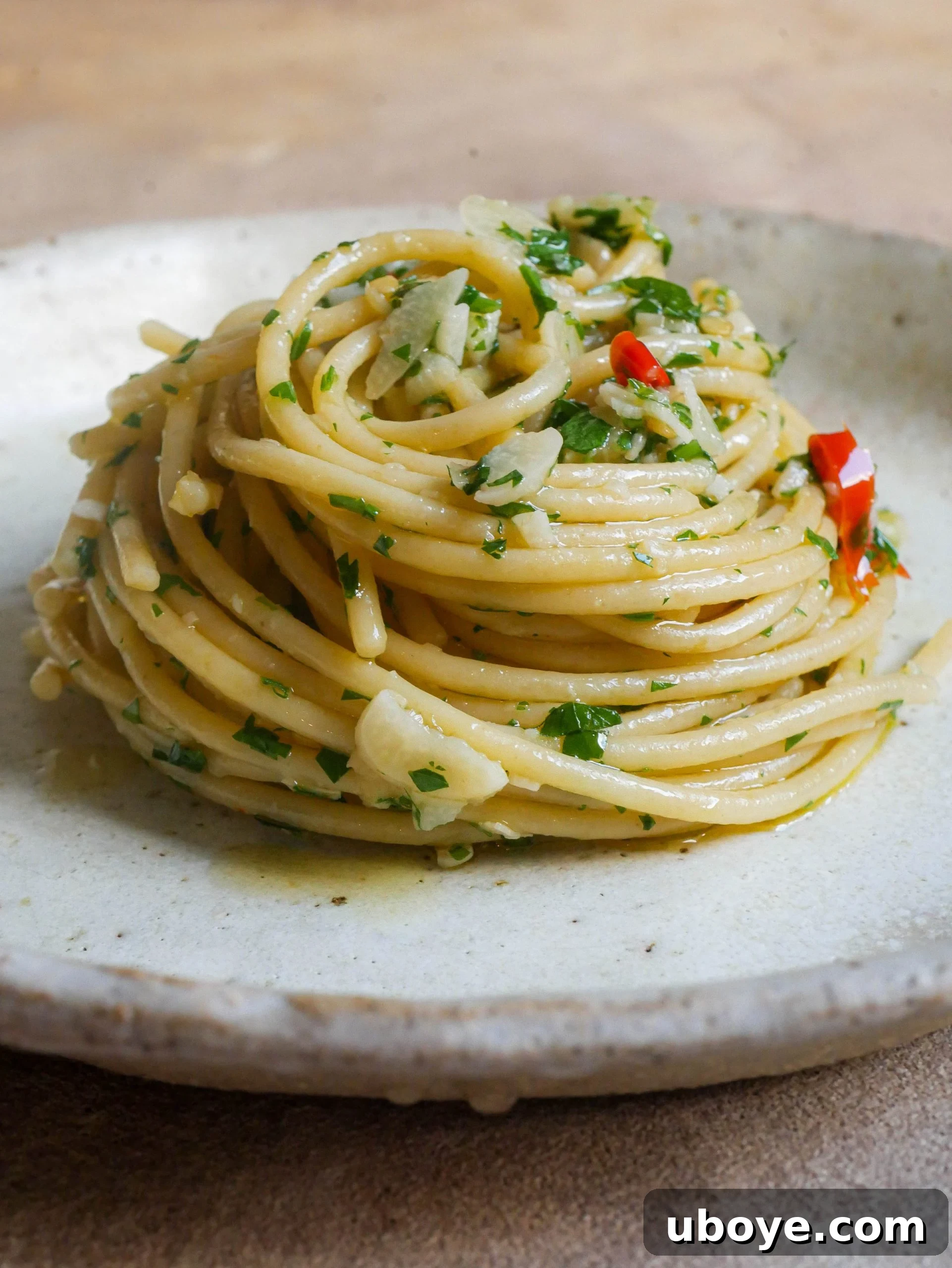
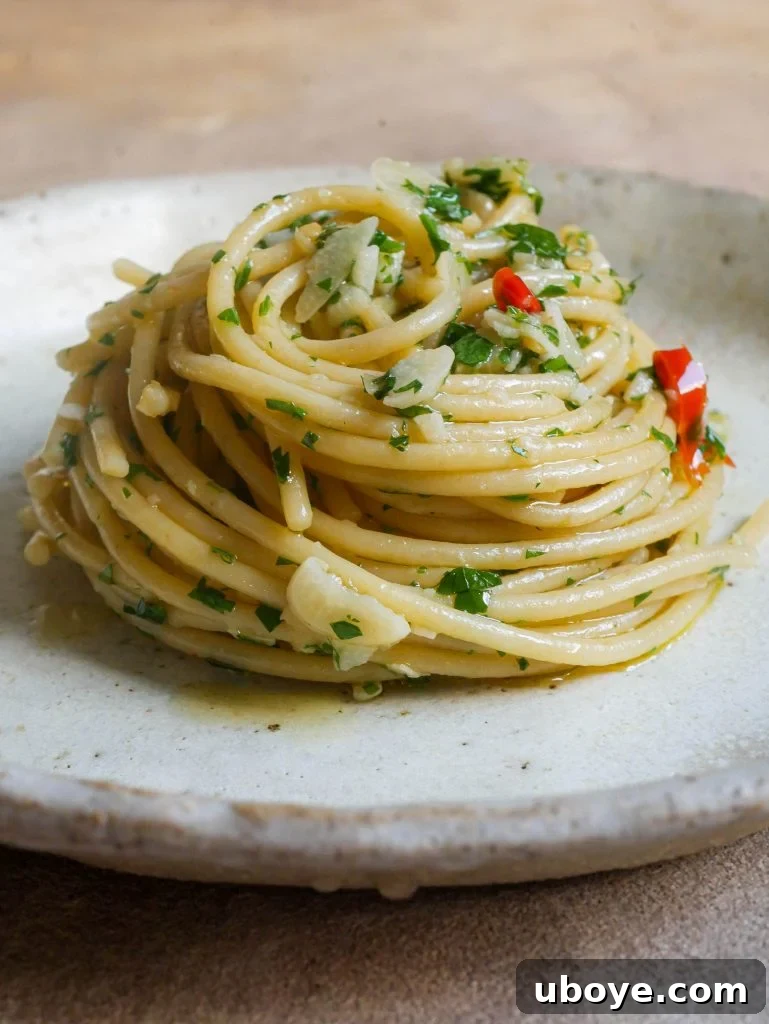
Aglio e Olio, an iconic Italian pasta dish, stands as a testament to the power of culinary simplicity. With just a handful of staple ingredients – garlic (aglio) and oil (olio) – this classic transforms into a profoundly flavorful and deeply satisfying meal that captivates palates across the globe. Originating from Naples, this humble creation was historically revered as a “poor man’s dish” and a cherished midnight snack, born out of necessity but perfected through generations. Its elegant restraint and ability to deliver immense taste from minimal components make it a cornerstone of Italian “cucina povera” (peasant cooking). For many, the aroma of garlic gently sizzling in high-quality olive oil instantly evokes nostalgic memories, transporting them back to comforting family kitchens.
The Enduring Legacy of Aglio e Olio: History and Cultural Significance
The story of Aglio e Olio is deeply intertwined with the culinary traditions of Southern Italy, particularly Naples. Born from an era when resources were scarce, this dish exemplifies ingenuity and a profound understanding of ingredients. It was a meal accessible to everyone, requiring only pantry staples that were readily available. Far from being seen as lacking, its elegance lies in its unpretentious nature. It teaches us that exceptional flavor doesn’t always demand complex techniques or exotic ingredients, but rather a respectful treatment of simple, high-quality components.
Throughout history, Aglio e Olio has transcended its humble beginnings to become a beloved dish worldwide. Its popularity is not merely due to its ease of preparation but also its universal appeal. It is a dish that caters to various dietary preferences, naturally being vegan (when served without cheese) and immensely satisfying. It’s a perfect illustration of Italian gastronomy’s philosophy: letting the natural goodness of ingredients shine through, with subtle enhancements rather than overpowering flavors.
Mastering the Art of Simplicity: Essential Ingredients for Perfect Aglio e Olio
When a dish relies on such few ingredients, the quality of each component becomes paramount. There’s an undeniable art to cooking Aglio e Olio, where attention to detail transforms a simple concept into a gourmet experience. Selecting the right ingredients and treating them with care is the secret to unlocking the full potential of this classic.
Garlic: The Aromatic Heart
The star of the show, garlic, dictates much of the dish’s character. Using fresh, firm garlic cloves is non-negotiable. Finely slicing the garlic, rather than mincing, helps prevent it from burning quickly and allows it to release its flavors more gradually into the oil. The goal is to cook the garlic until it’s fragrant, soft, and lightly golden, allowing its natural sweetness to develop. Burnt garlic will turn bitter and ruin the entire dish, so a low and slow approach is crucial.
Extra Virgin Olive Oil: The Liquid Gold
Given that “olio” is half the name, the choice of olive oil is critical. A high-quality extra virgin olive oil is essential, providing a rich, fruity base that infuses every element. Its robust flavor is what carries the garlic and chili, creating a luxurious mouthfeel and enhancing the overall depth of the sauce. Avoid using lower-grade oils; invest in a good bottle for an authentic taste experience.
Spaghetti: The Perfect Vehicle
While various pasta shapes can be used, spaghetti is the traditional choice for Aglio e Olio. Its long, slender strands are ideal for coating with the light garlic-infused sauce. The key to perfect pasta is cooking it “al dente” – firm to the bite. More importantly, for Aglio e Olio, the spaghetti should be slightly undercooked in boiling water, as it will finish cooking in the pan with the sauce, absorbing its flavors and contributing starch for emulsification.
Chili: A Spark of Heat
A subtle hint of chili adds a welcome warmth and complexity to the dish. Traditionally, fresh red chili, thinly sliced, or dried red pepper flakes (peperoncino) are used. The amount can be adjusted to personal preference, from a gentle warmth to a vibrant kick. The chili should be cooked alongside the garlic, allowing its spice to mellow and meld with the oil.
Fresh Parsley: The Bright Finish
Fresh parsley is the perfect finishing touch, offering a vibrant green hue and a burst of herbaceous freshness that cuts through the richness of the oil and garlic. It’s usually stirred in at the very end, just before serving, to retain its bright color and delicate flavor. Flat-leaf Italian parsley is generally preferred for its more robust taste.
Pasta Water: The Secret Emulsifier
Often overlooked, pasta water is arguably the most crucial ingredient in creating a silky, glossy, and creamy Aglio e Olio sauce. The starchy water, reserved from cooking the spaghetti, acts as a natural emulsifier, binding the oil and garlic flavors together. Added early in the cooking process, it helps the garlic soften without burning and then thickens the sauce, ensuring every strand of pasta is beautifully coated.
Crafting Your Aglio e Olio: Step-by-Step Perfection
The beauty of Aglio e Olio lies in its straightforward preparation. Follow these steps to achieve a truly memorable dish:
- Prepare the Pasta: Start by bringing a large pot of heavily salted water to a vigorous boil. The saltiness should resemble that of the sea, as this is your only chance to season the pasta itself. Add your spaghetti and cook it until it’s very al dente – typically 2 minutes less than the package instructions suggest. Before draining, make sure to reserve at least 1 cup of the starchy pasta water. This “liquid gold” is indispensable for your sauce.
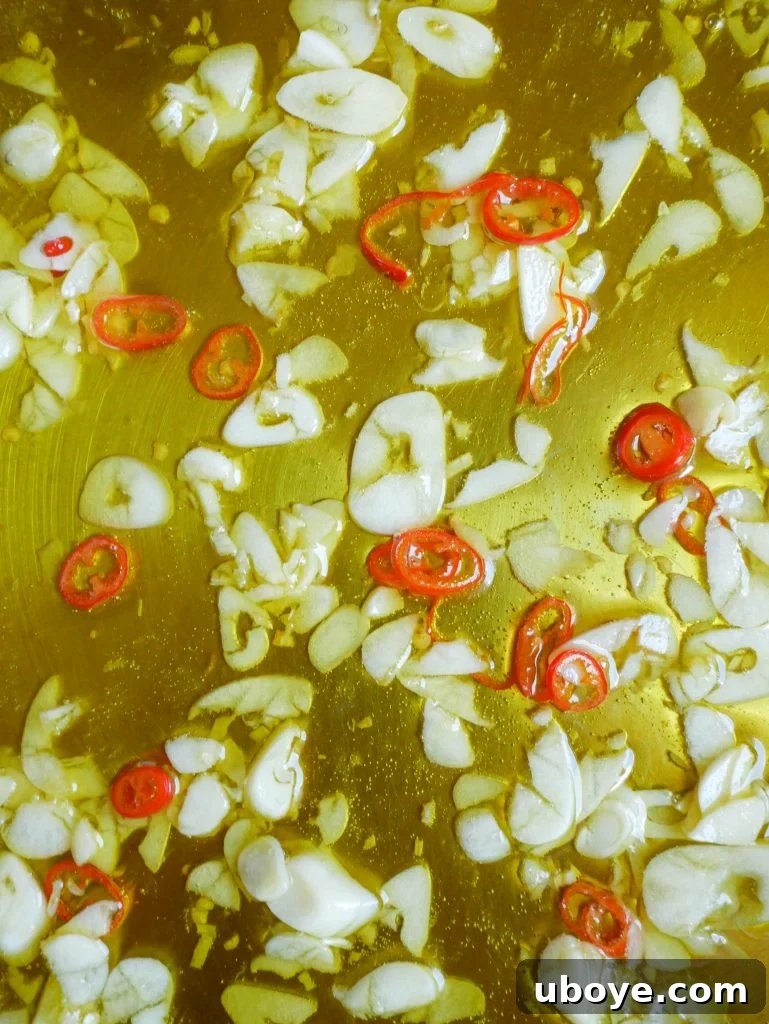
- Infuse the Olive Oil: While the pasta is cooking, heat a large, wide skillet or frying pan over a very low flame. Pour in your high-quality extra virgin olive oil. Add the thinly sliced garlic and finely sliced chili (or red pepper flakes). Cook this mixture gently for 3 to 5 minutes. The goal is to allow the garlic to become fragrant, tender, and just barely turn a light golden color. Stir frequently to ensure even cooking and, most importantly, prevent the garlic from burning, which would impart a bitter taste.
- Build the Emulsified Sauce: Once the garlic is aromatic and softened, pour in about 1/2 cup of the reserved pasta water. Increase the heat slightly and let the mixture simmer gently for approximately 8 to 10 minutes, or until most of the water has evaporated. During this process, the pasta water, oil, and garlic will begin to emulsify, creating a nascent, flavorful sauce. The garlic will continue to soften and sweeten in this liquid.
- Combine Pasta and Sauce: Drain your al dente spaghetti and transfer it directly into the skillet with your developing sauce. Add an additional 1/4 cup of the reserved pasta water. Over low heat, continuously toss and stir the pasta for 1 to 2 minutes. This crucial step allows the spaghetti to finish cooking, absorbing all the wonderful flavors, and helps the starches from the pasta and water to bind with the oil, creating a truly silky, glossy, and cohesive sauce that lovingly coats every strand. Add a tablespoon or two more pasta water if the sauce appears too thick or dry.
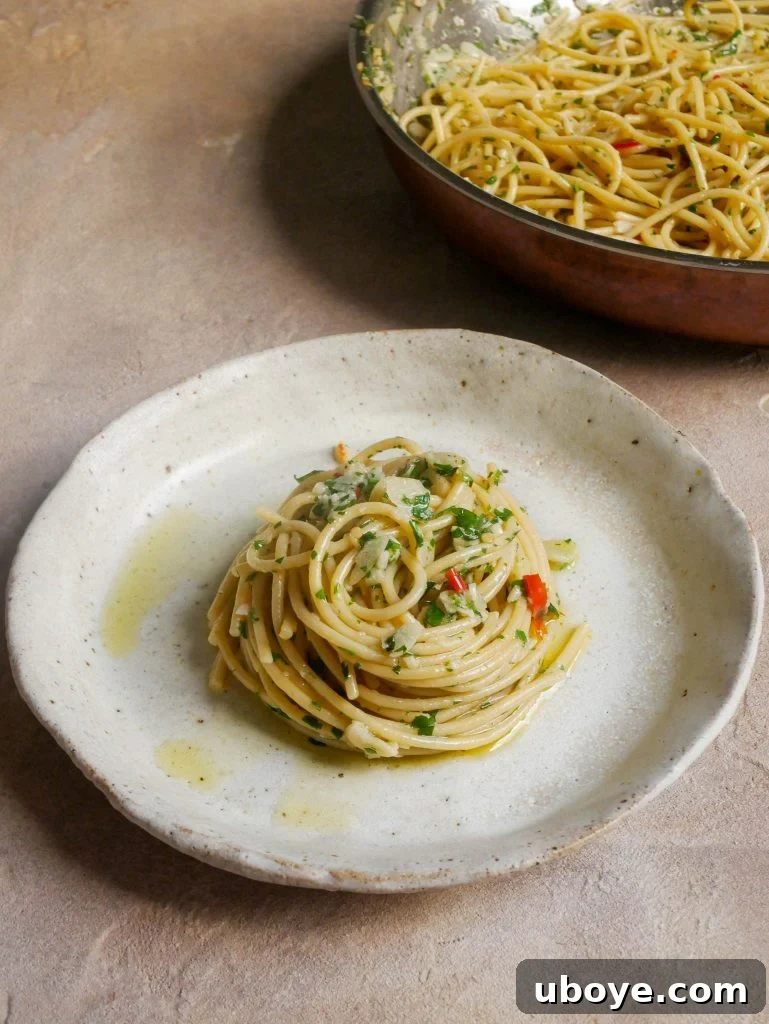
- Finish and Serve: Remove the pan from the heat. Stir in a generous handful of fresh, finely chopped parsley. Taste and season with salt and freshly ground black pepper as needed. Serve your Aglio e Olio immediately, perhaps with an optional drizzle of fresh olive oil and a sprinkle of grated Pecorino Romano or Parmesan cheese for an extra layer of flavor.
Tips for Aglio e Olio Mastery
- Never Burn the Garlic: This is the golden rule. Maintain a low heat and cook the garlic slowly until it’s tender and golden, not brown or crispy, to avoid bitterness.
- Embrace Pasta Water: Don’t underestimate its power. It’s the magical ingredient that binds the oil and garlic, creating a creamy, emulsified sauce without any actual cream.
- Undercook Your Pasta: Always cook your pasta slightly less than al dente in the boiling water. It will finish cooking in the pan with the sauce, soaking up the flavors and preventing it from becoming mushy.
- Quality Ingredients Matter: Since there are so few ingredients, make sure each one is of the highest quality, especially the extra virgin olive oil and fresh garlic.
- Season Thoughtfully: Season the pasta water generously with salt. Then, taste the sauce before serving and adjust salt and pepper as needed.
Elevate Your Dish: Variations and Creative Additions
While traditional Aglio e Olio is celebrated for its purity, it also serves as a fantastic canvas for subtle variations. A squeeze of fresh lemon juice at the end can add a bright, zesty counterpoint to the rich garlic and oil. A sprinkle of grated Pecorino Romano or Parmesan cheese introduces a salty, umami depth, though this moves away from the traditional vegan recipe. For added texture, toasted breadcrumbs (pangrattato) can be scattered over the top, offering a delightful crunch.
Other simple additions could include a few anchovy fillets, dissolved in the oil with the garlic for an extra layer of savory flavor, or a handful of cherry tomatoes, halved and sautéed briefly for a touch of sweetness and acidity. Some might even experiment with a splash of white wine, deglazing the pan before adding pasta water for a more complex aroma. The beauty of Aglio e Olio lies in its adaptability while retaining its core essence.
Frequently Asked Questions About Aglio e Olio
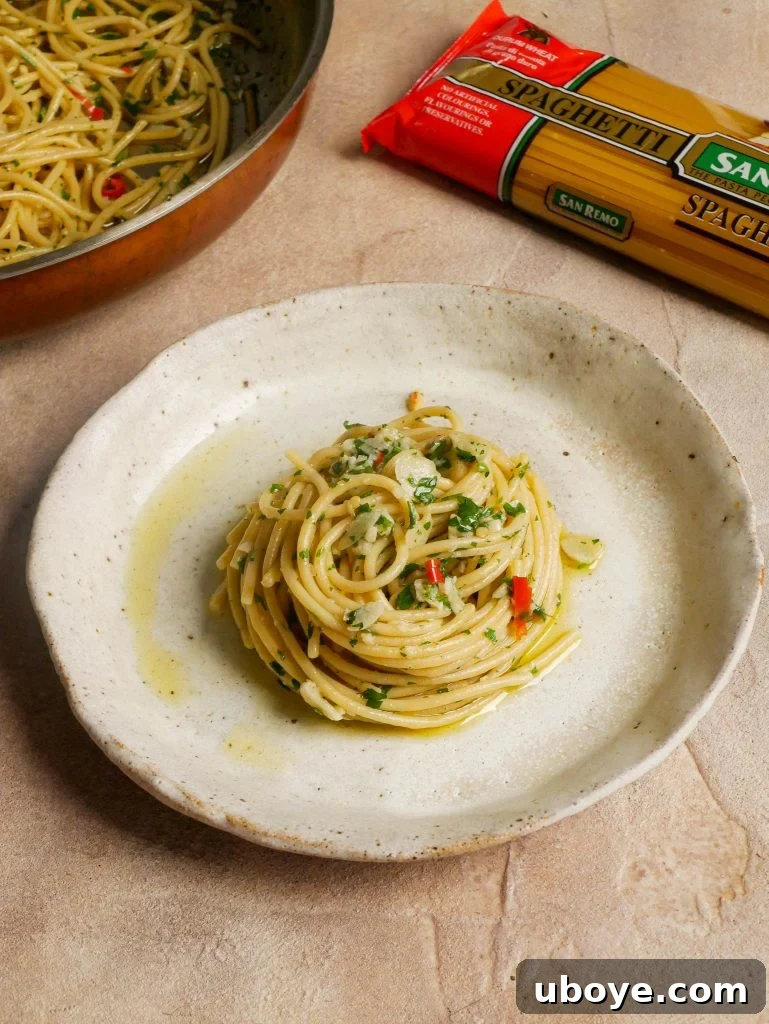
Why is pasta water so crucial in Aglio e Olio?
Pasta water, particularly the starchy water from cooking your spaghetti, is the secret weapon for Aglio e Olio. It serves multiple vital functions: it helps to gently cook and soften the garlic without burning, it allows the oil and aromatics to emulsify, creating a glossy and cohesive sauce, and its starch helps the sauce cling perfectly to every strand of pasta. Without it, the sauce would be oily and thin, lacking that signature silky texture.
Can I really add other ingredients to this traditional recipe?
Absolutely! While the beauty of Aglio e Olio lies in its traditional simplicity, it’s also wonderfully versatile. You can certainly personalize it with a squeeze of fresh lemon juice for brightness, a generous grating of Parmesan or Pecorino Romano cheese for umami, or toasted breadcrumbs for a delightful crunch. Other popular additions include a few fresh cherry tomatoes, spinach, or even some capers for a briny kick. Just remember that each addition subtly changes the classic profile, so choose wisely to complement the existing flavors.
What does “al dente” mean for this specific dish?
“Al dente” translates to “to the tooth” in Italian, meaning the pasta should be firm but not hard when bitten. For Aglio e Olio, we actually cook the pasta “extremely al dente” in the boiling water – about 2 minutes shy of the package’s recommended time. This is because the pasta will finish cooking directly in the pan with the garlic and oil sauce. This final cooking step allows the pasta to fully absorb the sauce’s flavors and contribute its starch to thicken the sauce, preventing it from becoming overcooked and mushy.
Is Aglio e Olio a vegan dish?
Traditionally, Aglio e Olio, made with just pasta, garlic, olive oil, chili, and parsley, is naturally vegan. It contains no meat, dairy, or other animal products. However, if you choose to add optional ingredients like Parmesan or Pecorino Romano cheese, it would no longer be considered vegan. Always specify if you’re making a vegan version to ensure no dairy is added.
How can I prevent my garlic from burning?
Preventing burnt garlic is perhaps the most critical step in making Aglio e Olio. The key is to use very low heat and a watchful eye. Add the sliced garlic to the cold or slightly warmed olive oil, and let it infuse slowly as the oil gently heats up. Stir the garlic frequently. You want the garlic to become fragrant, soft, and just faintly golden, not crispy or dark brown. If it starts to brown too quickly, remove the pan from the heat for a moment to let it cool down before continuing.
Classic Aglio e Olio Recipe
Aglio e Olio
By Daen Lia
Aglio e Olio is a timeless Italian pasta dish, translating simply to “garlic and oil.” Celebrated for its elegant simplicity and robust flavor, it offers a nourishing and satisfying meal with minimal ingredients. This recipe guides you to a silky, glossy sauce and perfectly tender pasta, capturing the essence of traditional Neapolitan cooking.
- Prep Time: 10 mins
- Cook Time: 20 mins
- Servings: 4
Ingredients
- 250 g (approximately 8.8 oz) San Remo Spaghetti no.5 (or any high-quality spaghetti)
- 6 large garlic cloves, finely sliced
- 1 fresh red chili, finely sliced (or 1/2-1 teaspoon red pepper flakes, adjusted to taste)
- 6 tbsp high-quality extra virgin olive oil
- 3/4 cup pasta water (reserved from cooking spaghetti)
- 1 handful fresh Italian flat-leaf parsley, finely chopped
- Salt and freshly ground black pepper, to taste
Instructions
- Cook the Pasta: Bring a large pot of heavily salted water to a rolling boil. Add the spaghetti and cook according to package directions, but remove it about 2 minutes before the suggested al dente time. The pasta should still be quite firm. Before draining, make sure to reserve at least 1 cup of the starchy pasta water. This is essential for your sauce.
- Prepare the Aromatics: In a large, wide skillet or fry pan, add the extra virgin olive oil. Place the pan over very low heat. Add the finely sliced garlic and chili (or red pepper flakes). Cook gently for 3-5 minutes, stirring frequently, until the garlic is fragrant, soft, and lightly golden. It is absolutely crucial *not* to burn the garlic, as this will result in a bitter flavor that will overpower the dish.
- Build the Sauce: Pour 1/2 cup of the reserved pasta water into the pan with the garlic and chili mixture. Increase the heat slightly to a gentle simmer. Allow this mixture to cook for about 8-10 minutes, stirring occasionally, until most of the water has evaporated and the sauce has slightly thickened and emulsified. The garlic should be very tender and sweet by now.
- Combine Pasta and Sauce: Add the undercooked spaghetti directly into the pan with the garlic-chili sauce. Add an additional 1/4 cup of the reserved pasta water. Toss and stir continuously for 1-2 minutes over low heat, allowing the pasta to finish cooking and fully absorb the exquisite flavors of the sauce. The starch from the pasta and the reserved water will combine to create a beautifully silky, glossy, and creamy emulsion that coats every single strand. Add a splash more pasta water if the sauce appears too dry.
- Finish and Serve: Remove the pan from the heat. Stir in the finely chopped fresh parsley. Taste the dish and season with salt and freshly ground black pepper as desired. Serve your Aglio e Olio immediately, perhaps with an optional final drizzle of fresh extra virgin olive oil and a sprinkle of grated Pecorino Romano or Parmesan cheese, if preferred.
Watch the Aglio e Olio Recipe Video
We absolutely love seeing your culinary creations! If you make this Aglio e Olio recipe, please share your masterpiece and tag us on Instagram, TikTok, or Pinterest.
Do you have any questions about the recipe, or would you like to share your feedback and review? Please feel free to leave your comments below. We cherish hearing from our community of food lovers and are always happy to answer your cooking-related inquiries!
 Buon appetito!